
16 November 2024 – 20 April 2025
This November, Gainsborough’s House will chart a century-long journey of fashion, through the models and photographers who have helped shape British and global culture.
Picture Perfect: A Century of Fashion Photography from the National Portrait Gallery will feature 29 photographs, spanning ten decades, featuring some of the most recognisable faces and looks from the Golden Age of Hollywood to the Swinging Sixties and catwalk supermodels. They are taken by the most influential photographers of their time including Cecil Beaton (1904 -1980), Irving Penn (1917-2009), Norman Parkinson (1913-1990) and Miles Aldridge (b.1964).
The exhibition highlights the huge role that fashion plays in culture and how ever-changing styles reflect the sensibilities and ambitions of the time. The photography that captures the designs and looks has also evolved, not just being used as a technical showcase, but becoming an art form in itself. Visitors will be able to see how photographers have used their camera to capture the beauty and essence of fashion – influenced by the artwork and designs of the past – to create bold new images of the future. The exhibition has been curated in partnership with the Ulster Museum with NPG.
Sir John Lavery (1856-1941) was very aware of fashion, as one of the most popular portraitists of his era, his work often depicted the latest and most luxurious must-have fashion. But it is the painter himself who becomes the starting point for the exhibition, with a 1922 photograph by E.O. Hoppé (1878-1972). Lavery is accompanied by his second wife, the American painter Hazel Lavery (1880-1935), whose noted beauty appeared on Irish banknotes for half a century. The couple demonstrate the focus on headwear at the time, with Sir John sporting a large top hat while Lady Hazel wears black fur with a glittery band echoing the decoration of her black velvet coat.
This was also the time that Sir Cecil Beaton travelled to New York, furthering a career which would end with him becoming one of the most celebrated fashion and war photographers in British history. Famed for capturing the “Bright Young Things” of the 1920s, he also met and captured the looks of fellow photographers like Lee Miller (1907-1977) and models like Elise de Wolfe, Lady Mendl (1865-1950). Also featured in the show is his image of the English model and muse Paula Gellibrand (1898-1986) in a sequin dress at her Modernist home, highlighting why she became one of the most sought-after “mannequins” of the twenties, thanks to what Beaton described as her “Modigliani features” and “slender hands”.
Striking compositions, colour and bold figure-hugging dresses are seen in the photographs of the 1930s and 1940s. Cabaret dancer Wes Adams remains in the background of Gordon Anthony’s (1902-1989) photo, while his dancing partner takes the attention in the foreground with a backless dress and high-held cigarette. One of the major stars of old Hollywood, Loretta Young (1913-2000), is in an all-black silk crepe dress in Horst P Horst’s (1909-1999) image, complete with a picture hat of spun black lace. While the English actress Dame Gladys Cooper (1888-1971) is the exact opposite, in a white hat and white dress detailed with flowers, in a Surrealist creation by Angus McBean (1904-1990).
One of the most famous backdrops in Irving Penn’s work was the tight-cornered set that he used throughout his career. And one of the first people to be photographed in this setting, and arguably one of his most famous images, is of Wallis Simpson, Duchess of Windsor (1896-1986). The glamour of her former position in the Royal family is shown with the white sash and elegant dress, while her angular posture conveys strength and power.
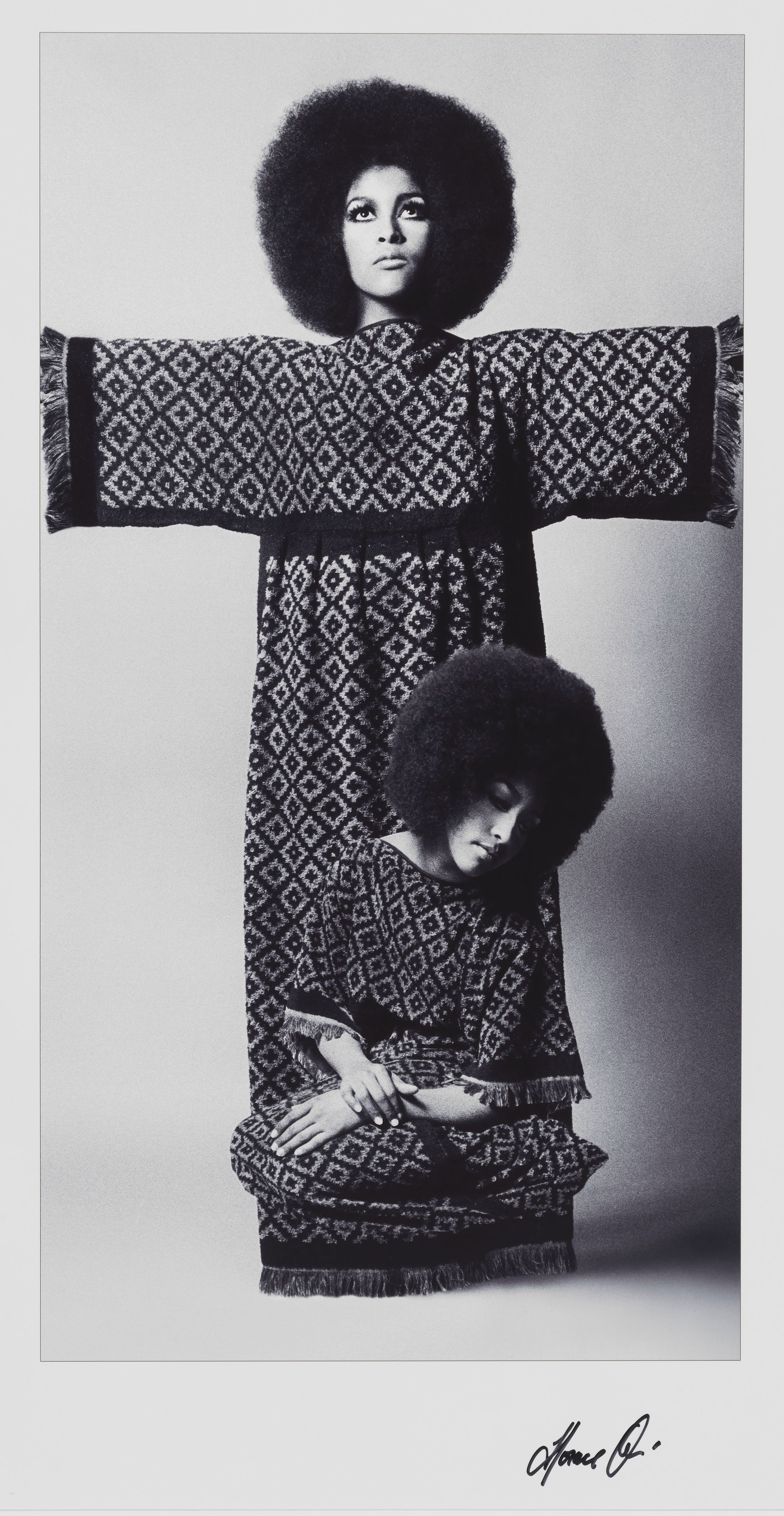
Marsha Hunt – Horace Ové 1968 – Copyright the artist
Into the 50s and classic Hollywood is being replaced with new Hollywood, while fashion couture is re-imagining feminine looks. Norman Parkinson (1913-1990) worked for several years at Vogue and this show traces how he moved his subjects out of the studio and into outdoor spaces, highlighting the artistic influences that could be re-imagined in fashion, in a street-setting photo where the model Adéle Collins wears an Otto Lucas velvet toque in a reference to Fauvist painting.
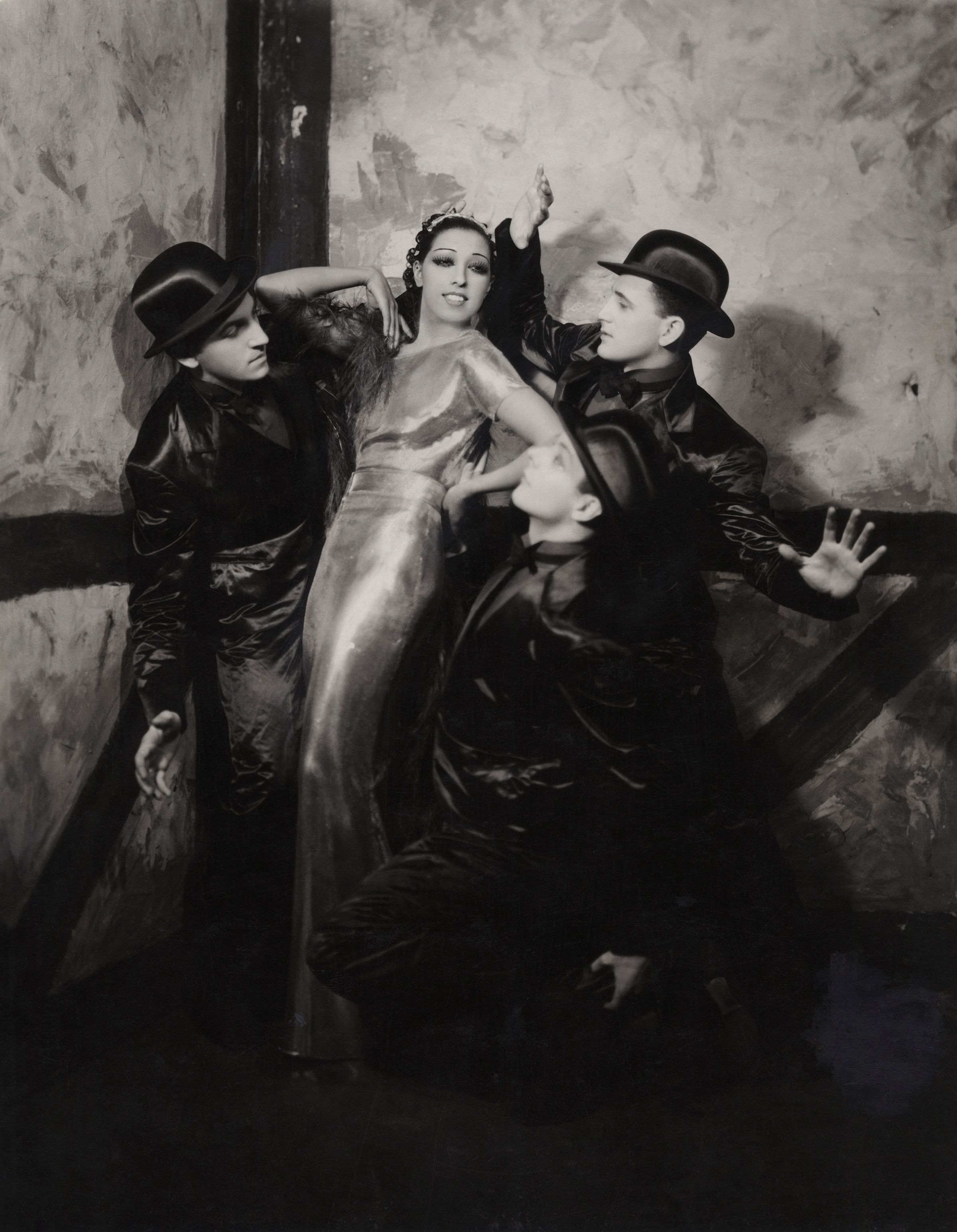
Josephine Baker, Murray Korman, 1936, vintage bromide print – National Portrait Gallery, London
Pop bands in uniforms are a mainstay of 1960s pop culture and the exhibition will include the famous image of The Beatles by Harry Hammond (1906-1969) complete with ‘moptops’ and collar-free suits which changed concepts of masculinity and style for the ‘Swinging Sixties’. Accompanying photos will also show a radical change in fashion for women. There will be a group photo of the wives and girlfriends of the Fab Four, Ronny Traegar (1936-1968) capturing the iconic “Face of 1966” Twiggy (b.1949) on a bike, demonstrating the decade’s shift to youth culture as a fashion focus. The film icon Audrey Hepburn (1929-1993), with her short hairstyle and gamine look, was a key figure in the transition from the 50s to the more ‘accessible’ 60s. The exhibition features her portrait by Cecil Beaton, who remarked she embodied “our new feminine ideal”.
In the 1980s fashion was both looking at what came before and what could be made anew. Vivienne Westwood (1941-2022) helped launch the Punk movement at the end of the last decade with her shocking and vibrant designs, and Philip Sayer’s (b.1947) portrait shows the designer surrounded by a mountain of fabric in her workshop. A favourite of practically every working designer, the trailblazing supermodel Iman (b.1955) is shown in shadow in John Swannell’s (b.1946) striking black and white portrait.
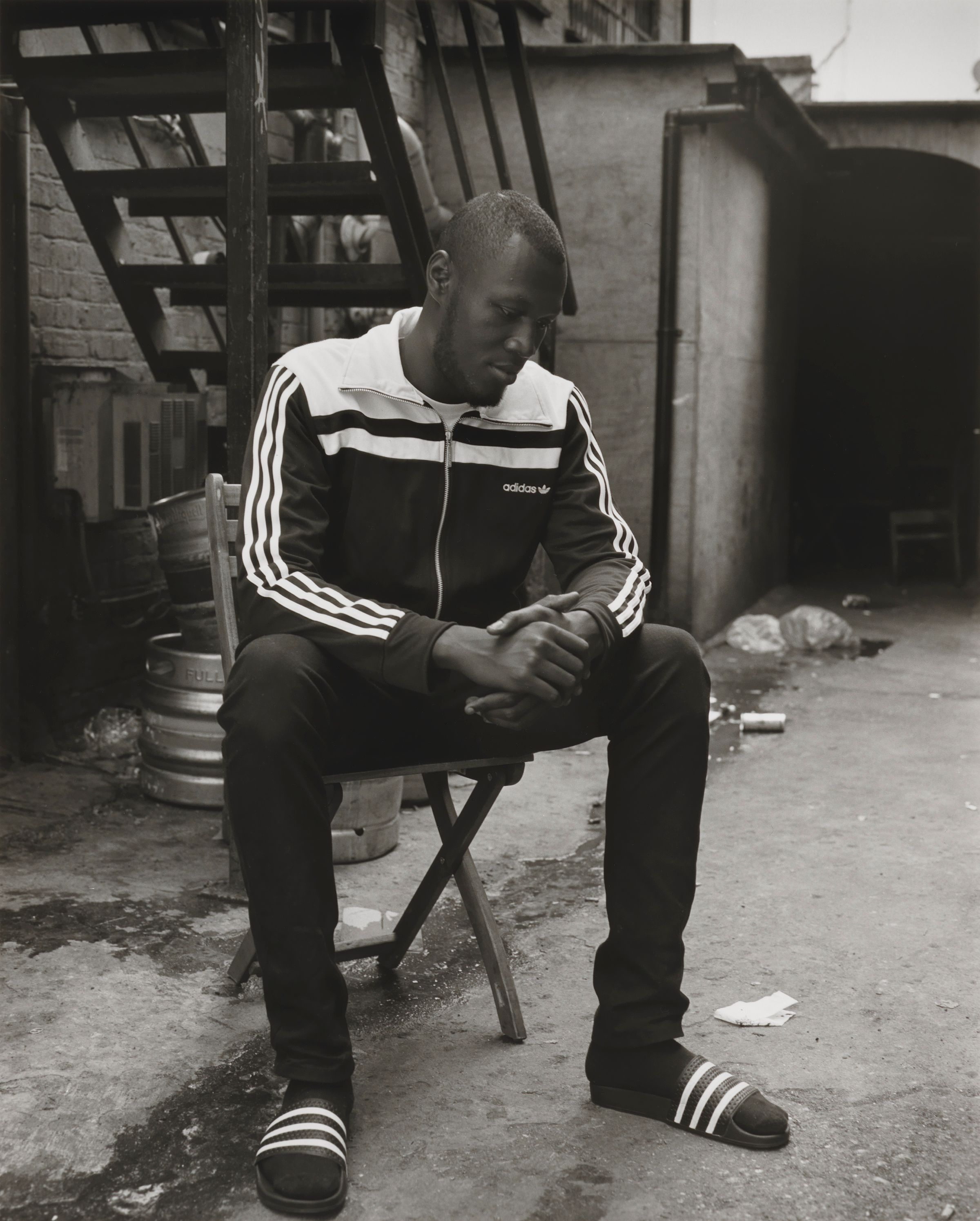
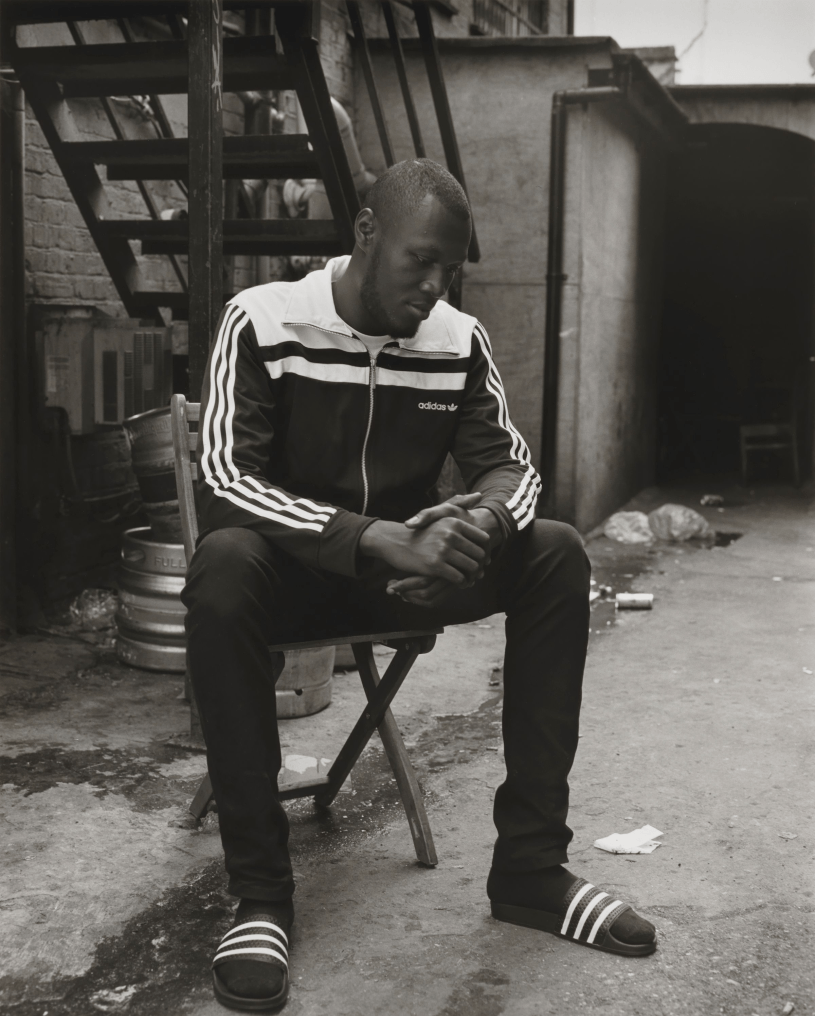
Stormzy, Olivia Rose, 2016, gelatin silver print – Copyright the artist
Visitors to the exhibition will then be able to trace the changing nature of fashion right into the 21st century with some of the most seen and photographed faces. From Oscar-winning actresses like Cate Blanchett (b.1969), models like Lily Cole (b.1987), Kate Moss (b.1974) and Twiggy, as well as the most recent fashion icons such as musician Stormzy (b.1993), featured in Olivia Rose’s (b.1985) moody 2016 portrait complete with trademark Adidas tracksuit.
The exhibition has been curated in collaboration with the National Portrait Gallery and is part of the Inspiring People project funded by the National Lottery Heritage Fund and the Art Fund.
Calvin Winner, Director at Gainsborough’s House, said: “It’s wonderful to be working with our colleagues at the National Portrait Gallery. This exhibition highlights both the intersection of art and fashion but also the important role of photography plays in our cultural life.”
Clare Freestone, Curator of Photography at the National Portrait Gallery, said: “Continuing our long tradition of working in partnership with colleagues at Gainsborough’s House, I am delighted to see this fantastic selection which reflects the strength and variety of fashion photography and fashion in portraiture held in the Gallery’s collection.”
Gainsborough’s House is the National Centre for Thomas Gainsborough RA(1727-88) one of theicons of British art. It is the childhood home of Gainsborough and contains the largest single concentration of his works in the world. Its mission is to promote the wider knowledge, appreciation and enjoyment of the art of Thomas Gainsborough, both nationally and internationally. As an artist home our purpose is to support the role artists play in society and the contribution they make to our cultural life. In 2022 Gainsborough’s House re-opened to the public after a £10m transformational refurbishment, supported by The National Lottery Heritage Fund. This created a suite of exhibition galleries where we present exhibitions of historic and contemporary art and celebrate diversity through our programme. The redevelopment designed by the acclaimed architectural firm ZMMA has recently been awarded the prestigious RIBA East Building of the Year 2024. Open daily, 10am–5pm
 The Travel Locker