

Gainsborough’s House, Sudbury, Suffolk 15 November 2025— 22 March 2026
Stanley Spencer Gallery, Cookham, Berkshire 2 April — 1 November 2026
The most ambitious exhibition dedicated to Stanley Spencer (1891-1959) in a decade will open at Gainsborough’s House, Sudbury this November, before transferring to the Stanley Spencer Gallery, Cookham from April 2026.
Sir Stanley Spencer, CBE RA (30 June 1891 – 14 December 1959) attended the Slade School of Art and is well known for his visionary paintings depicting biblical scenes occurring in Cookham, the small village beside the River Thames, as well as his large paintings for the Sandham Memorial Chapel and the Shipbuilding on the Clyde series. Spencer’s works often express his fervent if unconventional Christian faith. Some of Spencer’s works originally provoked great shock and controversy. Nowadays, they still seem stylistic and experimental, while his nude paintings foreshadow the work of Lucian Freud.
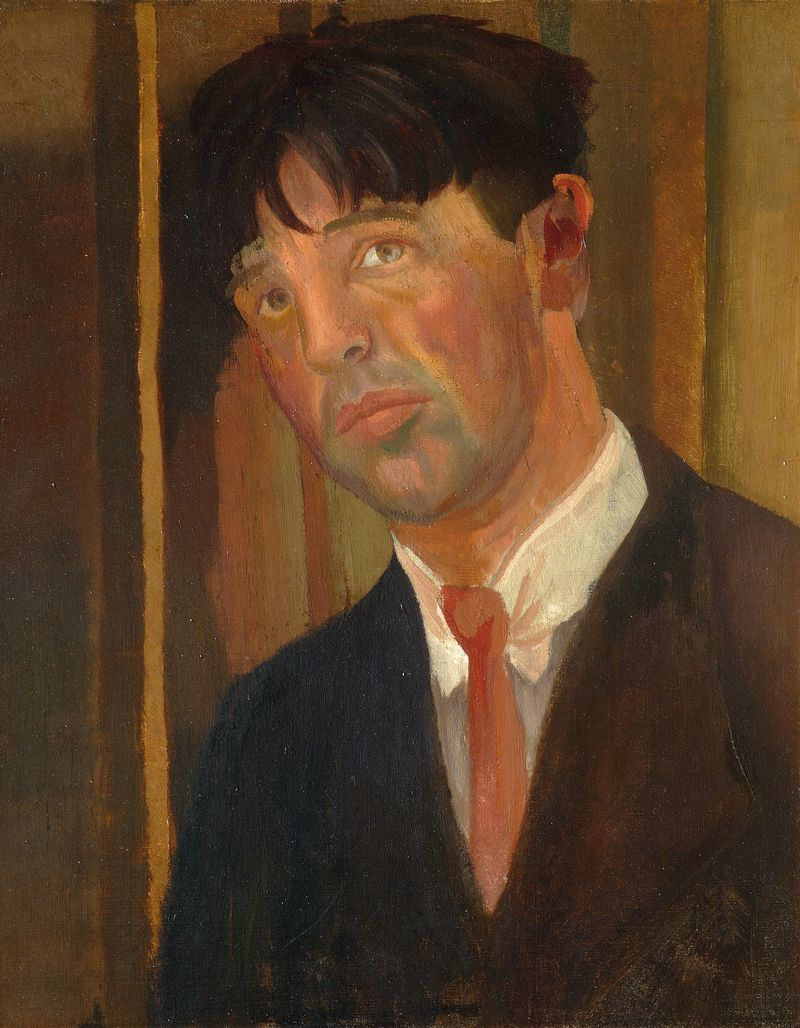
Self Portrait 1923
The partnership between the two museums will feature over 20 works from the Stanley Spencer Gallery presented alongside major loans from Tate, Aberdeen Art Gallery, Leeds Museums and Galleries, and other public lenders, as well as rarely seen works from private collections.
Although Spencer’s life and career are largely synonymous with his native village of Cookham in Berkshire, he also spent a great deal of time in Suffolk, most notably Wangford and Southwold on the coast. His association with the county spanned four decades, initially through the experience of his first wife, Hilda Carline (1889-1950).
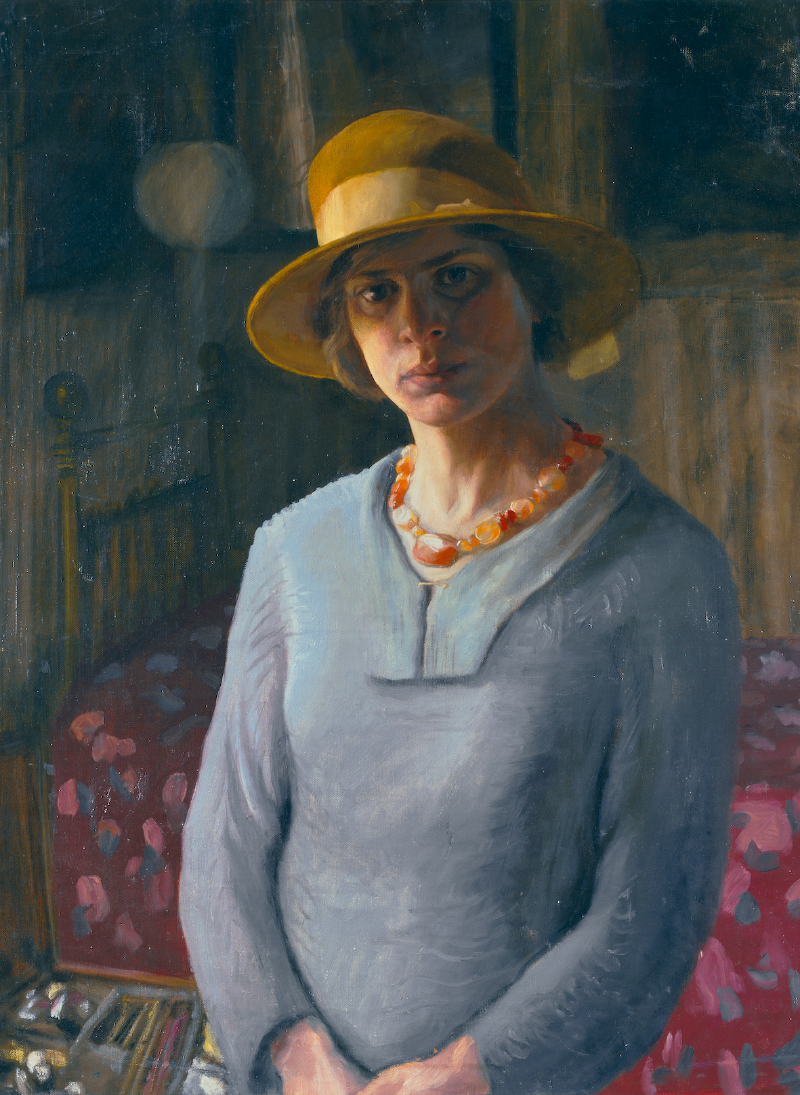
Hilda Carline – Self Portrait
A talented painter in her own right, Hilda had worked as a Land Girl in Wangford during the First World War. In 1924 Spencer, Hilda and other members of her family stayed there for a painting holiday. The opening section of the show reflects their visit, with several portraits made around this time, including Gathering on the Terrace (1924) by Richard Carline (1896-1980), depicting the various members of the group.
A year later, Stanley and Hilda returned to Wangford to be married, and they visited again in 1926. For a man whose art was deeply informed by memories of people and places, it was their time in Suffolk that laid down happy associations for him, and paintings such as Trees and Chicken Coops (1925-26) and The Red House, Wangford (1926) reveal his connection with the life and landscape of the area.
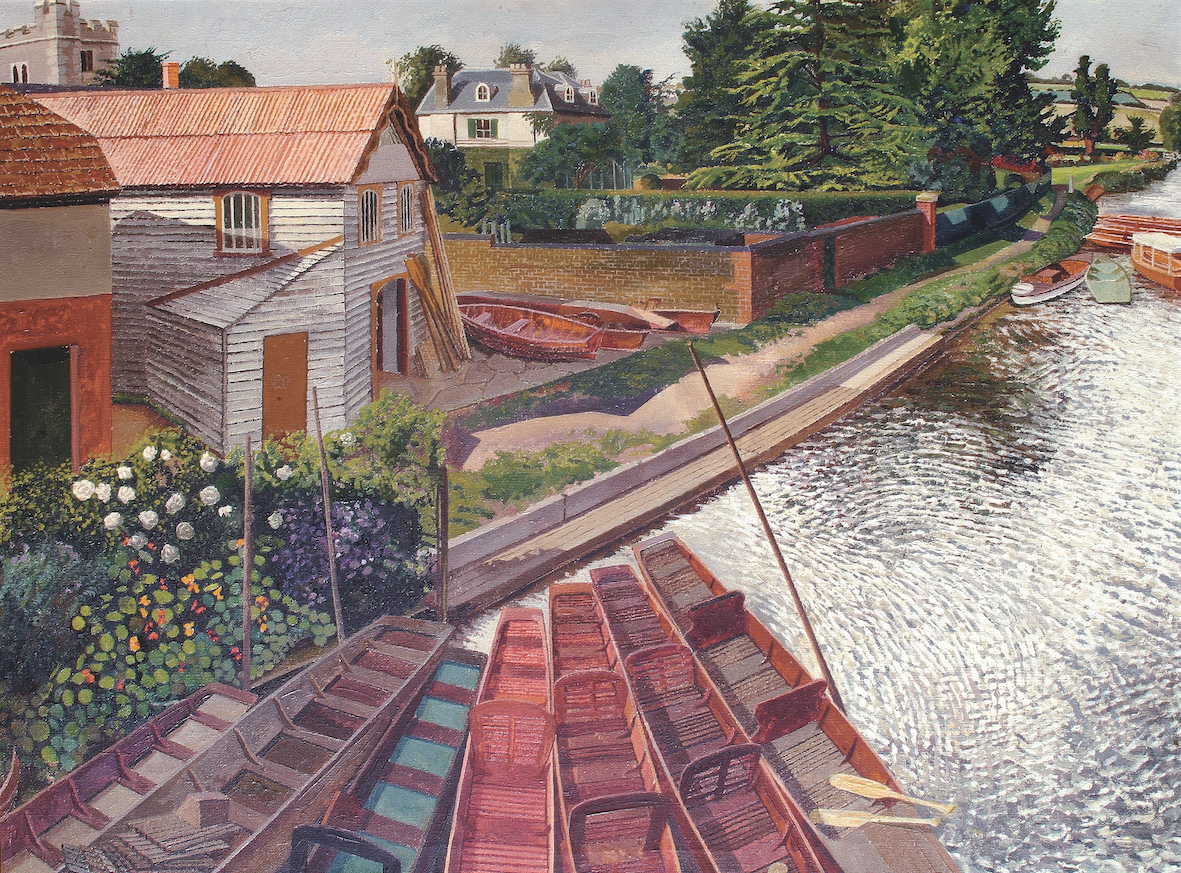
View from Cookham Bridge
In the early 1930s, things began to fall apart for the couple. Along with their two young daughters the couple moved back to Cookham, but Hilda was increasingly absent, visiting her ill brother. During this time, Stanley became enraptured with a younger artist, Patricia Preece (1894-1966), apparently oblivious to her romantic and artistic partnership with Dorothy Hepworth (1894-1978).
Infatuated, he began to spend increasing sums on jewellery, clothes and perfumes for Patricia and by 1935 had become seriously indebted. Hilda left him and in 1936 began divorce proceedings. After a decree absolute was granted in 1937, Spencer married Patricia. However, once the service was over, Patricia and Dorothy headed off to St Ives in Cornwall. Spencer followed a few days later, but very quickly realised that his new marriage was a sham and felt that he had betrayed Hilda.
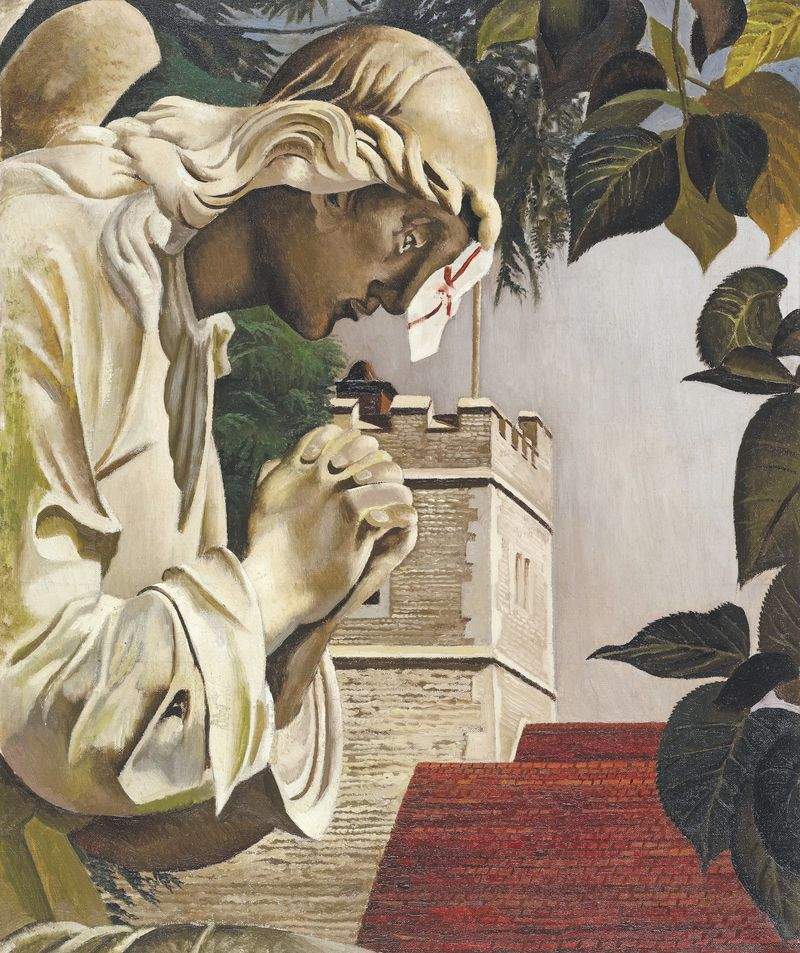
The Angel, Cookham Churchyard 1934
Seeking comfort and solace by returning to the source of his earlier happiness, Spencer once again travelled to the Suffolk coast, revisiting familiar landmarks and would write movingly of being able to reestablish a connection with the landscape after his domestic difficulties. This juncture of his life, with its complicated domestic environment, is reflected with a group of works of and by Hilda, Patricia and Dorothy. These include Spencer’s striking and intimate Nude portrait of Patricia Preece (1935).
Other paintings and drawings made by Spencer on and after his return to Suffolk in 1937 clearly demonstrate how Suffolk was a stimulus to creativity and a source of solace.
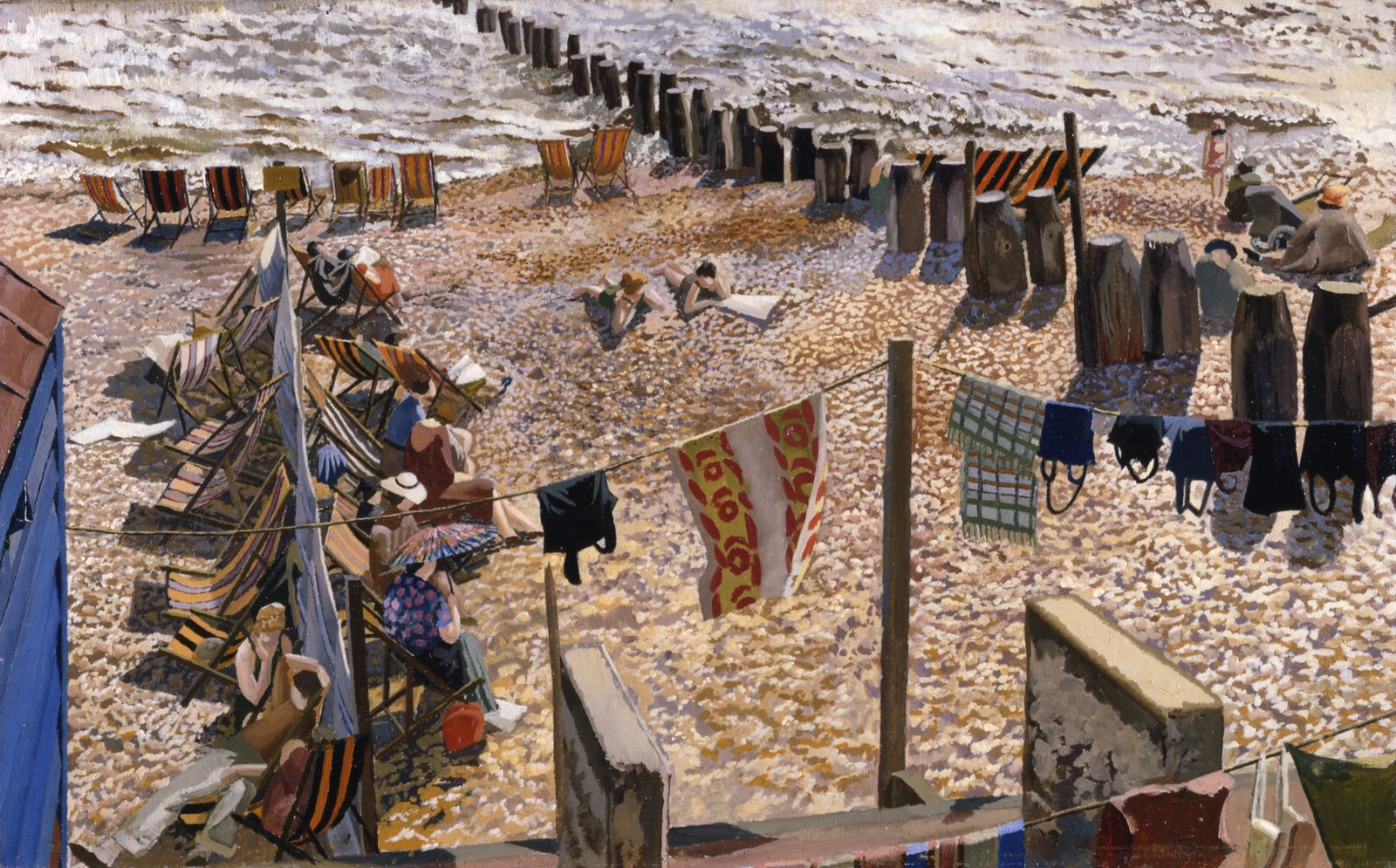
Southwold 1937
Catching a bus to Southwold each day from Wangford, Spencer produced one of his most popular paintings, Southwold (1937). The scene will be familiar to visitors today, featuring a glimpse of a blue beach hut in the left-hand corner, while the foreground is dominated by a group of striped deckchairs, relaxing figures, swimwear and towels drying on a line, and bright sunlight shining on the surface of the beach and waves. It is a scene that initially looks full of joy, but closer inspection suggests that the viewer – or indeed Spencer – is distant, removed, and reflecting on what might have been.
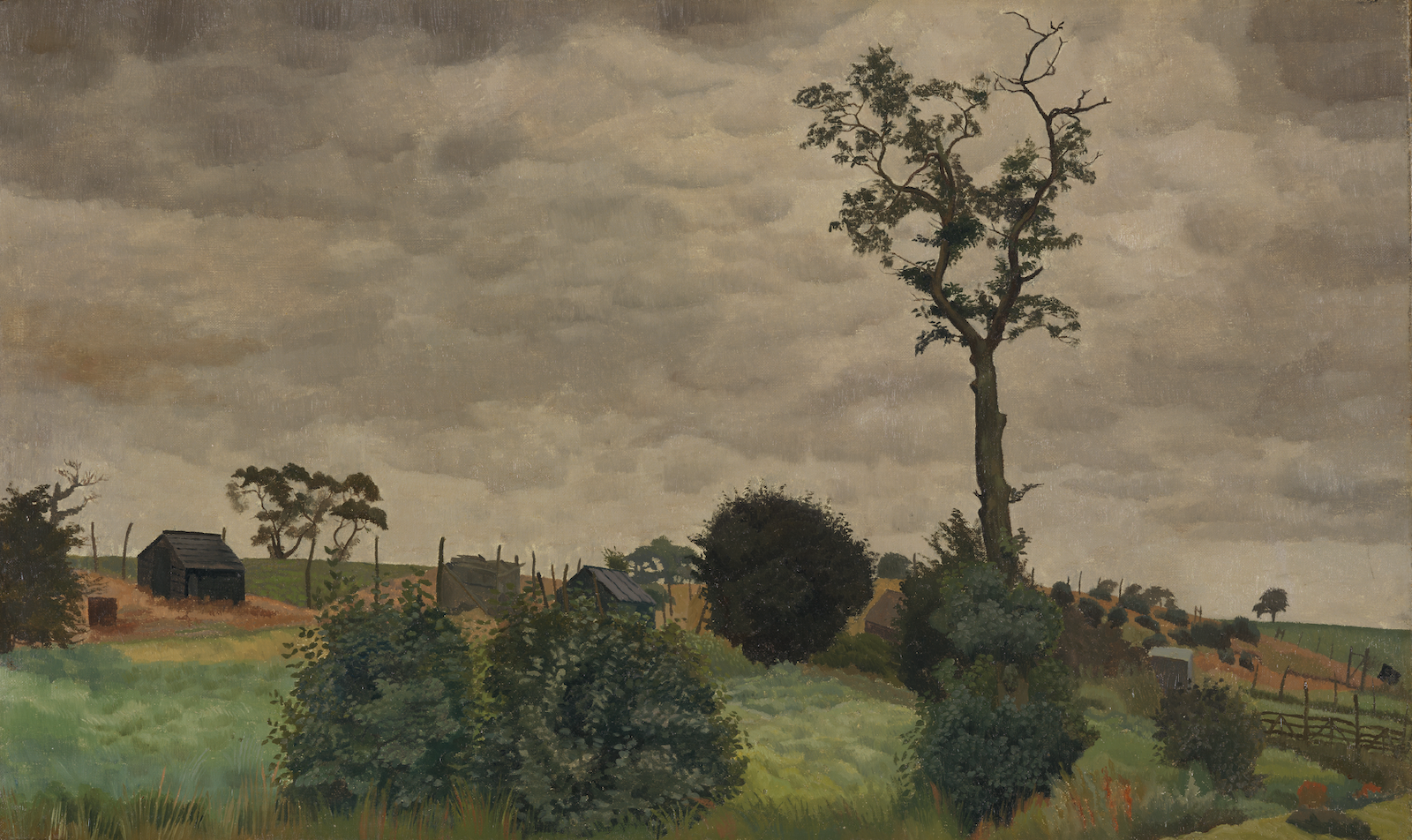
Chicken Coops Wangford
The exhibition’s third and final section explores how Spencer’s life and loves were at the heart of his visionary imaginative paintings. The immense upheaval in his personal life served as grist to his creative mill. Many of the paintings made at this time, and subsequently, were intended for a vast, unrealised scheme called ‘The Church House,’ or ‘The Church of Me’, with side chapels dedicated to the principal women in his life. Important works from the collection of the Stanley Spencer Gallery, including Beatitudes of Love: Contemplation (1938), At the Chest of Drawers (1936) and a group of ‘scrapbook’ drawings, illustrate Spencer’s vast imaginative project, and show how he fused biblical stories, childhood memories, romantic relationships and his beliefs about heavenly and earthly love, in a series of visionary paintings.
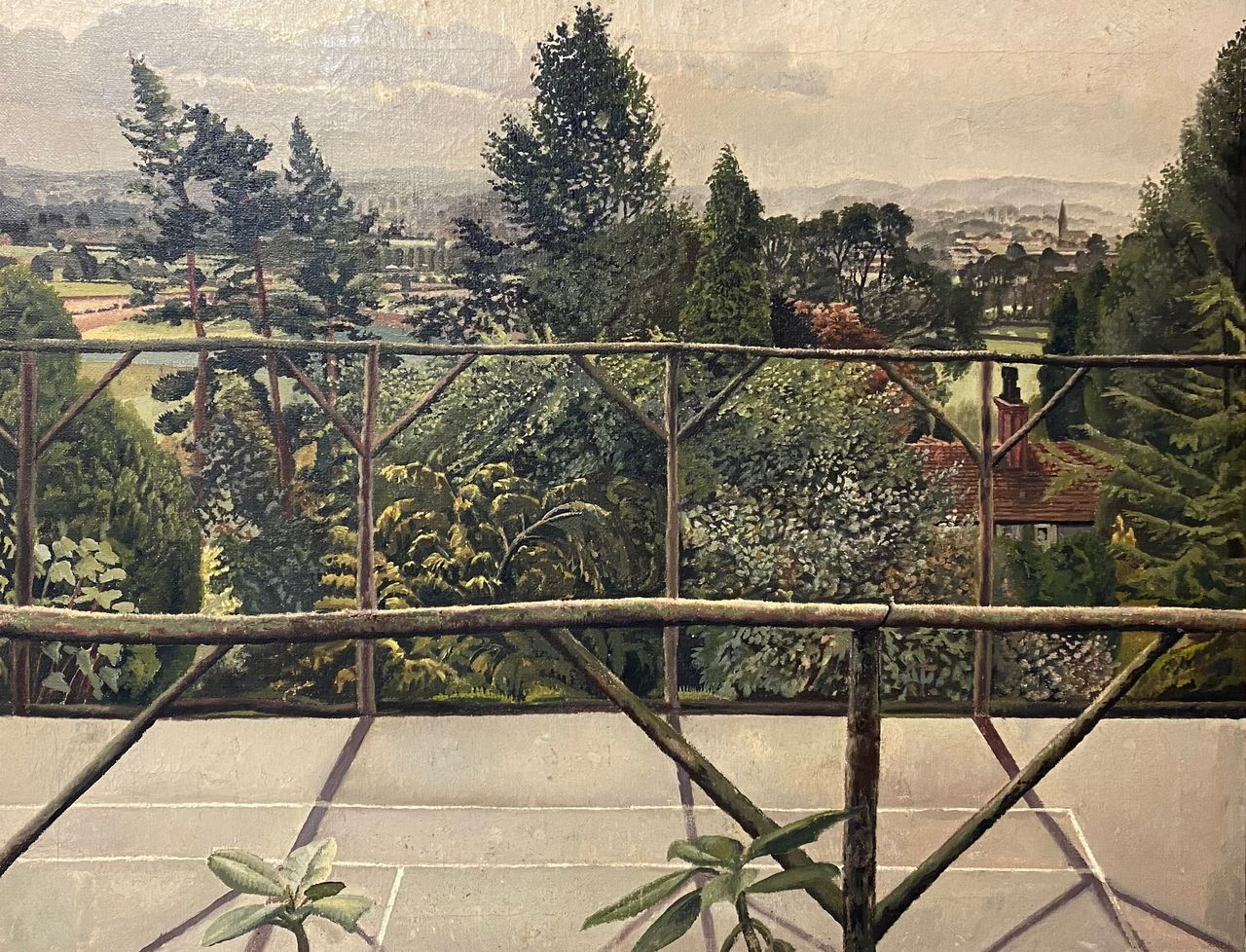
View from the tennis courts
Sarah Tubb and the Heavenly Visitors (1933) is an example of how familiar places and spaces could become scenes of the divine. The painting relates to a story told to Spencer by his father, in which Old ‘Granny’ Tubb was so startled by the appearance of Halley’s Comet that she fell to her knees in Cookham High Street and began to pray. Perhaps as a visual call for the viewer to open their own eyes to the hidden spiritual world all around us, Spencer shows the elderly woman comforted by angels or ‘heavenly visitors’.
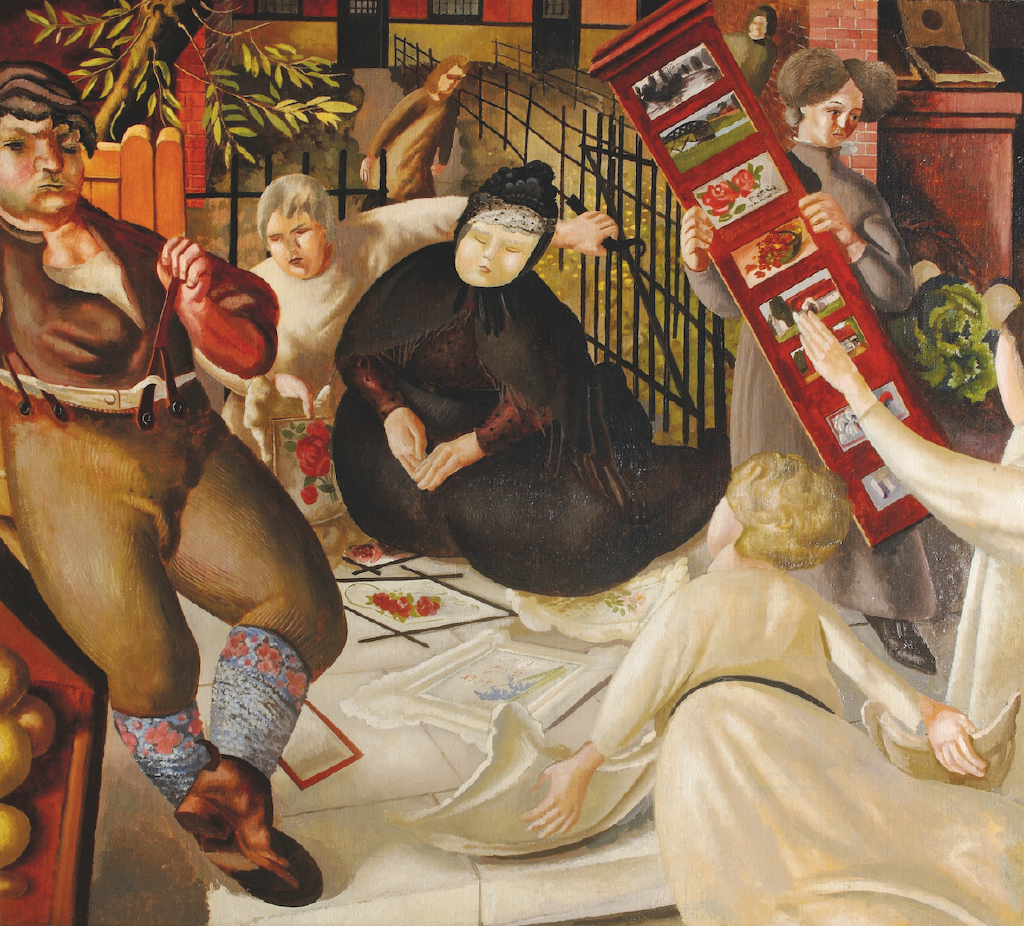
Sarah Tubb and the Heavenly Visitors (1933)
Love & Landscape: Stanley Spencer in Suffolk has been generously supported by the artist’s family with the loan of personal items that have never been previously displayed, including Hilda Carline’s wedding suit.
Calvin Winner, Executive Director, Gainsborough’s House, says: “Stanley Spencer is a one of the greatest painters to emerge in Britain in the 20th century. His visionary and forceful imagination created some of the most memorable imagery of his times. We are delighted to partner with the Stanley Spencer Gallery, Cookham in highlighting Spencer’s engagement with the Suffolk landscape as well as well as exploring for the first time the crucial role Suffolk played in his complex personal story.”
Dr Scot McKendrick, FSA, Chair of Trustees of the Stanley Spencer Gallery says: “We are delighted to be partnering with Gainsborough’s House to bring Stanley Spencer to new audiences. Suffolk and its landscape provided the backdrop to two pivotal moments in Spencer’s love for Hilda Carline, at the beginning and end of their marriage. Gainsborough’s House is therefore the ideal venue to share the Stanley Spencer Gallery’s collection more widely and explore this significant aspect of his life and work.”
The exhibition will be accompanied by an illustrated catalogue co-written by the curators with contributions from guest writers. It will also be supported by a programme of events and activities.
Gainsborough’s House is the National Centre for Thomas Gainsborough (1727-88), an icon of British art. It combines Gainsborough’s birthplace, a Grade I-listed house and garden, with award-winning exhibition galleries and visitor facilities. It looks after the largest single concentration of Gainsborough’s works in the world and presents his life and art alongside exhibitions of historic, modern and contemporary art. As an artist’s home our purpose is to support the role artists play in society and the contribution they make to our cultural life and we aim to bring exciting, diverse and national as well as international art to audiences in Suffolk, East Anglia and beyond. In 2022 Gainsborough’s House re-opened as the largest art gallery in Suffolk after a £10m transformational refurbishment, supported by The National Lottery Heritage Fund. The redevelopment, designed by the acclaimed architectural firm ZMMA, has recently been awarded the prestigious RIBA East Building of the Year 2024. Open daily, 10am–5pm. http://www.gainsborough.org | X @GH_Sudbury | Instagram @gainsboroughshouse | Tik Tok @gainsboroughshouse | Facebook ‘gainsboroughshouse’
https://gainsborough.org/event/stanley-spencer/
The Stanley Spencer Gallery is dedicated to the life, experience and imaginative world of one of Britain’s most talented artists. Its regular programme of summer and winter exhibitions promotes inspiration and enjoyment through expertly curated encounters with high quality art. Located in the heart of Cookham village, the Gallery is uniquely connected to Stanley Spencer’s spiritual home and lifelong source of artistic inspiration. The Gallery is led and run by a community of volunteers who are passionate about the art they care for, the artist who created it, and the environment that inspired him throughout his life. Through their freely-given talents, entrepreneurship, professionalism and collaborations, the Gallery remains creative, independent and self-funded, sixty years after its foundation. The Gallery is a Fully Accredited Museum under the scheme administered by Arts Council England. Housed in the former Wesleyan chapel where Spencer worshipped as a child, the Stanley Spencer Gallery presents the largest display of works by the artist, in the heart of the Village in Heaven that inspired many of his greatest paintings. Summer: Open daily 10.30-4.30. Winter (from 3 November): Thursday-Sunday only, 11-4.30. www.stanleyspencer.org.uk X @spencercookham | Instagram @stanleyspencergallery | YouTube @StanleySpencerGallery
 The Travel Locker