

2025 is the 250th anniversary of her birth – 16th December 1775 -18th July 1817.
To mark the 250th anniversary of the birth of Jane Austen, my wife & I decided to make a pilgrimage to Hampshire, taking in some of the most important locations associated with one of the most famous writers in English Literature, and considered by many, as second only to Shakespeare. Her six great novels have been adapted for film, theatre & television and translated into dozens of languages. For someone who was virtually unknown, on her death in 1817, because her novels had been published anonymously and actually went out of print, during the 1820`s, during the nineteenth century there was an Austen revival, which has continued to this day.
We were looking forward to exploring the world of Jane Austen.

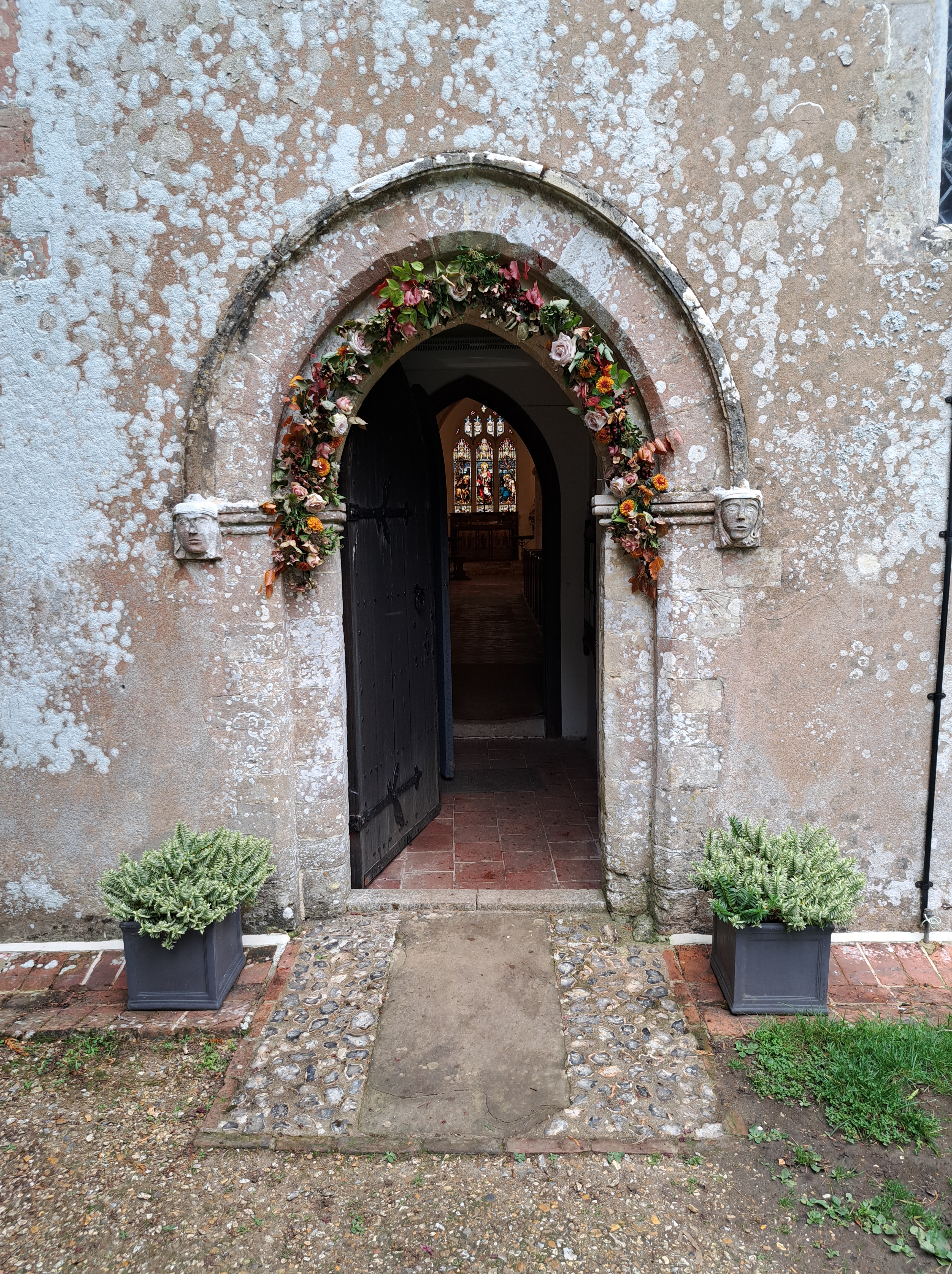
Steventon: We started our visit to Austen`s Hampshire in the north of the county, at St Nicholas Church, Steventon. The church is about a mile outside of the village, with a grand manor house next door and green rolling hills.

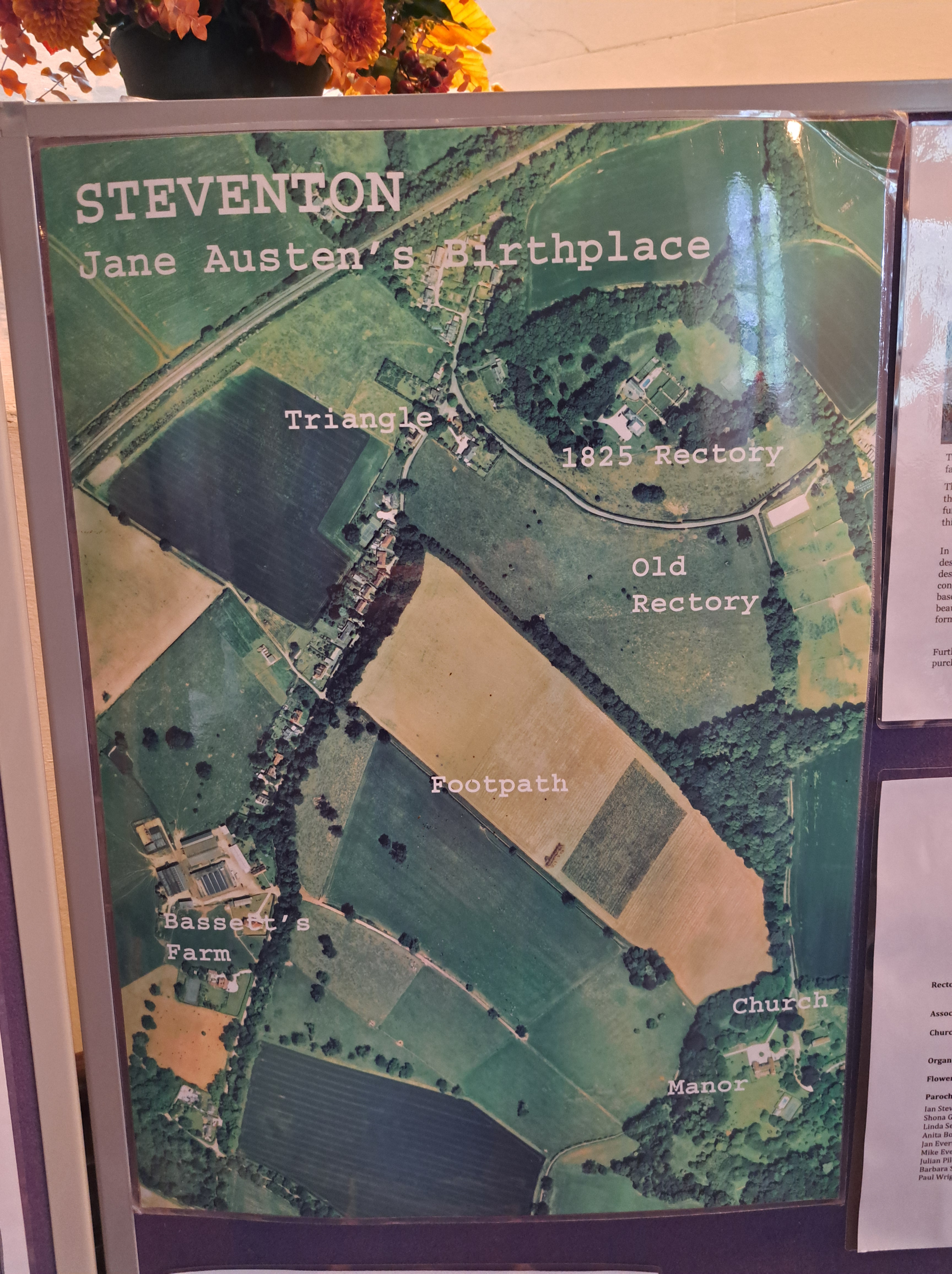
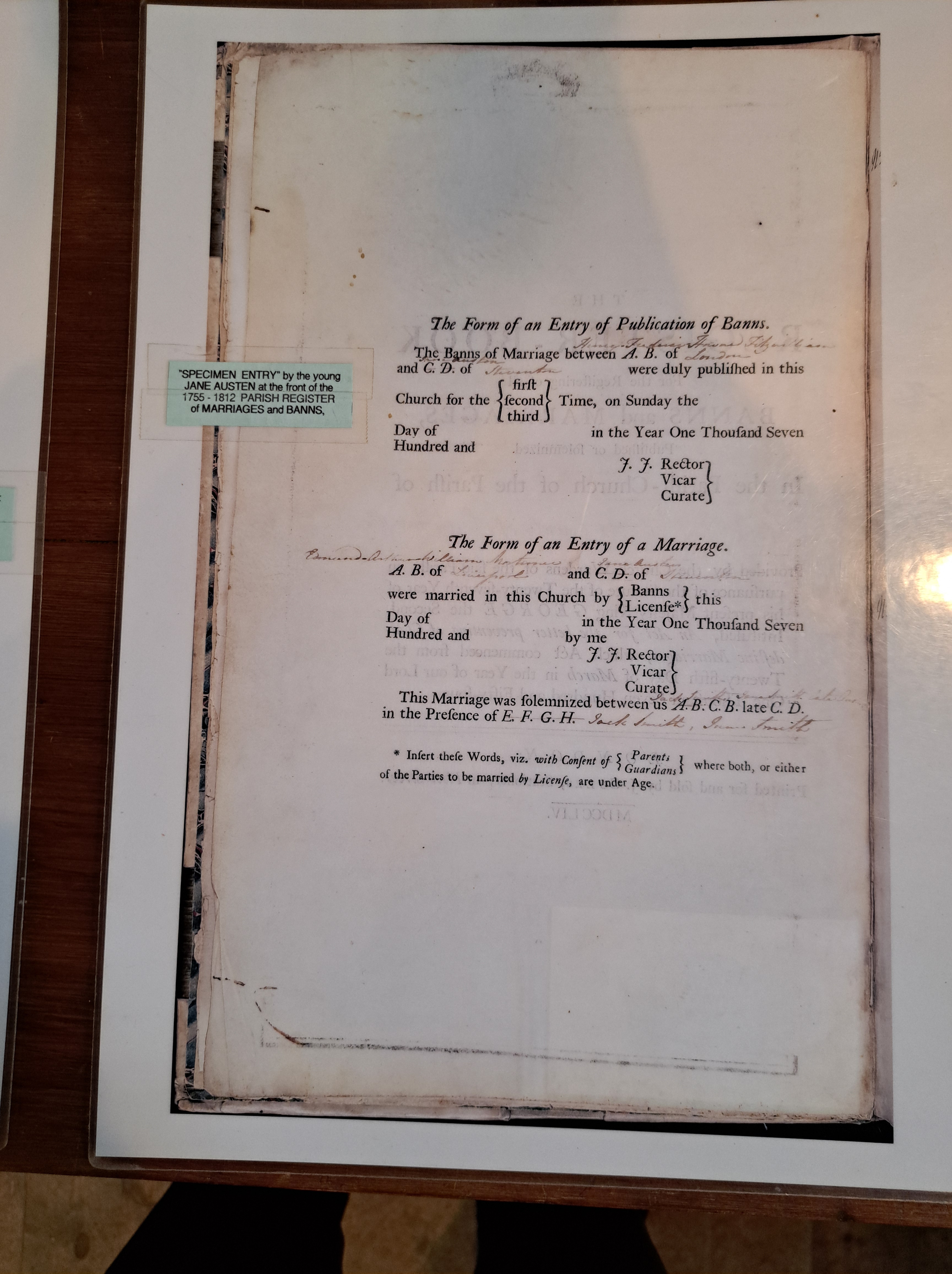
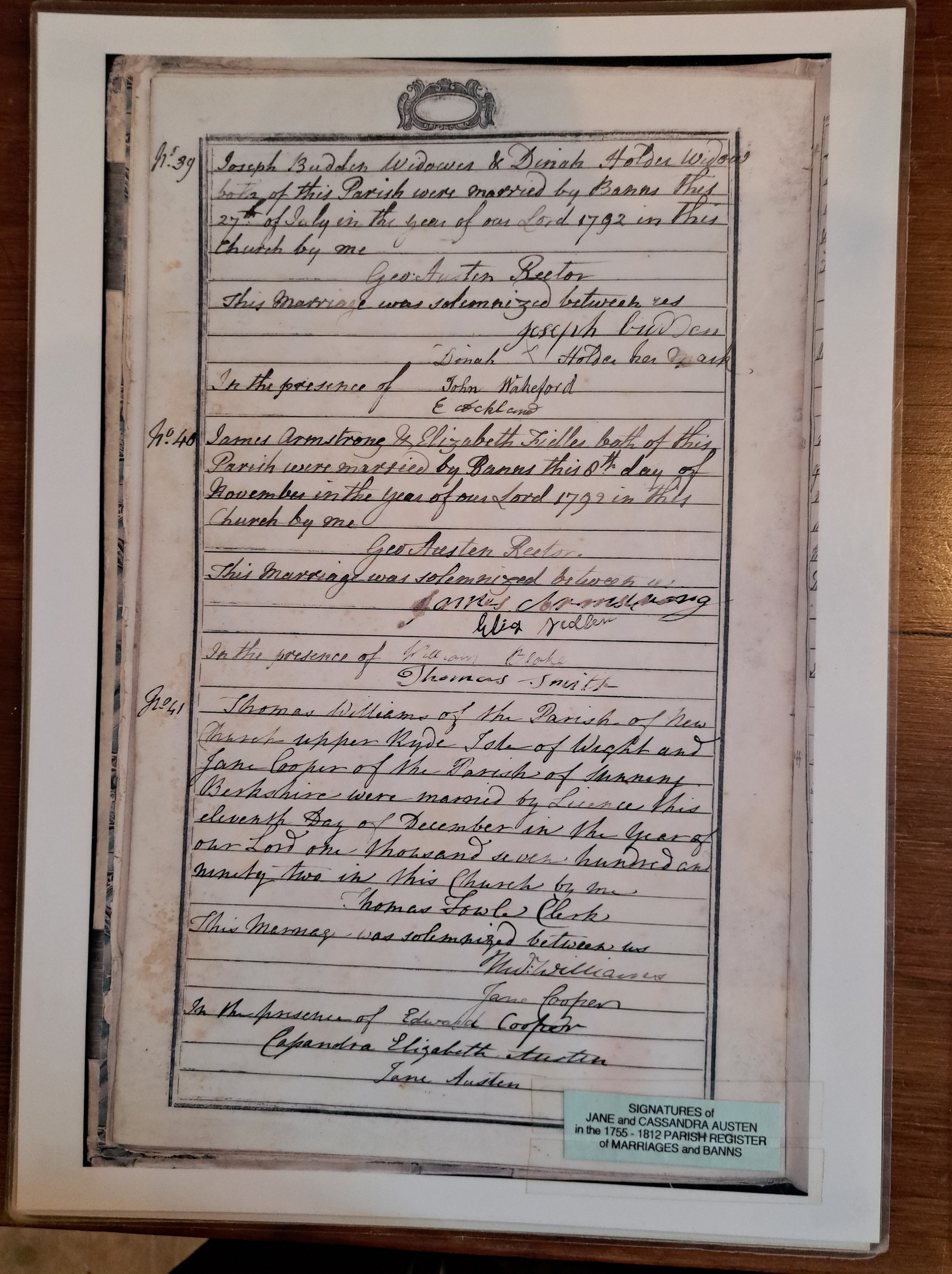
Jane Austen was born on 16th December 1775 at Steventon Old Rectory in North Hampshire, the seventh of eight children, where her parents had moved a year previously with three of her older brothers. Henry was born before Jane, then three further siblings arrived, which meant that the Austen brood, numbered eight in all.

As an infant, Jane was sent away to be cared for by a farming neighbour, Elizabeth Littlewood, which was not unusual for the times. Her brother George, who is thought to had epilepsy, also lived away from the family home. The third child, Edward, was adopted by his father’s third cousin, Mr Thomas Knight, eventually inheriting the Chawton and Godmersham estates, which led to him letting a cottage to Jane, Cassandra and his mother, rent free, in 1809.

Rector George Austen was known as the handsome proctor, when he was at Balliol college, was a reflective man, who took great pride in his children`s education. His wife, Cassandra (nee Leigh) was a sociable witty woman, whom George had met while studying at Balliol College, Oxford.
Most unusually, for a family & Rector at the time, he owned more than 500 books and was very forward thinking in encouraging his daughters to read widely. Jane`s only sister, Cassandra, left for school in 1782 and Jane aged just seven went with her. Her mother wrote at the time of their unique bond, that if Cassandra was to have her head cut off, Jane would have to do the same, such was their closeness. The two sisters attended schools in Oxford, Southampton and Reading, sporadically! It was her sister, Cassandra Austen, who produced the only known first hand likeness of Jane, a small pencil and watercolour sketch, circa 1810. It is now kept in the National Portrait Gallery, London.
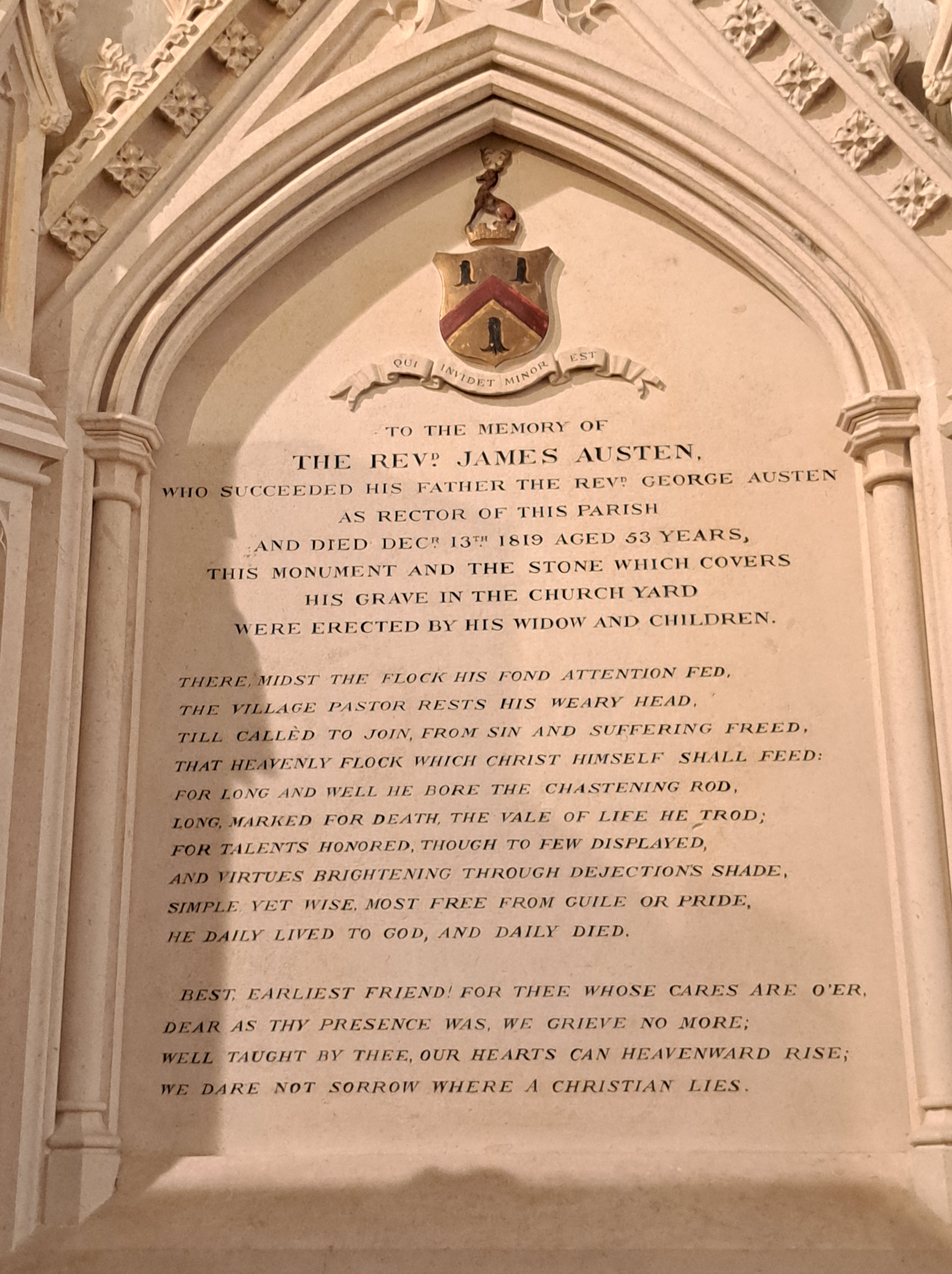
Jane Austen, a household name for more than two hundred years, lived in the Old Rectory, for the first 25 years of her life, creating the drafts of three of her published books. Today a towering Lime tree, an offspring of one planted by Austen`s brother James, and a clump of nettles, which marks the spot where their well was reputed to have been, is all that remains of the spot where the rectory once stood.
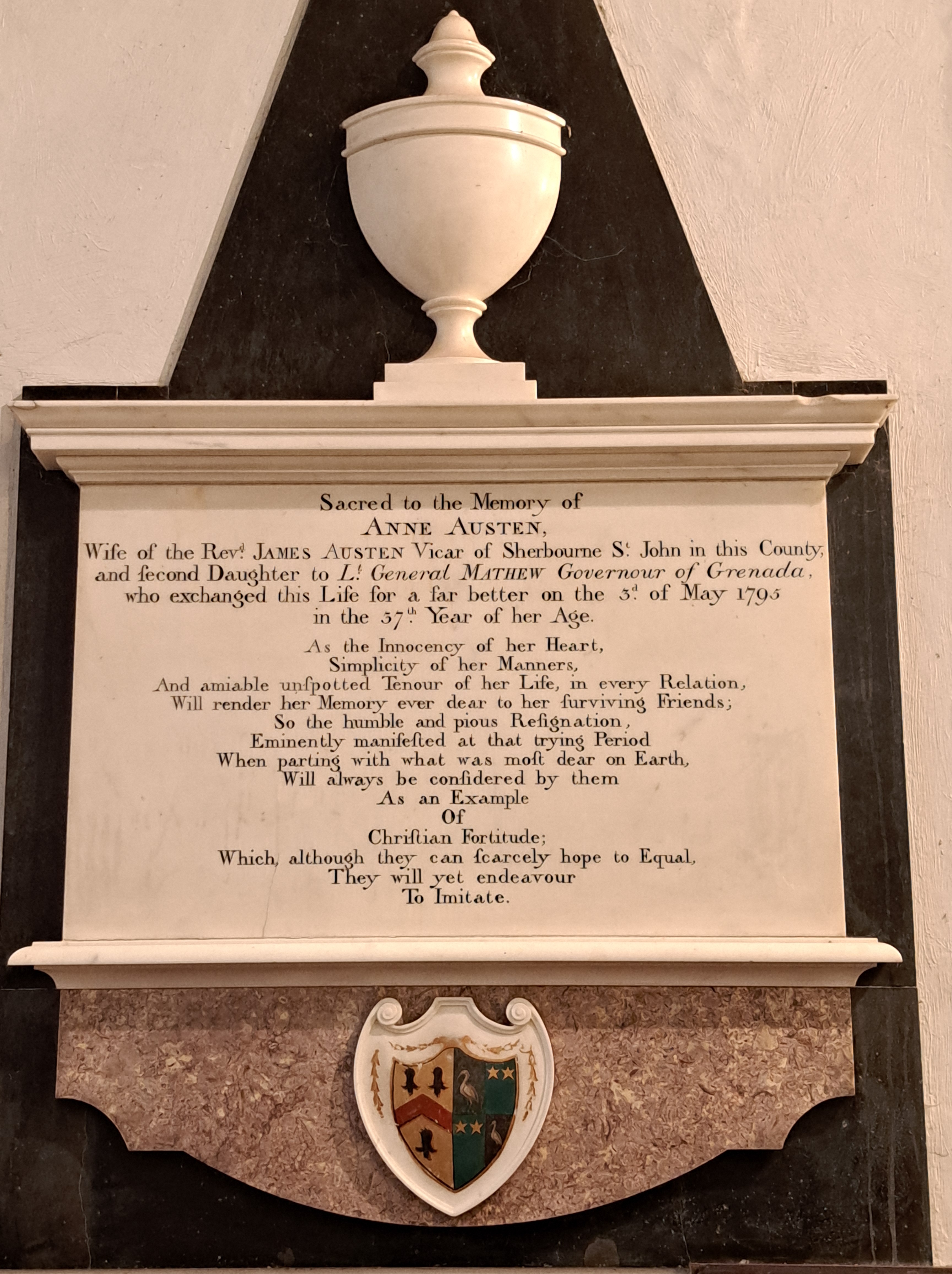
St Nicholas Church, which Jane attended regularly with the rest of her family to listen to her father preach and worshipped, is where visitors will find a bronze plaque dedicated to her memory and the grave of her elder brother, along with those of other relatives, in the graveyard. Jane was baptised by her father at home, in the rectory.

Our guide pointed out a 100-year-old Yew tree, outside the front of the church into whose hollow trunk, George would leave the large iron church key. There was also a replica of the key, inside the church, it was a big key!


Bath: On her father’s retirement, the family decided to move from Steventon to Bath in 1801. Jane spent six years living and writing in Bath. Two of her novels are set in the city, ‘Northanger Abbey’ and ‘Persuasion’. There are four houses in Bath that claim a link with Jane Austen during her time in the city. In the summer of 1799, it is reputed that she stayed with her mother at 13 Queens Square for a month. A more suitable house was later found at 4 Sydney Place, and the family stayed there until the expiry of the lease three years later; a bronze tablet on the wall of the house identifies it as Miss Austen’s principal domicile in the city. The Sydney Gardens provided a favourite walk for the young writer who set part of her novel Northanger Abbey across the road in Great Pulteney Street. Austen had also lived in Sydney Place, just off Great Pulteney Street, which was used in the filming of Persuasion (1994).
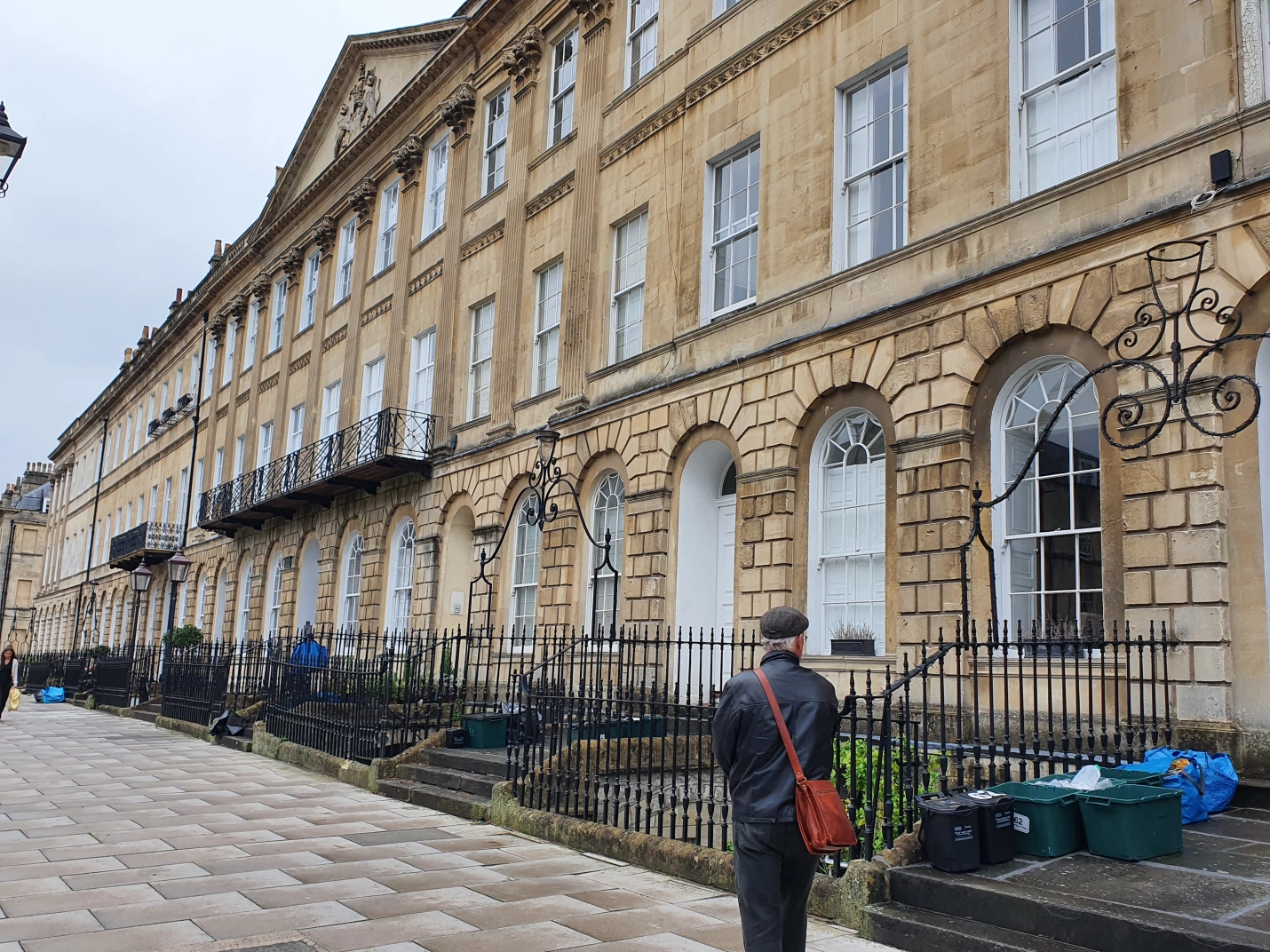
A short lease was then taken on 27 Green Park Buildings, where Jane’s father died in January 1805 and who was buried in Bath, and the family became poor as a result, and they soon become dependent on her brothers for support. After her father’s death, Mrs Austen and her daughters moved to 25 Gay Street.
It is said that Jane never liked Bath. Sometime after leaving the city, she wrote to her sister Cassandra: ‘It will be two years tomorrow since we left Bath for Clifton, with what happy feelings of escape’. Yet, in spite of her obvious dislike of the city, the central parts of two of her novels, Northanger Abbey and Persuasion are set in Bath, and the life she herself experienced in the city of Bath, is perfectly reflected in the pages of both of them.
Southampton: In the summer of 1806, Jane, her mother, Cassandra and friend Martha Lloyd leave Bath permanently moving first to Clifton, briefly and then on to Southampton, to live with her brother Frank and his wife. In Southampton the two girls and their cousin, Jane Cooper, caught a deadly fever brought to the city by troops returning from abroad. Their cousins mother died as a result, and Jane also contracted the typhus fever and became very ill, but luckily, she survived. The girls brief schooling ended because of family financial constraints and Jane returned to the rectory in 1787 to begin writing a collection of poems, plays & short stories, which she dedicated to friends and family.

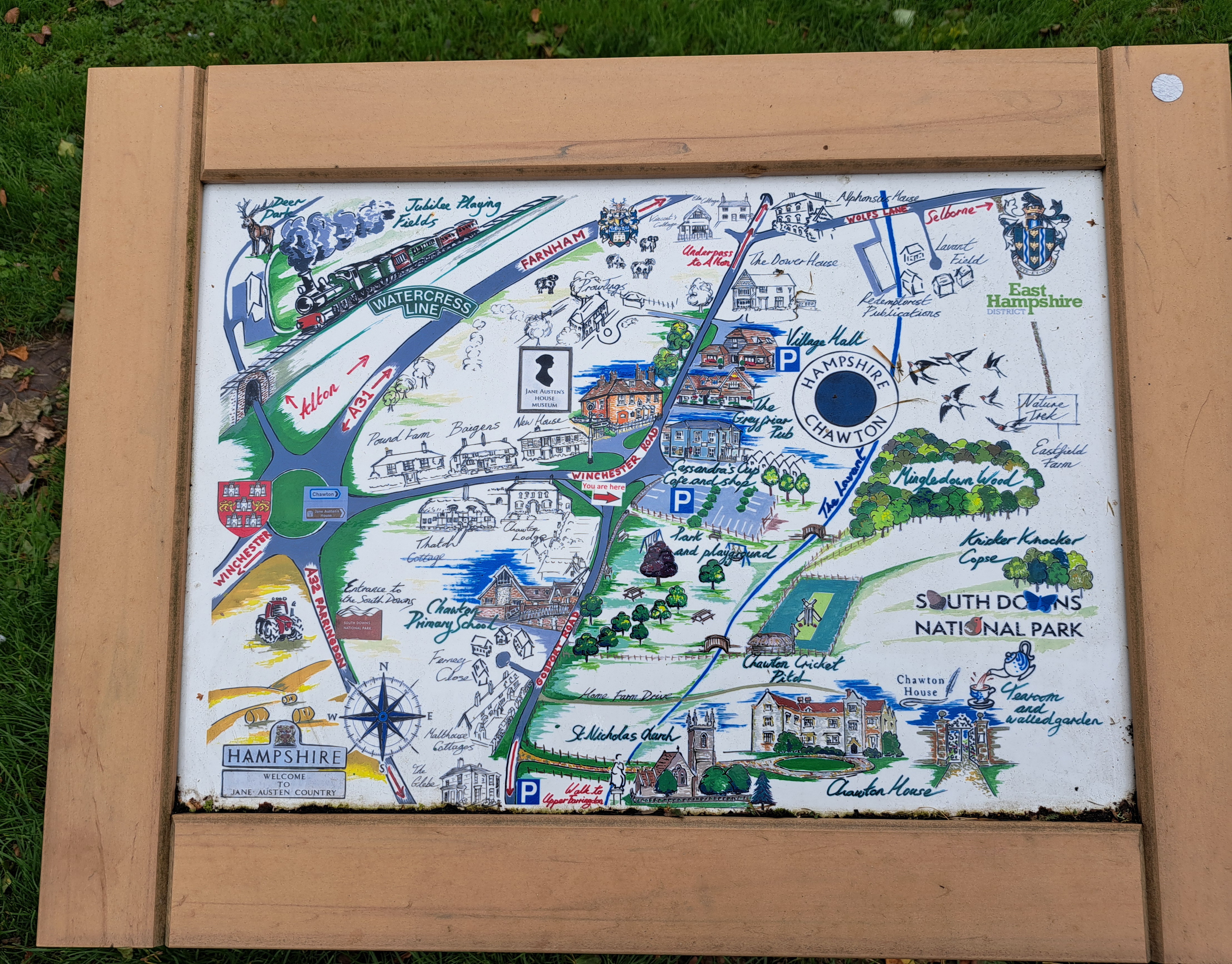
Jane Austen’s House: On the 7th July 1809, the family eventually move back to Hampshire to live at Chawton Cottage, after the cottage was offered to them rent free by her brother Edward, who had inherited estates in Chawton and Godmersham in Kent. The cottage is perhaps the most treasured Austen site in the world, because this cottage was Jane Austen`s home for the last eight years of her life, with Cassandra, her mother and their friend, Martha Lloyd.
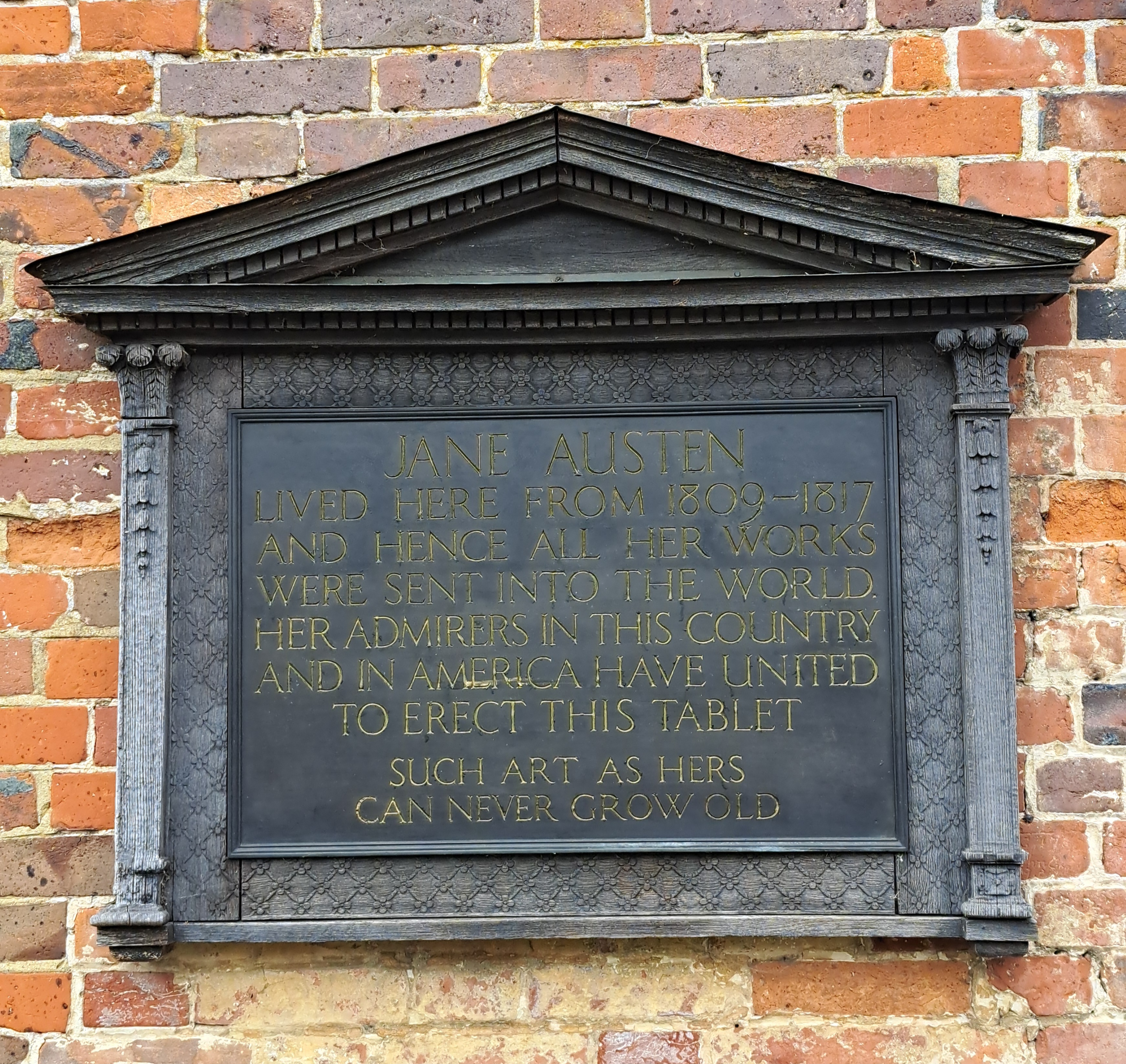
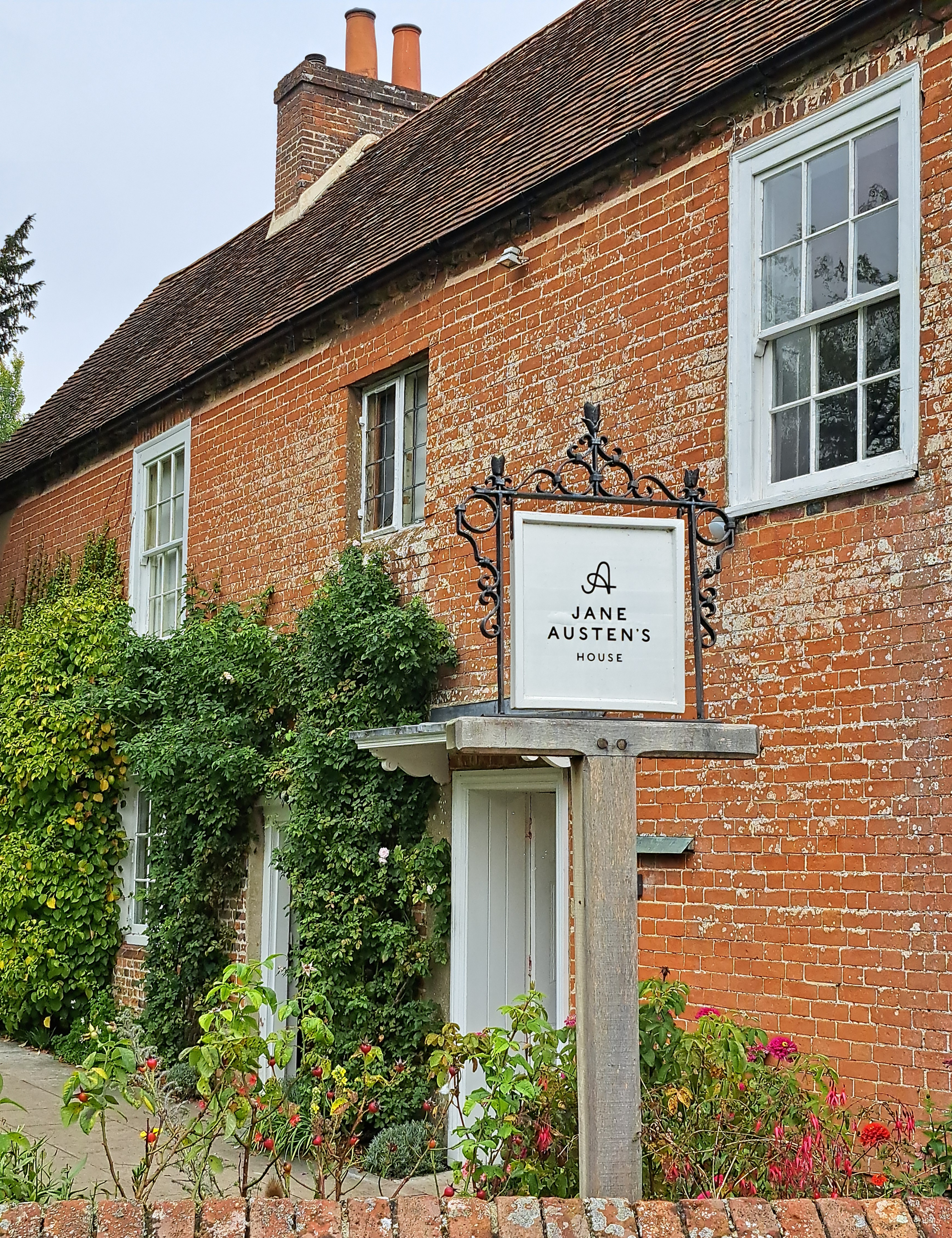
The cottage is on the corner of a bend, in the centre of the village, with a narrow lane off to the right leading to Chawton House, with a tea shop and pub on the opposite side of the road and car parking.


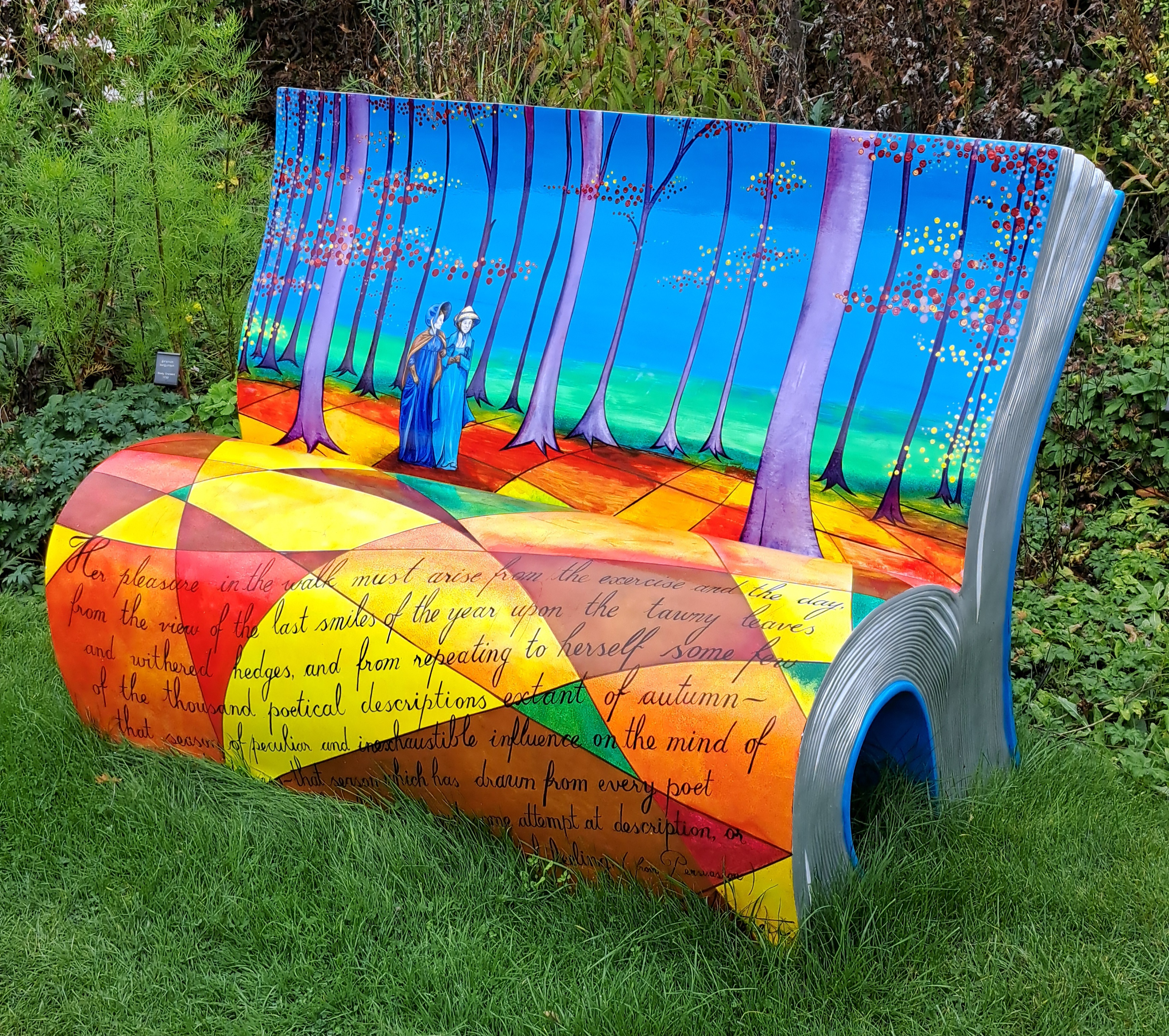
Back in rural Hampshire, Jane was happy once again and set about writing. Pride & Prejudice 1813, Mansfield Park 1814, Emma 1815, all three novels were completed in their entirety. To be able to stand beside the small occasional table, on which Jane loved to write all those years ago, is simply breathtaking.

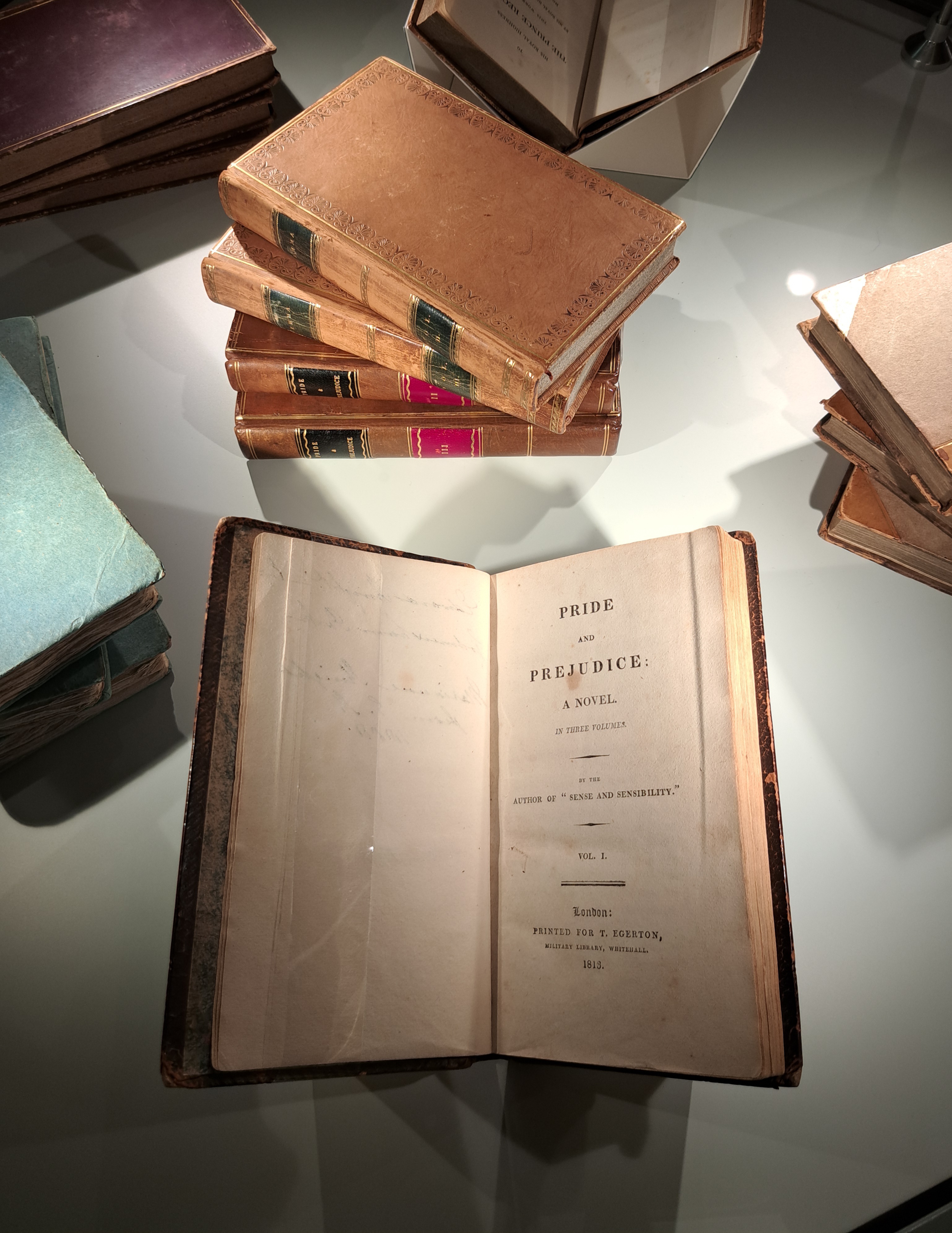
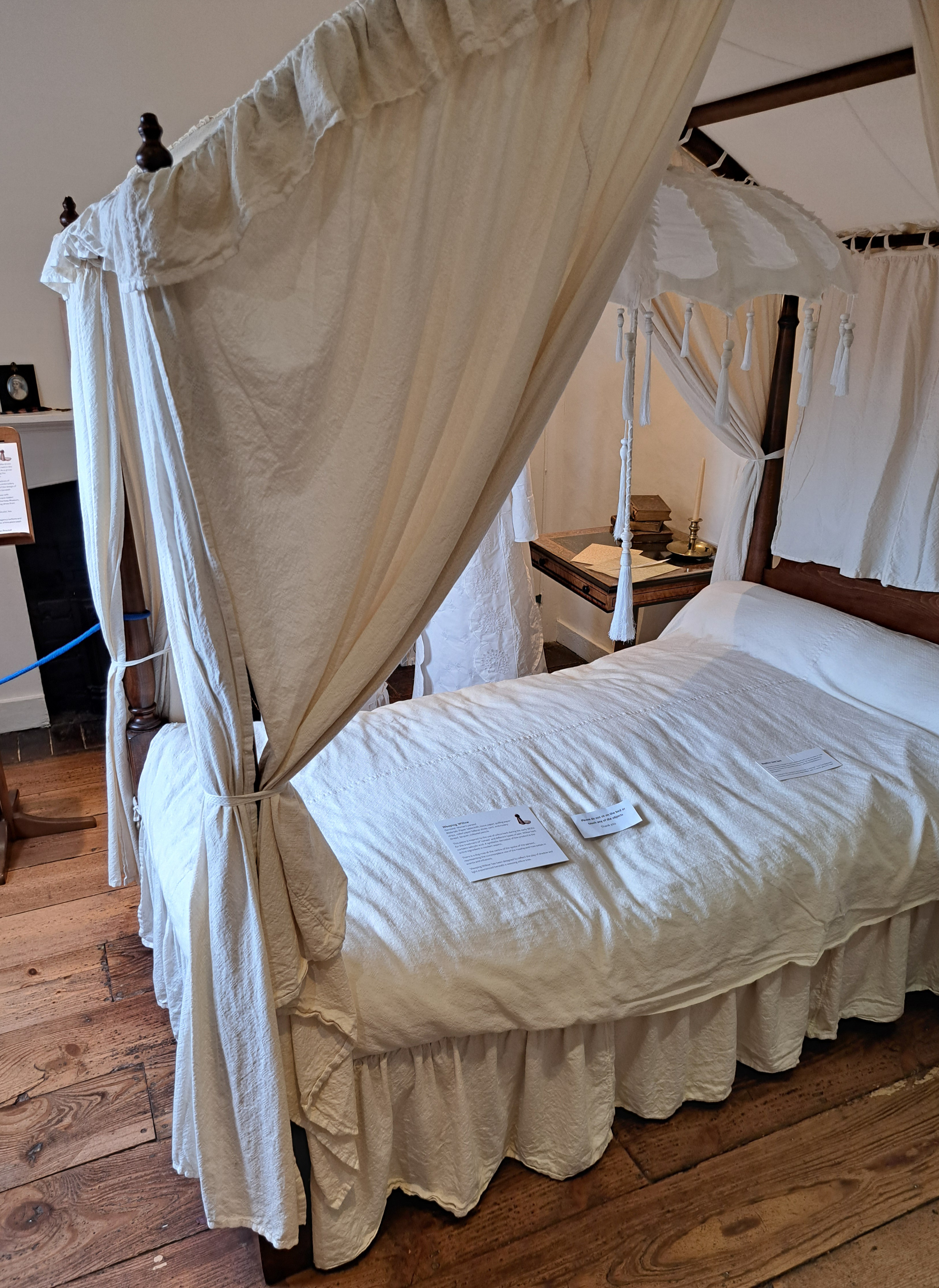
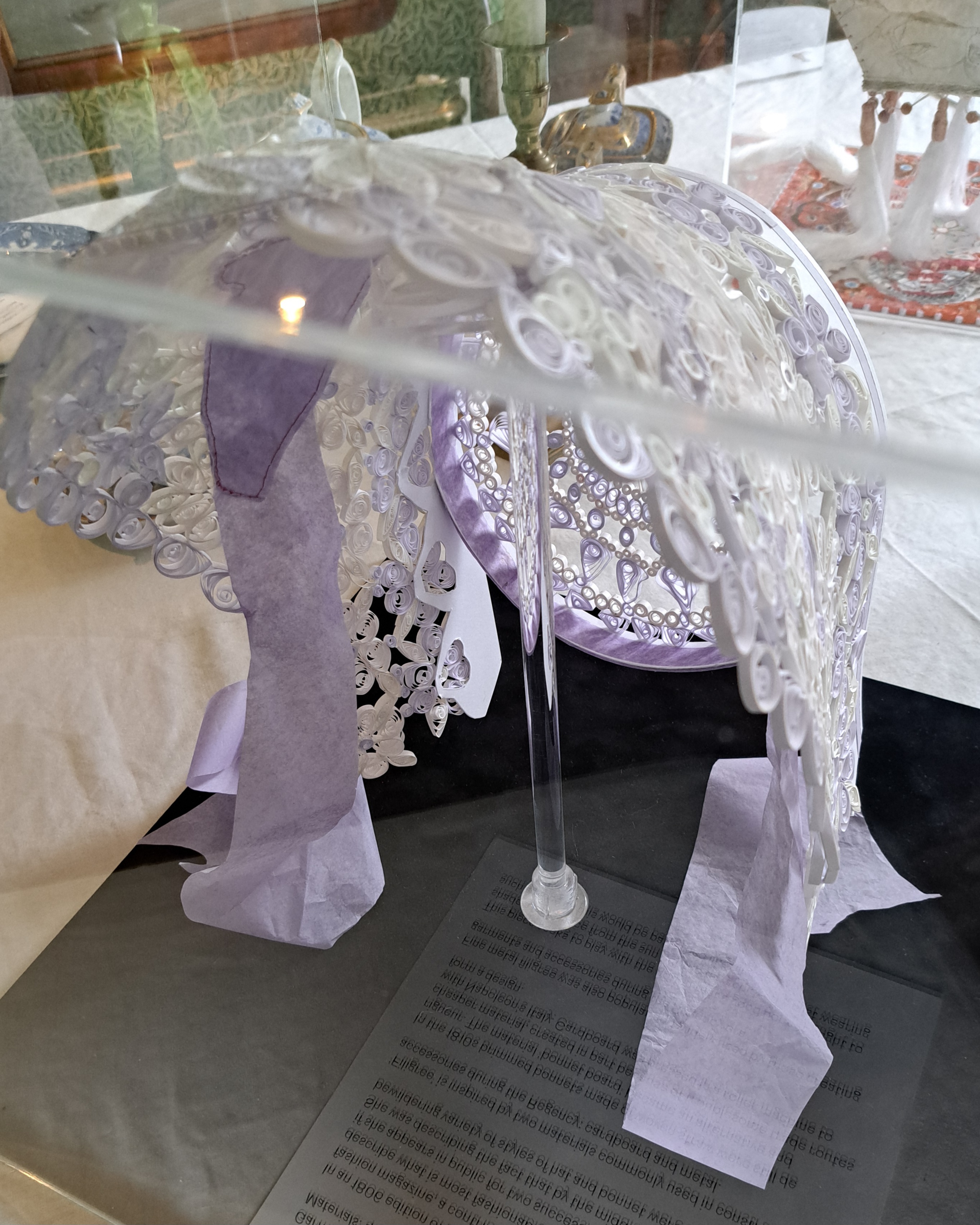
To see first editions of those cherished novels, the handkerchief she embroidered for her sister, original manuscripts and wallpaper, found to have been hanging, when she lived in the house, almost leaves me speechless. Jane and Cassandra shared a bedroom, despite there being enough bedrooms for them both. Jane would rise early, practice the piano, make breakfast and go for a walk to Chawton House or St Nicholas Church.
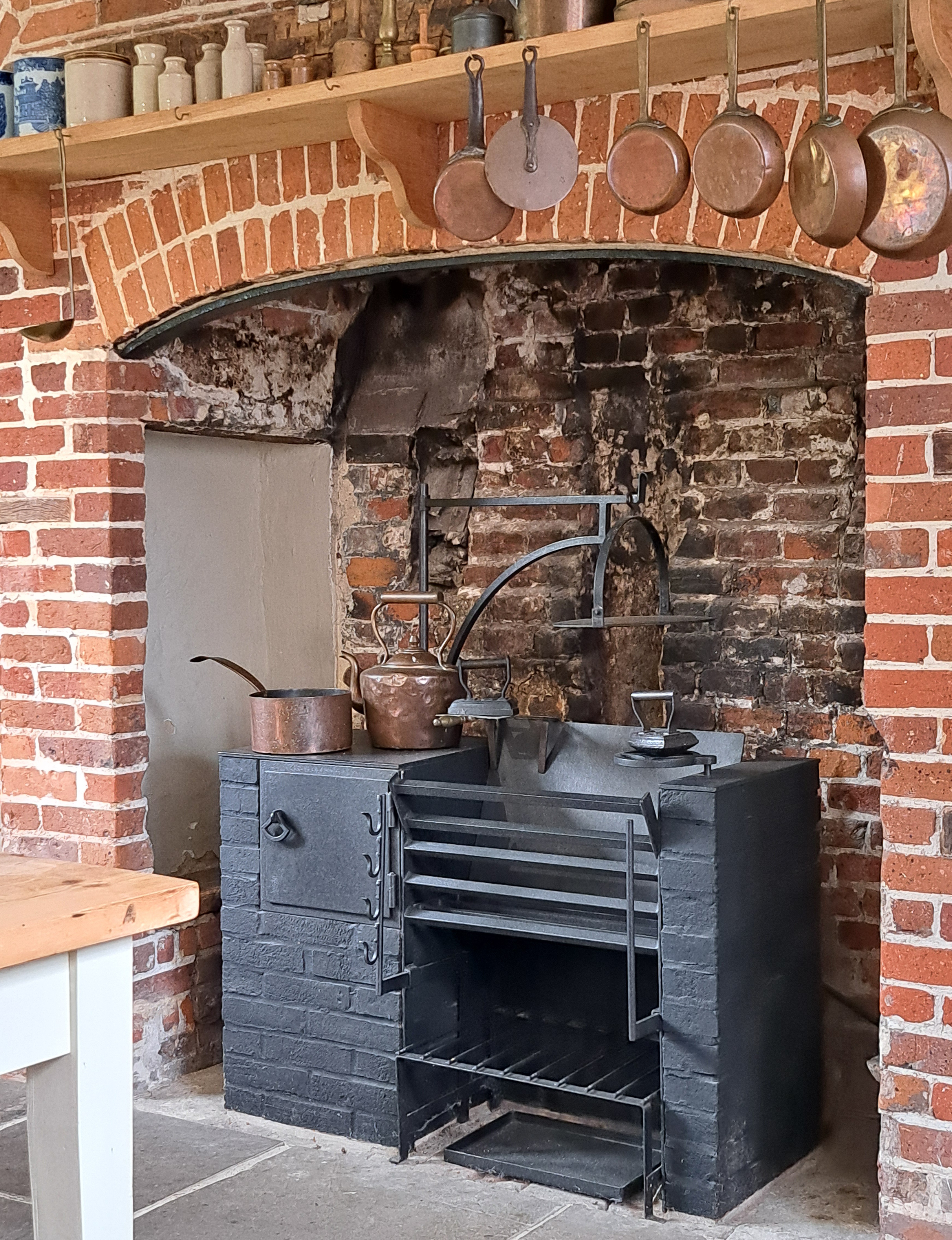
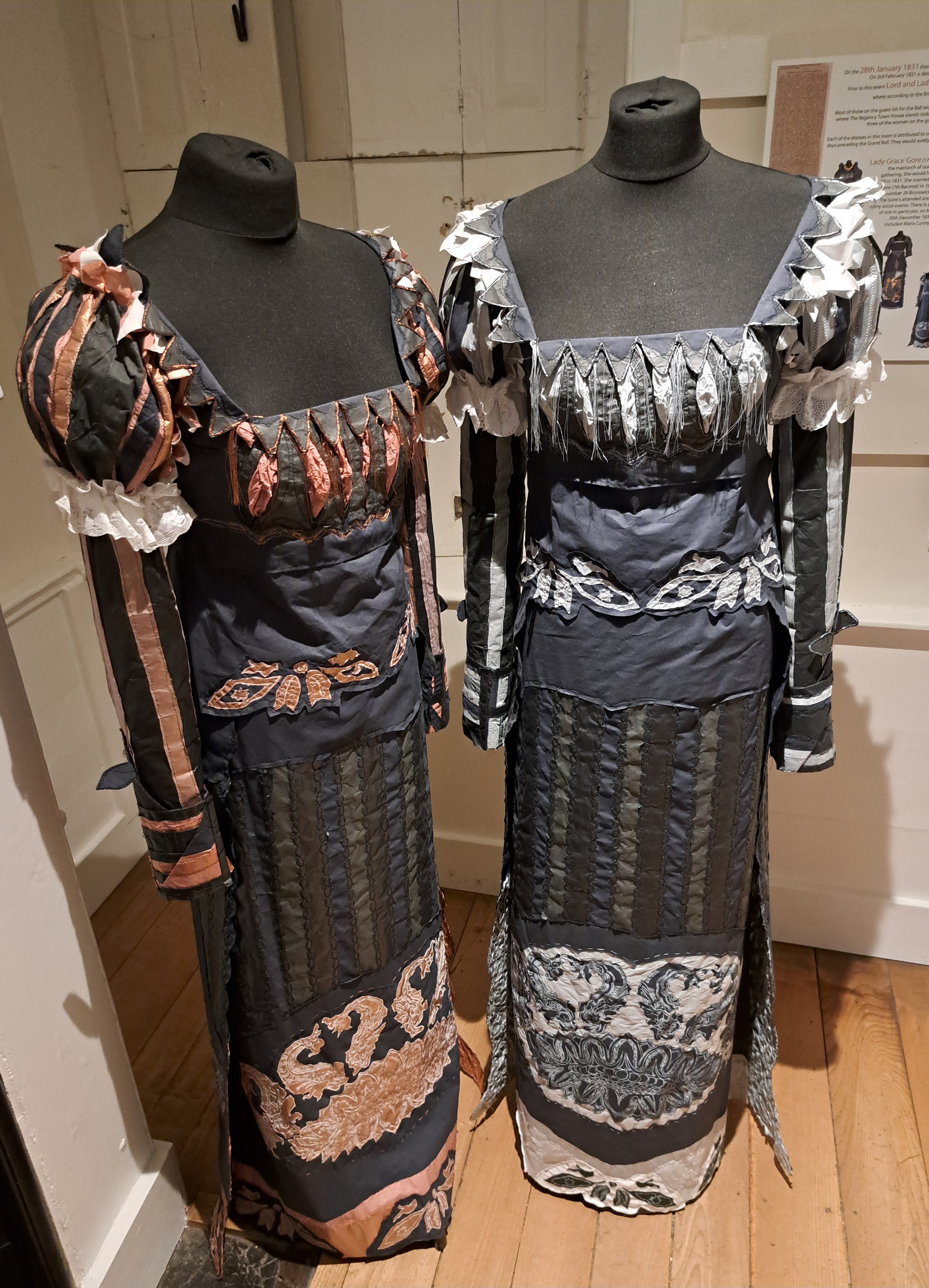
The cottage is where she lived and completed all six of her novels. Austen wrote six full-length novels; four which were published during her lifetime, anonymously. The books demonstrated her sharp and humorous exploration of human relationships and social interaction, which have won her huge popularity and appreciation, even today!


On the cover of her first novel, Sense & Sensibility 1811, Jane`s name does not appear on the front of the book, instead the title page reads, by a lady, Pride & Prejudice 1813, Mansfield Park 1814, Emma 1815. Persuasion, 1817, originally written as The Elliots then Northanger Abbey 1817, were both published after her death, under her own name for the first time.


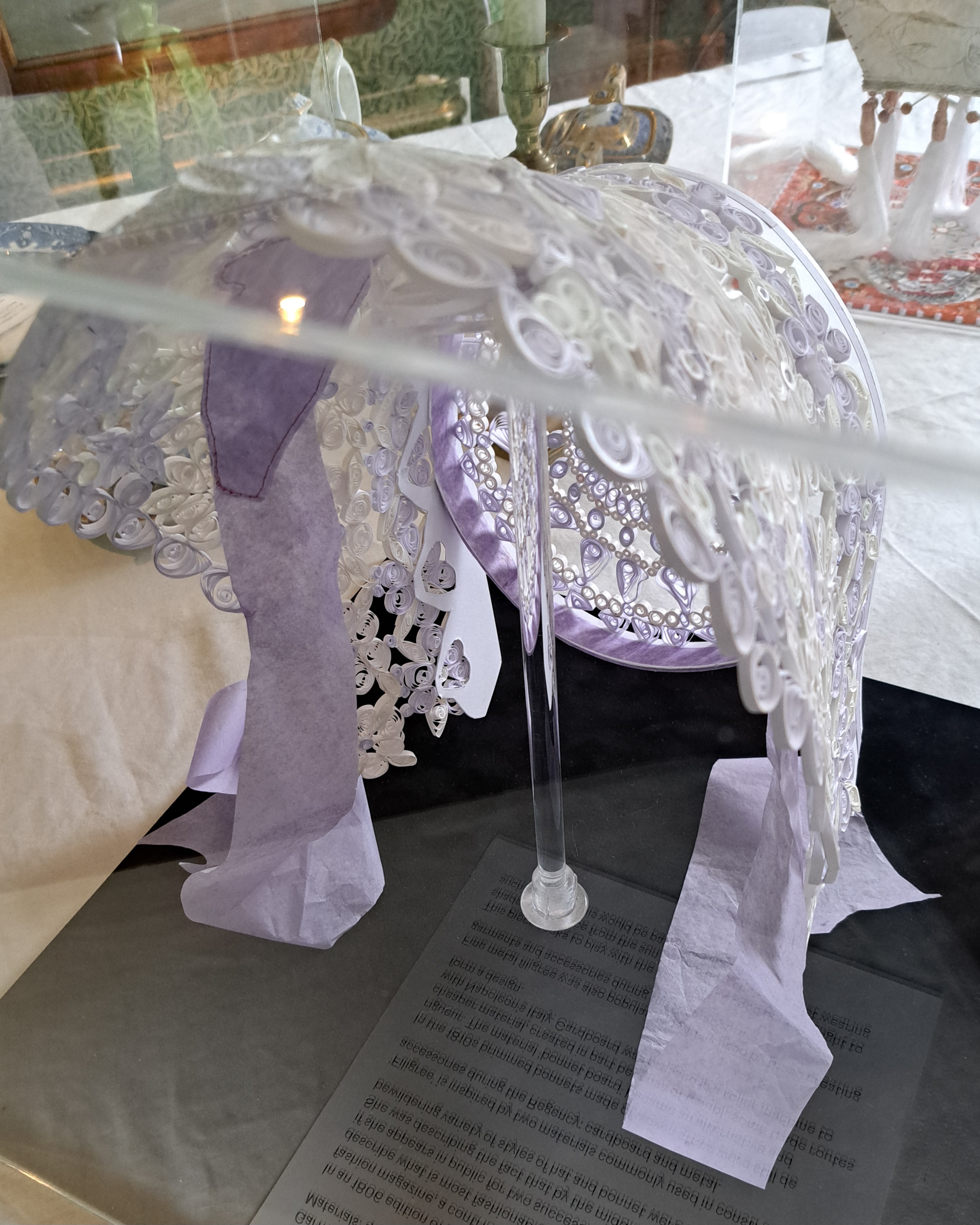
Jane also completed 12 chapters of a novel called The Brothers, which was later published in 1925 as Sanditon, Fragment of a novel. Today, the cottage is a fascinating independent museum celebrating her life, her works and legacy.


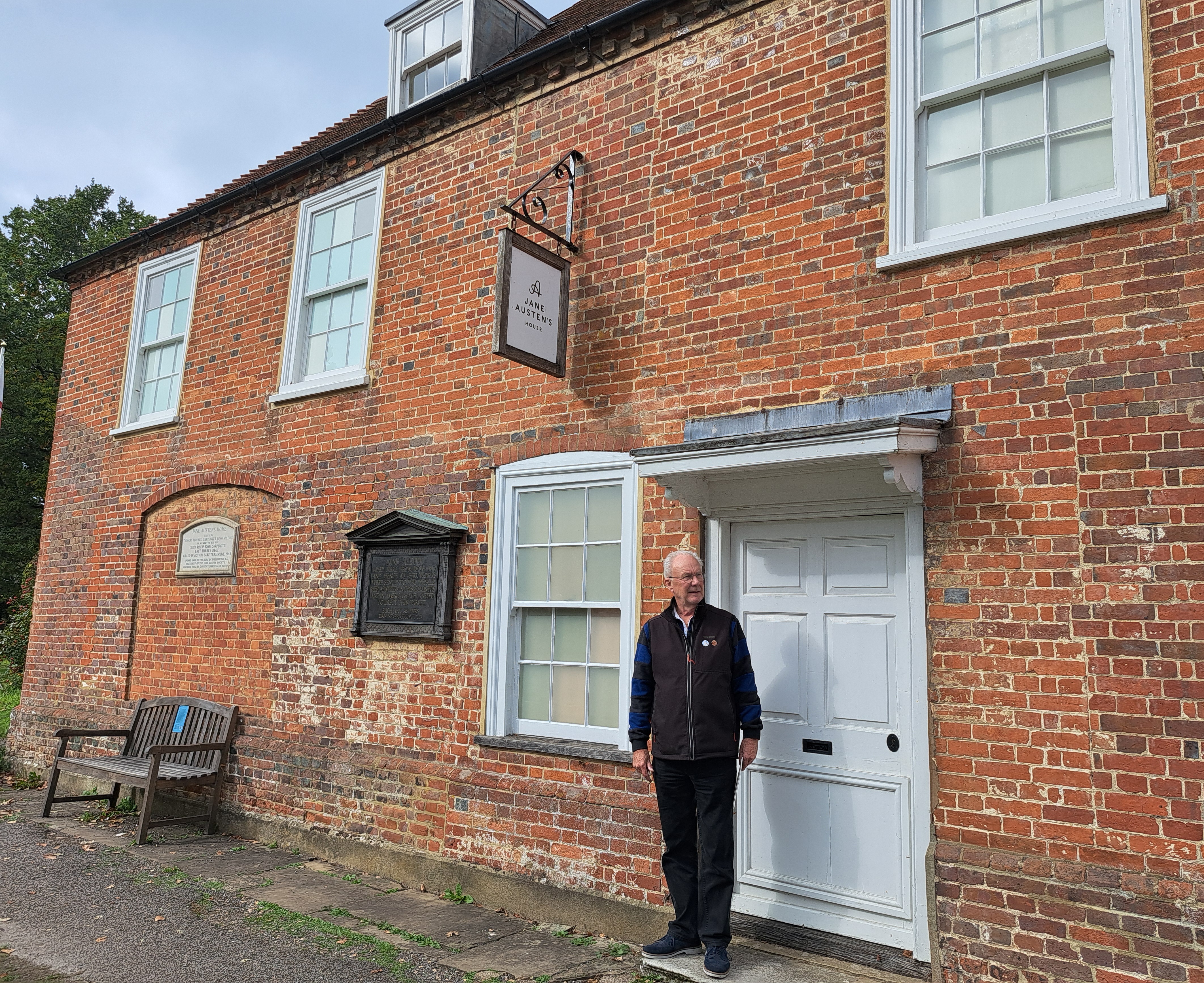
Chawton House: An Elizabethan Manor House. We made the ten-minute walk from Jane Austen`s House down the lane, with picturesque, thatched cottages and agricultural fields to Chawton House. At one time owned by her brother Edward, it was known to Jane, as The Great House. She spent a lot of time walking in the grounds and reflecting on her love of nature.


In the House we were able to see Austen heirlooms, such as the dining table, on which Jane would enjoy many family meals, and explore early editions of her books, original manuscripts and paintings. Jane would visit the house regularly, spending much of her time reading & writing in its extensive library. Many of the features Jane would have known remain, the shrubbery, the ha ha, the walled garden and the wilderness, could still be found in the grounds. Works by many other contemporary women writers can be found at the house, some of whom will have inspired Jane.


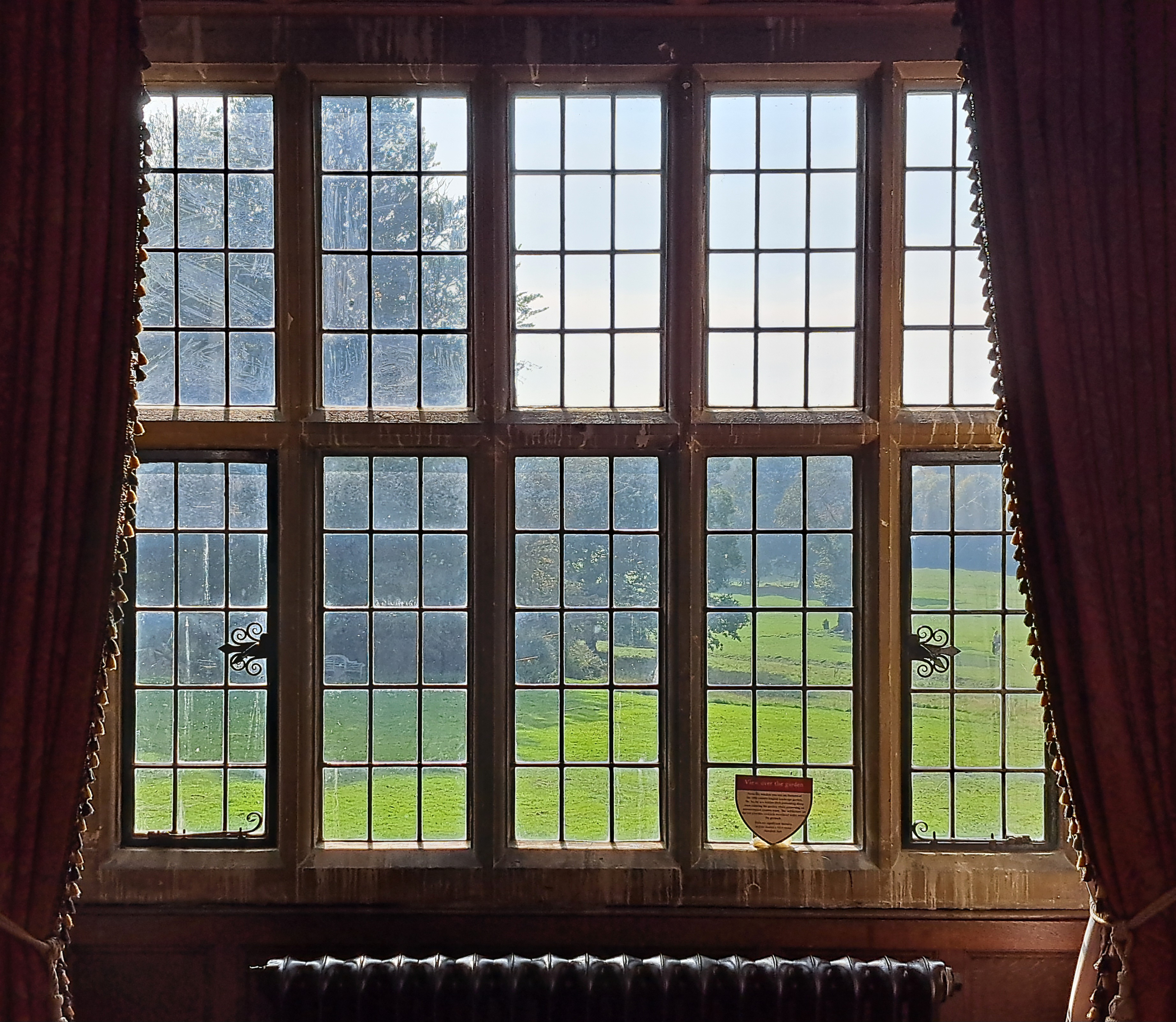


Winchester: On May 24th, 1817, Jane and Cassandra drove the 16 miles from Chawton to Winchester to be closer to the doctor who would treat her unknown illness, now thought to have been Addisons Disease. We decided to head for Winchester too!
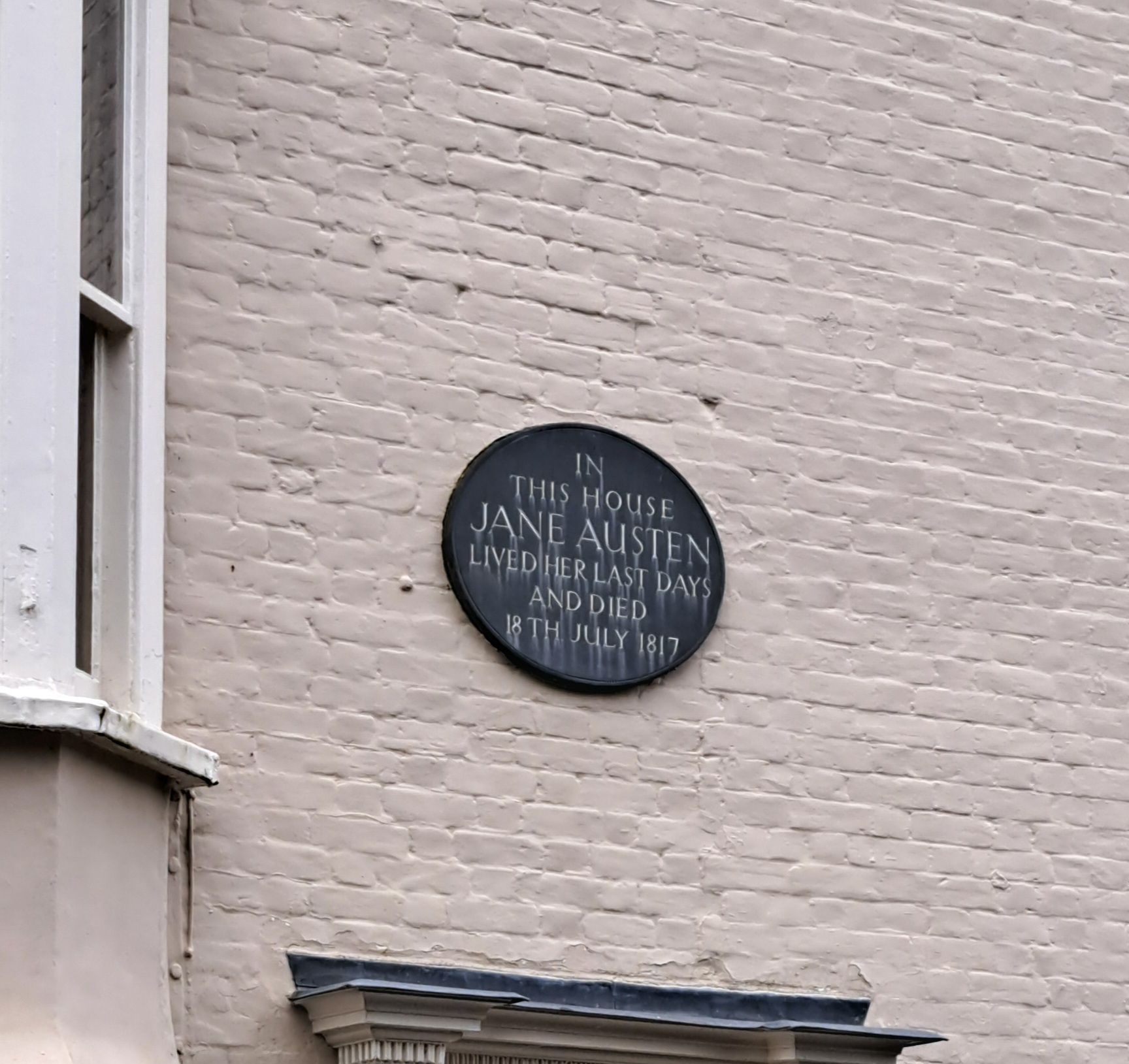


Jane had spent the last few weeks of her life in the City of Winchester, after struggling with the illness, for over a year, moving with her sister Cassandra to lodgings at 8 College Street, marked today with a Blue Plague, next to appropriately, one of the oldest bookshops in the country. It is said that Jane Austen died at 4.00am on Friday 18th July 1817, with her head resting on her sister’s knee. The house is now a private residence, linked to Winchester College.


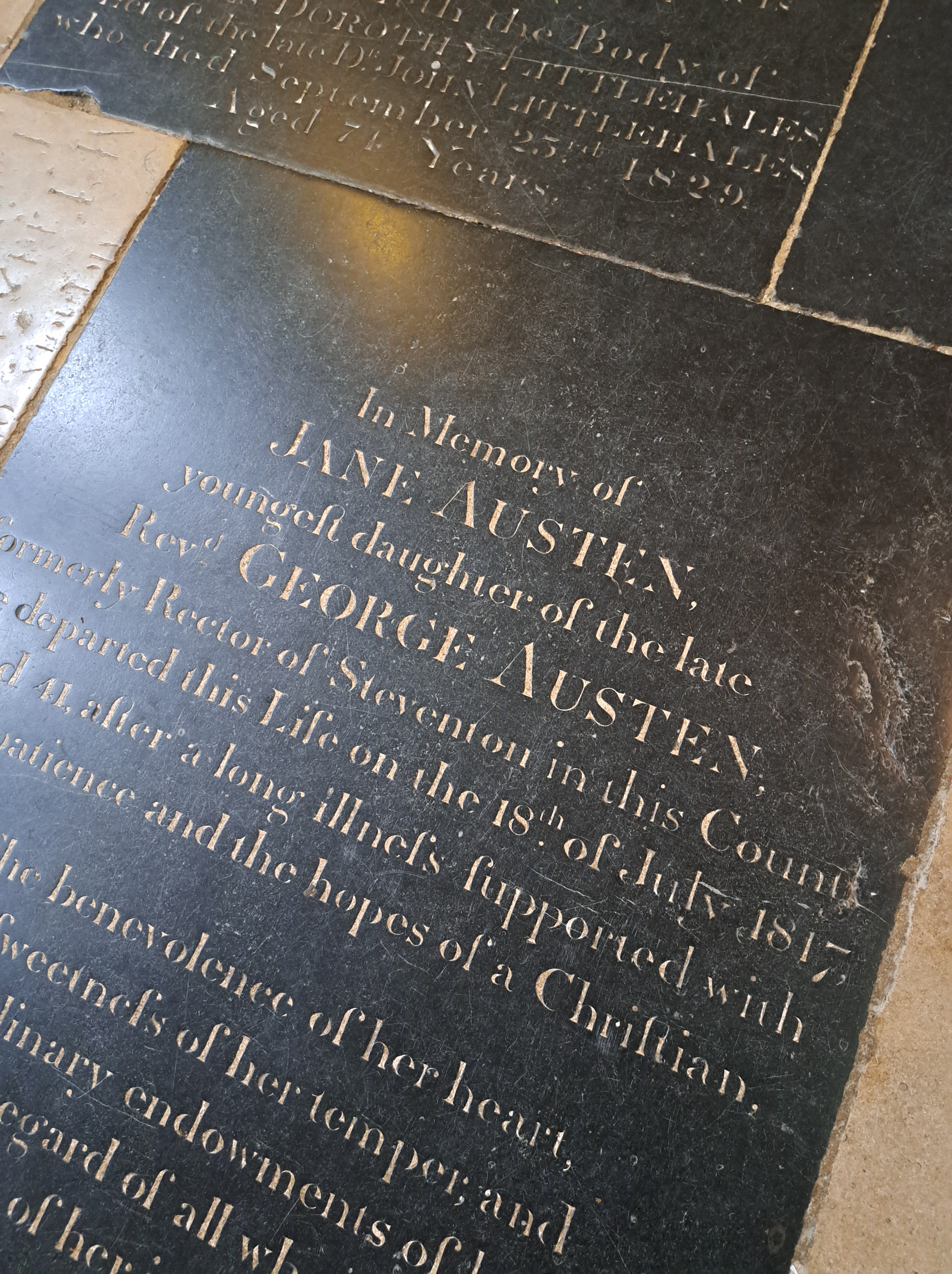
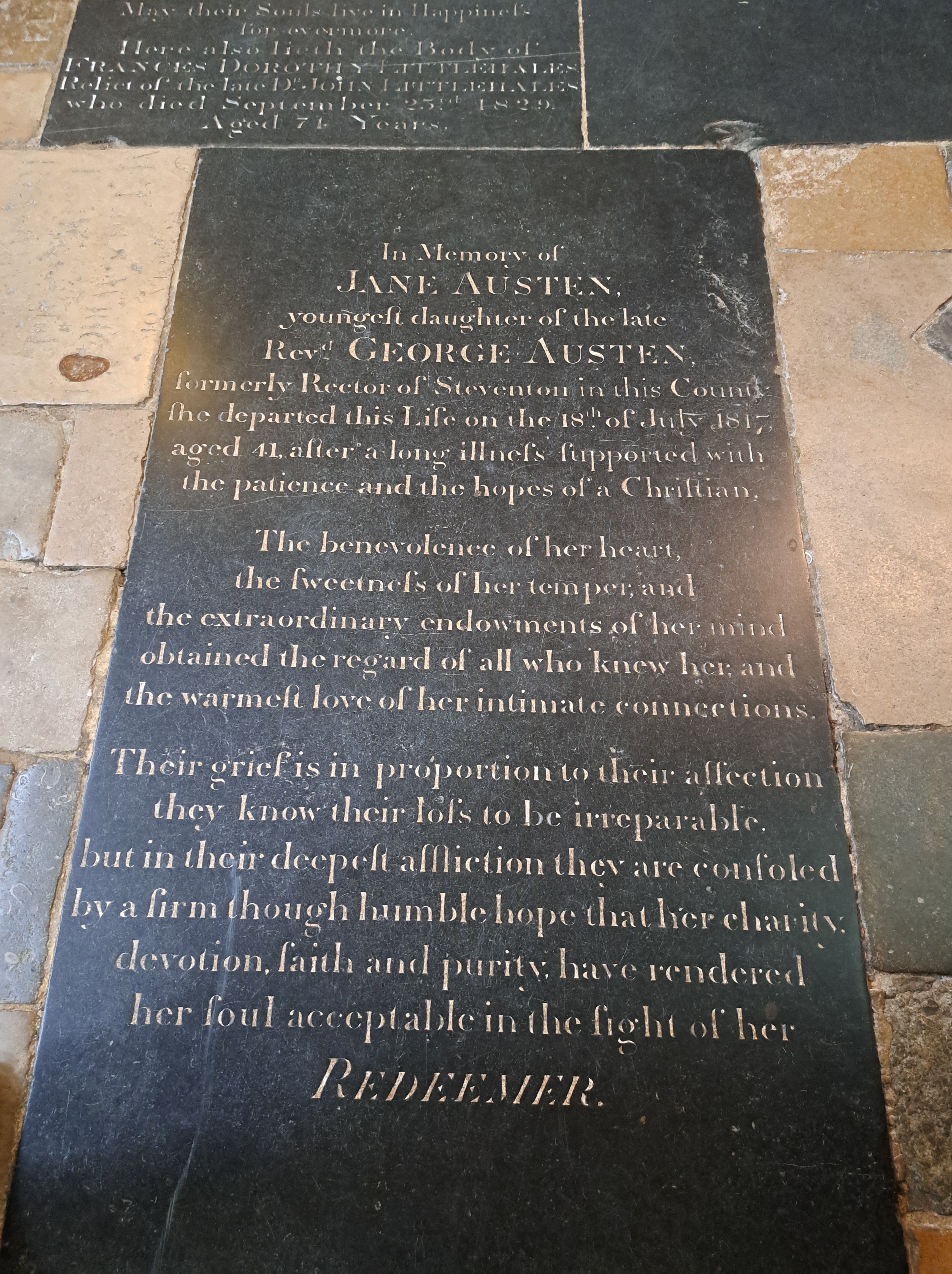
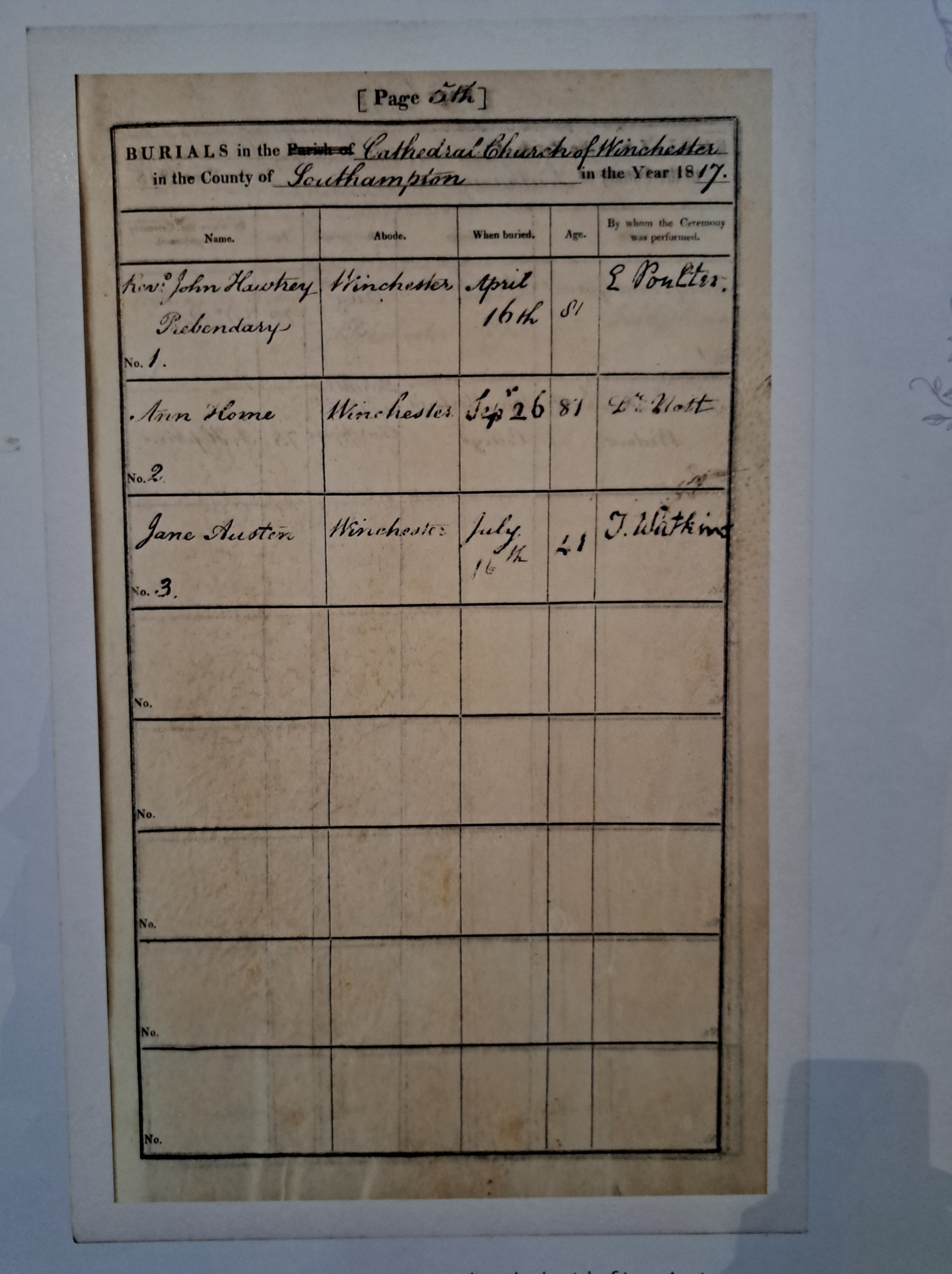
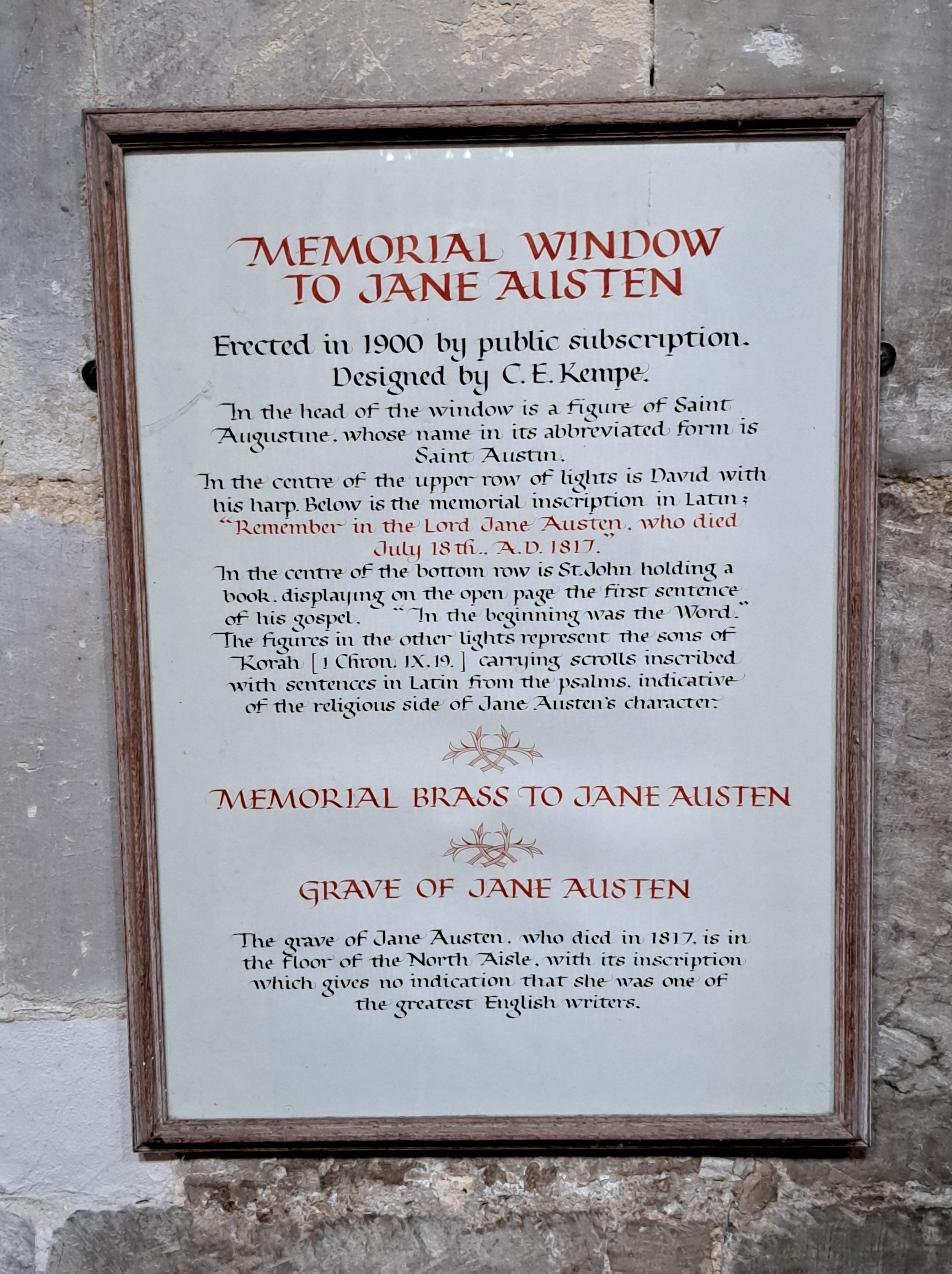
We then made our way over to nearby Winchester Cathedral, which has been a place of worship for over 900 years. Jane was buried in the North aisle of the cathedral, on 24th July 1817, at the age of forty-one. While the tomb inscription makes no reference to her literary achievements, a brass tablet was later added by her nephew Edward, confirming that “Jane Austen, known to many by her writings”. A new Jane Austen statue has recently been unveiled at Winchester Cathedral during the author’s 250th anniversary year. Created by sculptor Martin Jennings, the statue stands in the Inner Close as an elegant figure, with her characteristic ringlets and cap, by her famous writing table.
A fitting tribute to one of our countries greatest ever literary figures.


Footnote: I do not claim to be an expert on Jane Austen, so there may be errors in my review. If on reading my text, you find something you would like to draw my attention to, please do so. I am happy to correct any mistakes I may have made.
LIKE this Please consider giving thetravellocker a FOLLOW on Facebook, Twitter and Instagram.
Thank You
 The Travel Locker