
For the 250th anniversary of John Constable’s birth, Gainsborough’s House, situated at the heart of the Stour Valley in Suffolk, will celebrate with a rich programme of landscape exhibitions.
The area, characterised by the River Stour, is famously the birthplace and inspiration of two of Britain’s most influential landscape painters, Thomas Gainsborough (1727-88) and John Constable (1776-1837).
An exhibition featuring both these artists, and others – notably JMW Turner (1775-1851)- will be held alongside two exhibitions of contemporary art, showing how their influence is still felt by artists today.
Gainsborough, Turner and Constable
25 April – 11 October 2026
For Constable 250 the main exhibition at Gainsborough’s House will explore the emergence of landscape painting in Britain as led by three of its greatest exponents: Thomas Gainsborough (1727-88), JMW Turner (1775-1851) and John Constable (1776-1837). It will feature over 40 oil paintings, watercolours and drawings, mainly from private collections and therefore rarely seen, by Gainsborough, Turner and Constable, but also by their contemporaries, including the likes of Alexander Cozens (1717-86), Francis Towne (1738-1816) and Thomas Girtin (1775-1802). It will also include several works by their European forerunners, such as Antonio Joli (1700-77) and Claude-Joseph Vernet (1714-89).
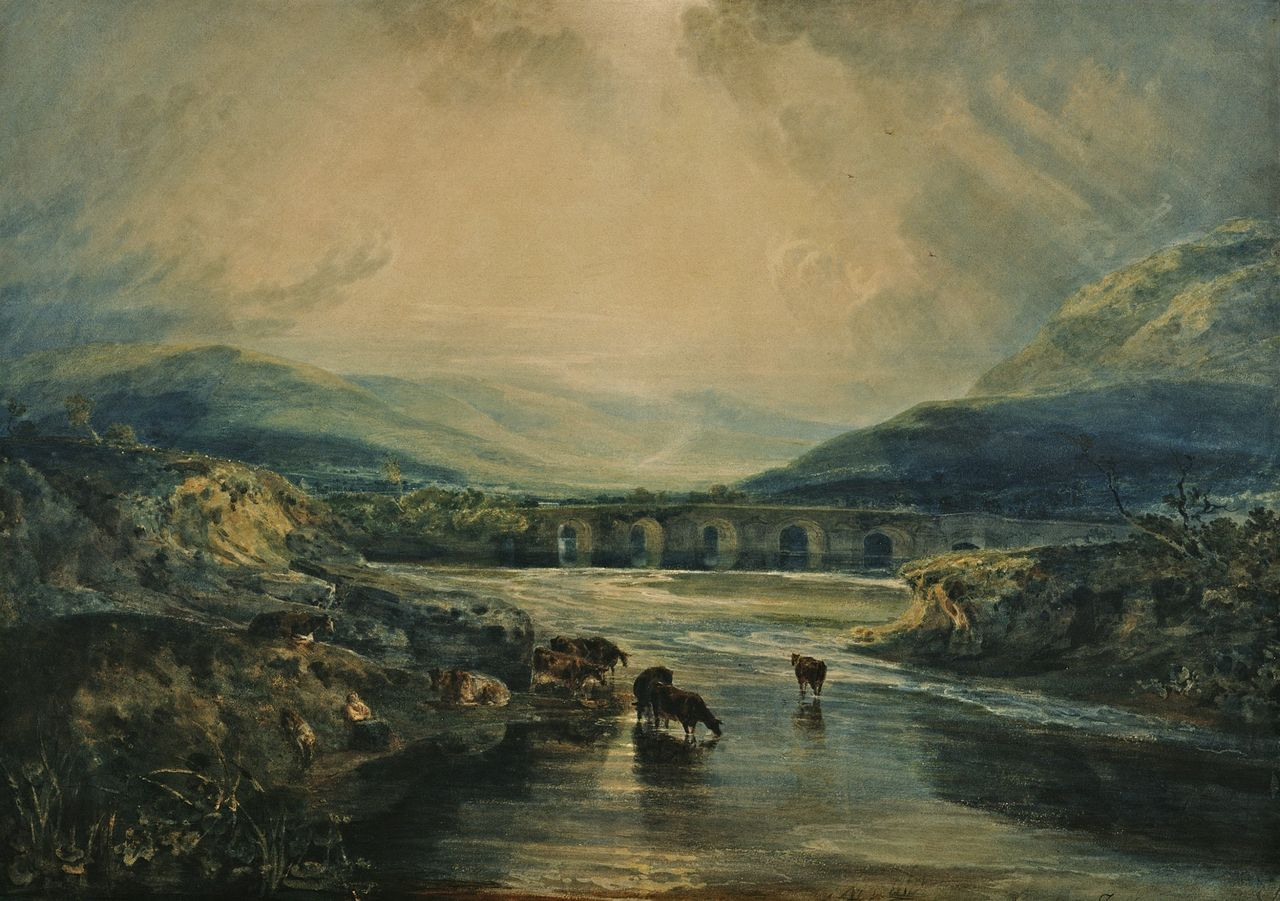
JMW Turner, Abergavenny Bridge, Monmouthshire: Clearing up After a Showery Day, 1799.
Private Collection
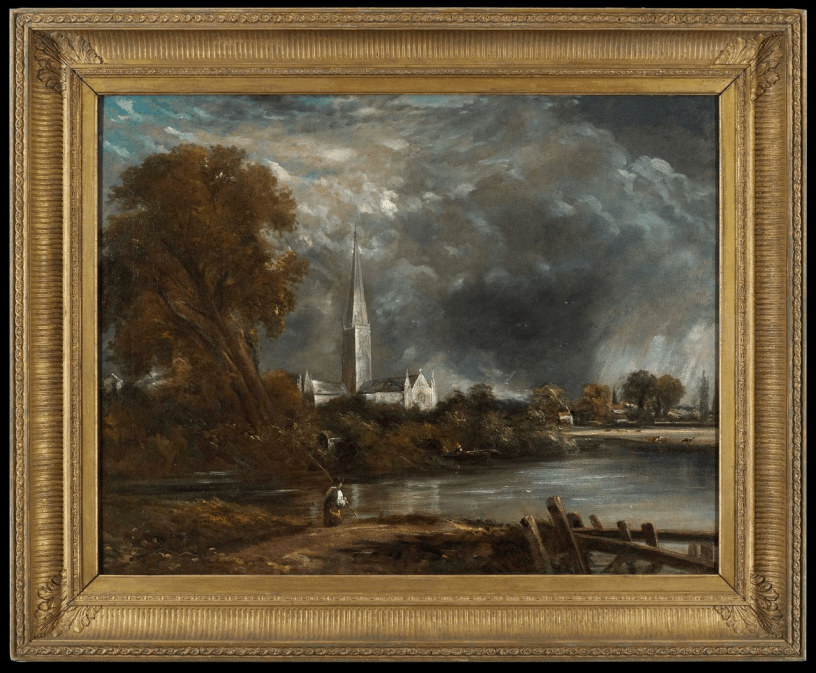
Key works include Gainsborough’s idyllic scene, Landscape with Cattle, a Young Man Courting a Milkmaid (early 1770s), which has not been exhibited in the UK since 1952; Turner’s large-scale watercolour, Abergavenny Bridge (1799) which has not been on public display since 1799 at the Royal Academy; and Constable’s dramatic oil sketch, Salisbury Cathedral from the Meadows (c. 1830s), a variant of his ‘great Salisbury’ painting thought to be a study for the mezzotint developed with David Lucas.
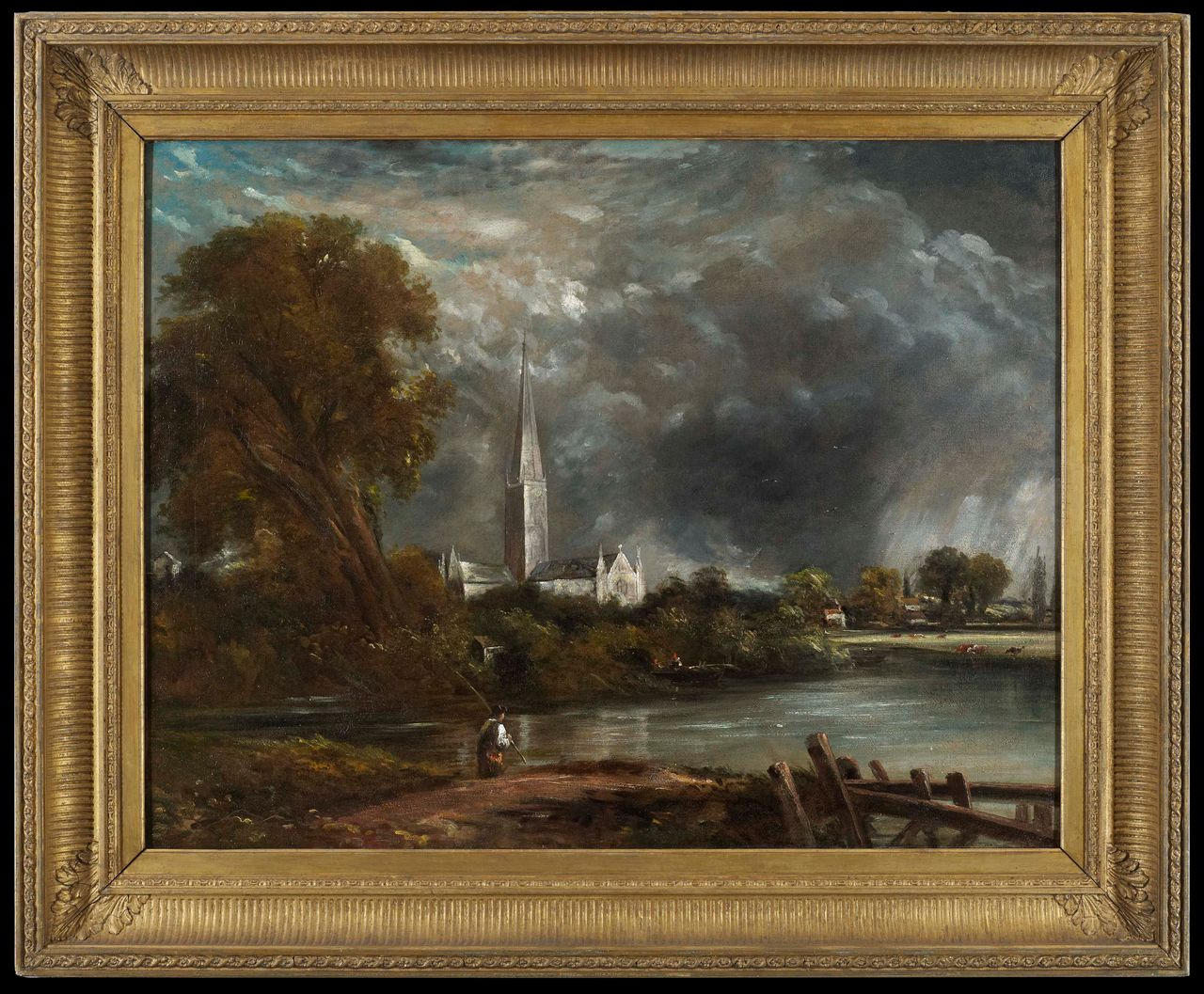
John Constable, Salisbury Cathedral from the Meadows, c. 1830s.
Private Collection
The exhibition culminates in John Constable’s magnificent The Leaping Horse from the Royal Academy — in Suffolk for the very first time. This was the final and perhaps greatest of the series of ‘six-footer’ paintings painted between 1819 and 1825 that sealed Constable’s reputation. Lucian Freud thought it Constable’s greatest achievement. He went further, describing The Leaping Horse as ‘the greatest painting in the world, and saw all the related drawings and paintings as one work of art: ‘What is so mysterious about “The Leaping Horse” – paintings, drawings – is that they all work on one another.”
Born in East Bergholt, not far from Sudbury, Constable was a great admirer of his Suffolk antecedent Thomas Gainsborough. Indeed, in his early career Constable tended to see the local landscape through the latter’s eyes, telling a friend ‘I fancy I see Gainsborough in every hedge and hollow tree’.
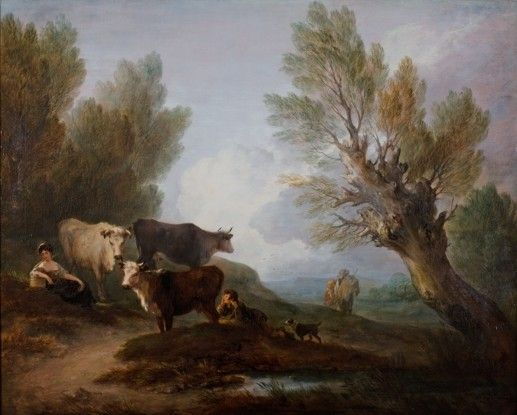
Thomas Gainsborough, Landscape with Cattle, a Young Man Courting a Milkmaid, early 1770s.
Private Collection
As the preeminent landscape painter of his time, Thomas Gainsborough (1727-1788) was clearly influential to the artists that would come to dominate landscape painting in the next century. Constable himself commented on the “soothing, tender and affecting” works of the “most benevolent and kind hearted man” saying that “on looking at them, we find tears in our eyes and know not what brings them.”
Calvin Winner, Executive Director, Gainsborough’s House, says: “This exhibition sets out to celebrate the 250th anniversary of John Constable in Suffolk, one of Britain’s great artistic landscapes. It explores the ascendency of landscape art in Britain in the 18th and early 19th centuries through the work of the great innovators of the genre, Thomas Gainsborough, JMW Turner and John Constable.”
The exhibition at Gainsborough’s House is part of a wider Suffolk partnership to celebrate Constable 250. In addition, there will be a year-long programme of exhibitions at Christchurch Mansion in Ipswich (Colchester and Ipswich Museums) supported by The National Lottery Heritage Fund, the Weston Loan Programme with Art Fund, Arts Council England, and other key partners.
Inspired by the artwork of Constable and his contemporaries
25 April – 11 October 2026
John Constable’s art continues to resonate with contemporary artists. To accompany the Constable 250 anniversary exhibition, Gainsborough’s House presents two exhibitions by David Dawson and Kate Giles.
David Dawson (b. 1960) has been creating works en plein air in his home country in Montgomeryshire, Mid Wales, and a selection of these will be on display. Painted outdoors during each season of the year, the artist then continues to work on them in his London studio before completing them back in the Welsh countryside, taking several years for each one.
Having left Wales for London where he was a student at the Chelsea School of Art and later becoming a model and assistant to Lucien Freud, these paintings depict an artist returning to their childhood home to explore the nature and solitude of its surroundings.
Suffolk-born and Norfolk-residing artist Kate Giles (b.1962) creates expressive work rooted in her native landscape, specifically drawing on the legacy of Constable. Varying densities of paint contrast and interplay to create seasonal landscapes of twisted trees and chaotic clouds. New work by Giles will be on display, allowing visitors to chart a view of East Anglia from Constable to the present day.
 The Travel Locker