
7 March – 7 June 2026
The first ever exhibition devoted to showing how the late artist John Piper (1903-92) responded to the landscape and architecture of Wiltshire and Dorset – including Devizes, his favourite market town – will open at Wiltshire Museum in March 2026.
More than three decades after his death, Piper’s work remains highly popular, and he is considered one of the most significant British artists of the 20th century. It was in the South Country that he made some of his most important paintings, portraying subjects from the region, including Stourhead, Fonthill and Lacock – yet there has never been an exhibition focusing on the work he did in this area, until now.
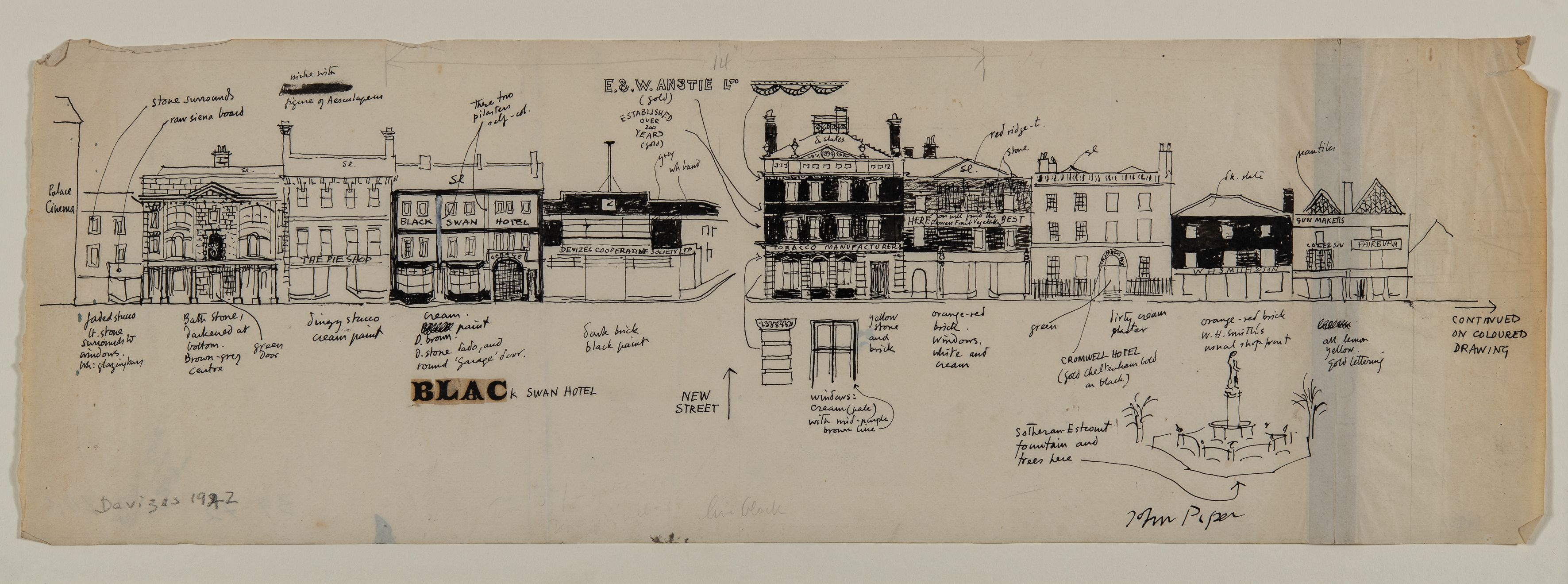
Devizes Marketplace
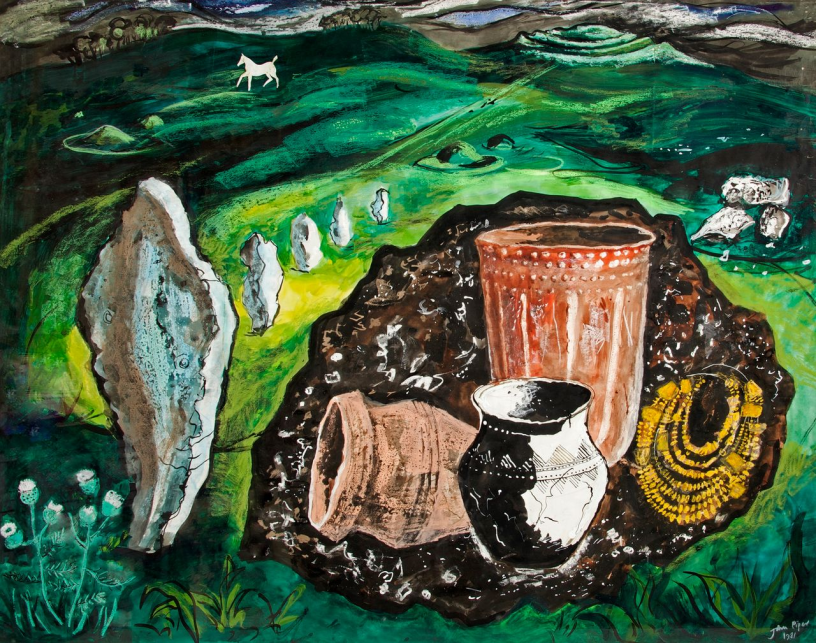
Renowned for working in a variety of media, the exhibition will also feature one of Piper’s finest early collages, depicting the neolithic site at Avebury. His strong Anglican faith also imbued his work, and he painted a number of churches in the locality, from Inglesham to Knowlton and Britwell Salome. In November 1940, while working as an official War artist, Piper persuaded the War Artists’ Advisory Committee (WAAC) to let him concentrate on painting bombed churches, which led him to depicting the ruins of architectural landmarks in cities such as Bath and Bristol.
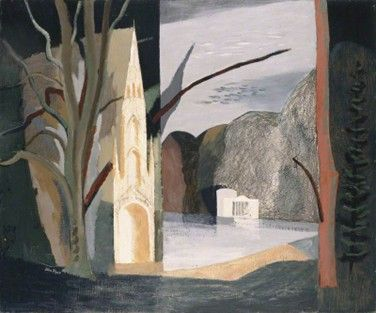
Autumn at Stourhead
During his visits to the Southwest, Piper also painted different aspects of Salisbury Plain, including a view of Bronze Age barrows, the land under plough in the Second World War, and Stonehenge. Post-war subjects in the exhibition include the interior of a church in Lydiard Tregoze, a village near Swindon, and several studies of the Isle of Portland.
While such images map Piper’s enduring love of Wiltshire and Dorset – he was also a member of the Wiltshire Archaeological and Natural History Society, the society that still manages Wiltshire Museum today – they also reveal his changing style of working.
He was one of many English artists who had adopted abstraction in the formative stages of his artistic career but soon discovered that, for him, a purely formal art of geometric lines and colours, however subtly orchestrated, was not enough. Piper missed having recognisable subject matter – things he had seen and enjoyed in the world around him – so he gradually returned to nature, through drawings, paintings and collages of landscapes and buildings.

Piper Cartoon
The Guest Curator for this exhibition is renowned author and art critic, Andrew Lambirth. He says: “The last museum show of Piper’s work was at Tate Liverpool in 2017 and looked at his Modernism. But Piper’s enduring appeal resides in his ability to celebrate buildings in the landscape, from the stone circles of neolithic man to churches, cottages and grand houses. By focusing on Wiltshire and Dorset, this exhibition shines a light on a wide range of Piper’s remarkable achievements: the early collage drawings of Avebury, Knowlton and Salisbury Plain, the majestic semi-abstract Autumn at Stourhead and the paintings of Fonthill and Lacock, then the various potent interpretations of Portland, Bradford-on-Avon and finally Stonehenge. Together with stained glass, ceramics, book illustrations and textiles, here are riches to be seen.”
David Dawson, Director at Wiltshire Museum adds: “Devizes was a special place for Piper – he described it as an English town that has not been spoiled and wrote about the magnificent museum. This exhibition enables us to highlight some of Piper’s amazing artworks in our collection, including a stained-glass window specially commissioned for our gallery.”
For more information about John Piper in the South Country please visit www.wiltshiremuseum.org.uk
John Egerton Christmas Piper CH (13 December 1903 – 28 June 1992) was an English painter, printmaker and designer of stained-glass windows and both opera and theatre sets. His work often focused on the British landscape, especially churches and monuments, and included tapestry designs, book jackets, screen prints, photography, fabrics and ceramics. He was educated at Epsom College and trained at the Richmond School of Art followed by the Royal College of Art in London. He turned from abstraction early in his career, concentrating on a more naturalistic but distinctive approach, but often worked in several different styles throughout his career.
Piper was an official war artist in World War II and his wartime depictions of bomb-damaged churches and landmarks, most notably those of Coventry Cathedral, made Piper a household name and led to his work being acquired by many public collections.
Wiltshire Museum is home to the best Bronze Age archaeology collection in Britain with a clear mission to ‘Inspire people to explore the archaeology, history and environment of Wiltshire’. The collections are Designated by Government as being of National Significance. Wiltshire Museum is an independent charity, with some revenue funding from Wiltshire Council and Devizes Town Council. The Museum is run by the Wiltshire Archaeological and Natural History Society (WANHS), a registered charity founded in 1853. To find out more, visit wiltshiremuseum.org.uk, follow us on BlueSky @wiltshiremuseum.bsky.social, Instagram @wiltshiremuseum, Facebook @WiltshireMuseum, YouTube @WiltshireMuseumDevizes and Tripdavisor Wiltshire Museum.
 The Travel Locker