Go With The Flow – Do you want to travel without the stress of organising every detail yourself?
My wife and I have always travelled independently, arranging accommodation, flights, airport transfers and, at times, car hire, as well as visits to museums, art galleries and other attractions. However, planning a full itinerary in an unfamiliar destination can become a real headache. Although we had visited Italy several times—including Rome, Florence, Siena, Naples and Venice—we had never explored Puglia or Basilicata, in the heel of Italy and the far south of the Mezzogiorno. For this trip, we chose a fully escorted, all-inclusive, week-long group rail tour with one of the industry’s most trusted and established operators, which has more than 50 years’ experience in rail travel, Great Rail Journeys.
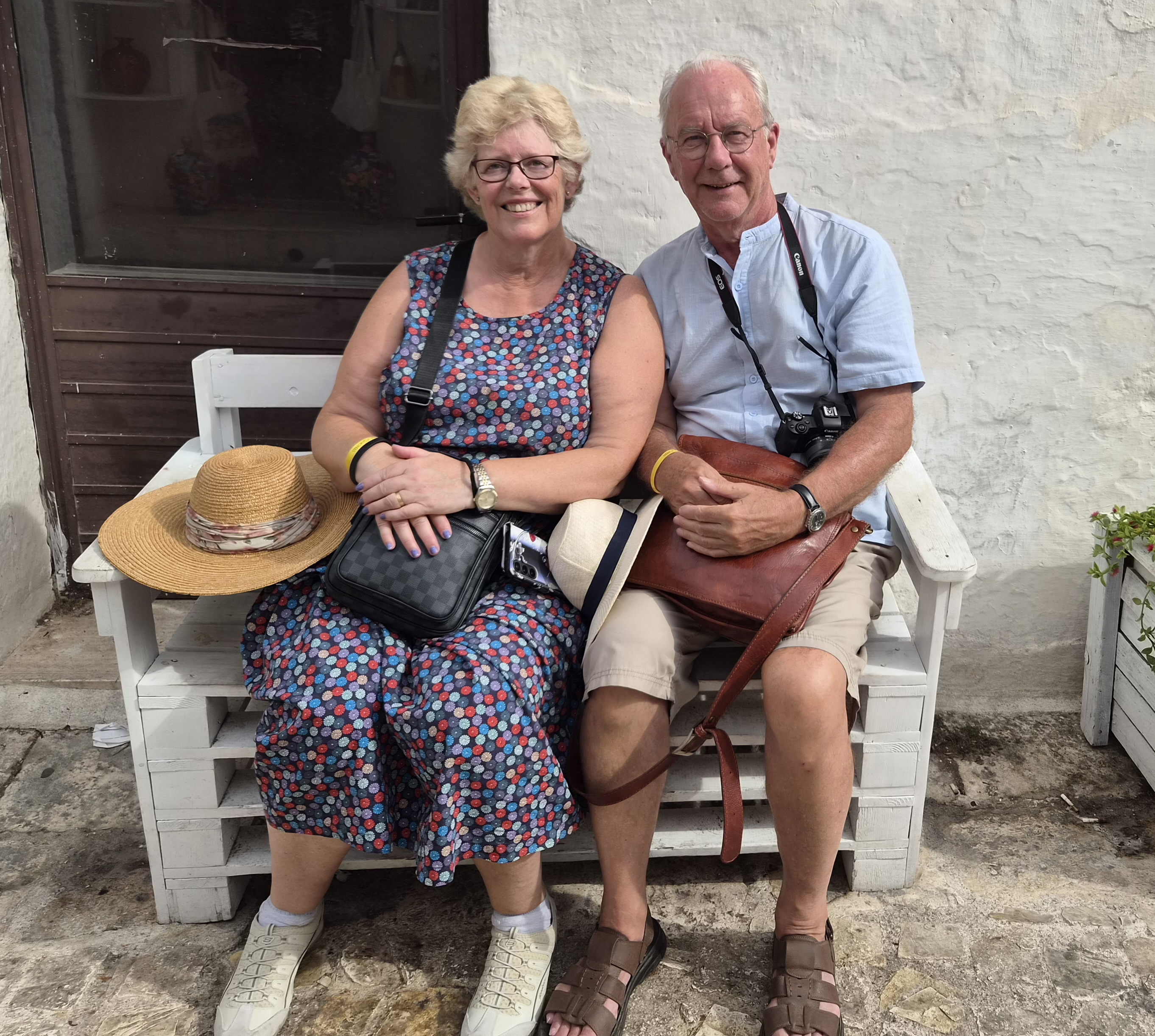
Our tour manager, Brian, met us at the airport after calling earlier in the week to introduce himself and answer any questions about the flight, the resort or the forthcoming tour. Having someone handle the travel logistics, rail tickets and coach transfers would be a new experience for us. It meant we could sit back, enjoy the journey and focus on the places we were visiting, something we were both looking forward to.
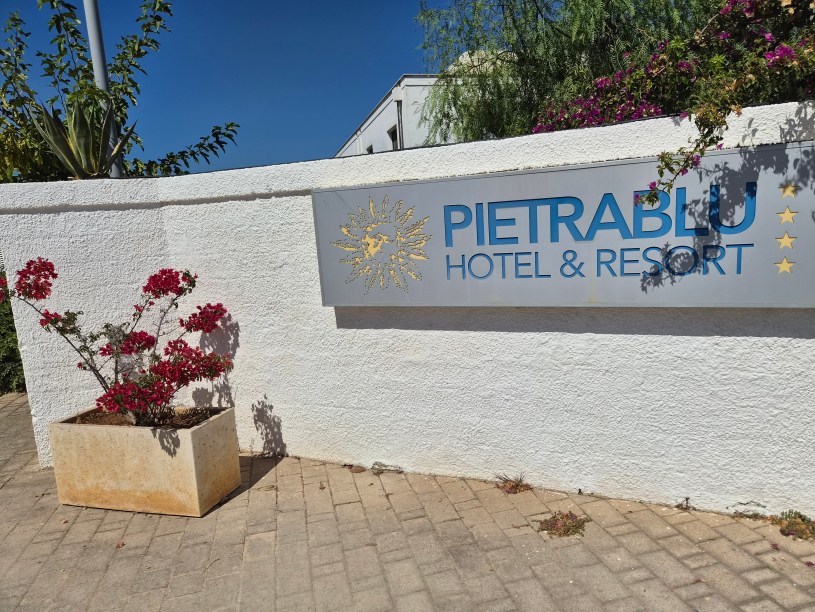
On arrival at Bari International Airport, our tour guide had already asked us to wait by the baggage carousel after collecting our luggage. Once everyone had their bags, he led us in a snaking line out of the airport to the waiting coach, which would take our group of forty to our resort hotel, the Pietrablu Resort & SPA. During the journey, Brian clearly explained what would happen when we reached our destination, with regard to our rooms, meals and drinks.
The coach and rail journeys became an important part of the tour, rather than simply a way to travel from place to place. Our knowledgeable guide shared detailed histories of the destinations and their attractions, along with practical information such as pick-up points and the times we needed to return to the coach or station. It soon became clear that he was a highly experienced guide and clearly understood the group’s needs, from locating the nearest toilets to keeping us entertained with his much-appreciated sense of humour.
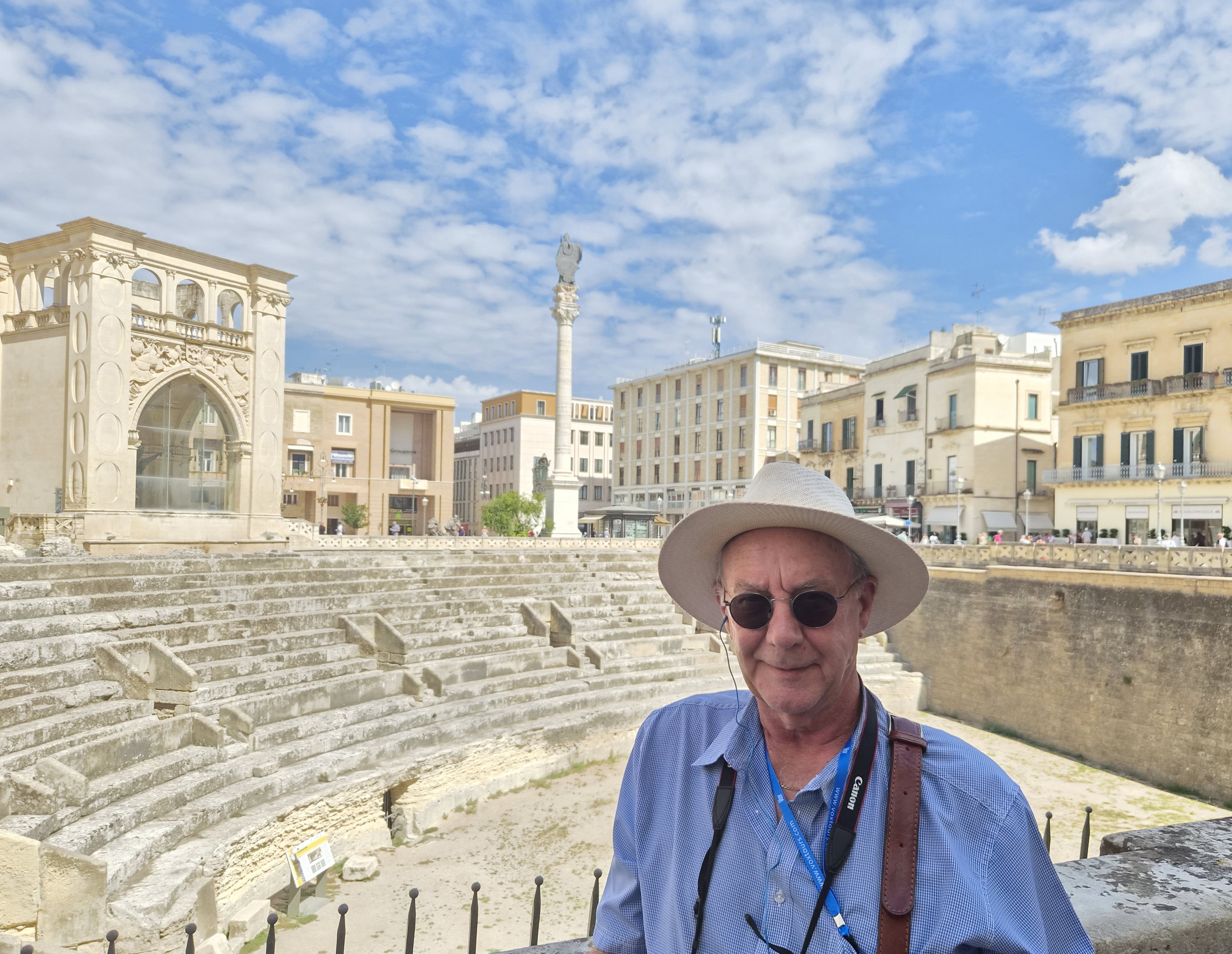
Our week-long tour included a number of cultural excursions, either by train/ coach or both, in Puglia & Basilicata visiting Locorotondo, Martina Franca, Bari, Lecce, Polignano a Mare, Matera and Alberobello. On three occasions there were local knowledgeable guides, but we were also given plenty of free time to explore at our own pace. I sometimes found it a little difficult sticking to a predetermined timetable, but fully appreciated the reason for the need to adhere to pick – up times, and sticking to a tight schedule, if we were to see everything on our itinerary. We are not used to being given just one hour to explore, as on a couple of occasions at Locorotondo and Martina Franca, for example, to take in the sights and the places we wanted to see. We would have wanted a little more time to explore, in some places that we visited, but time was precious.
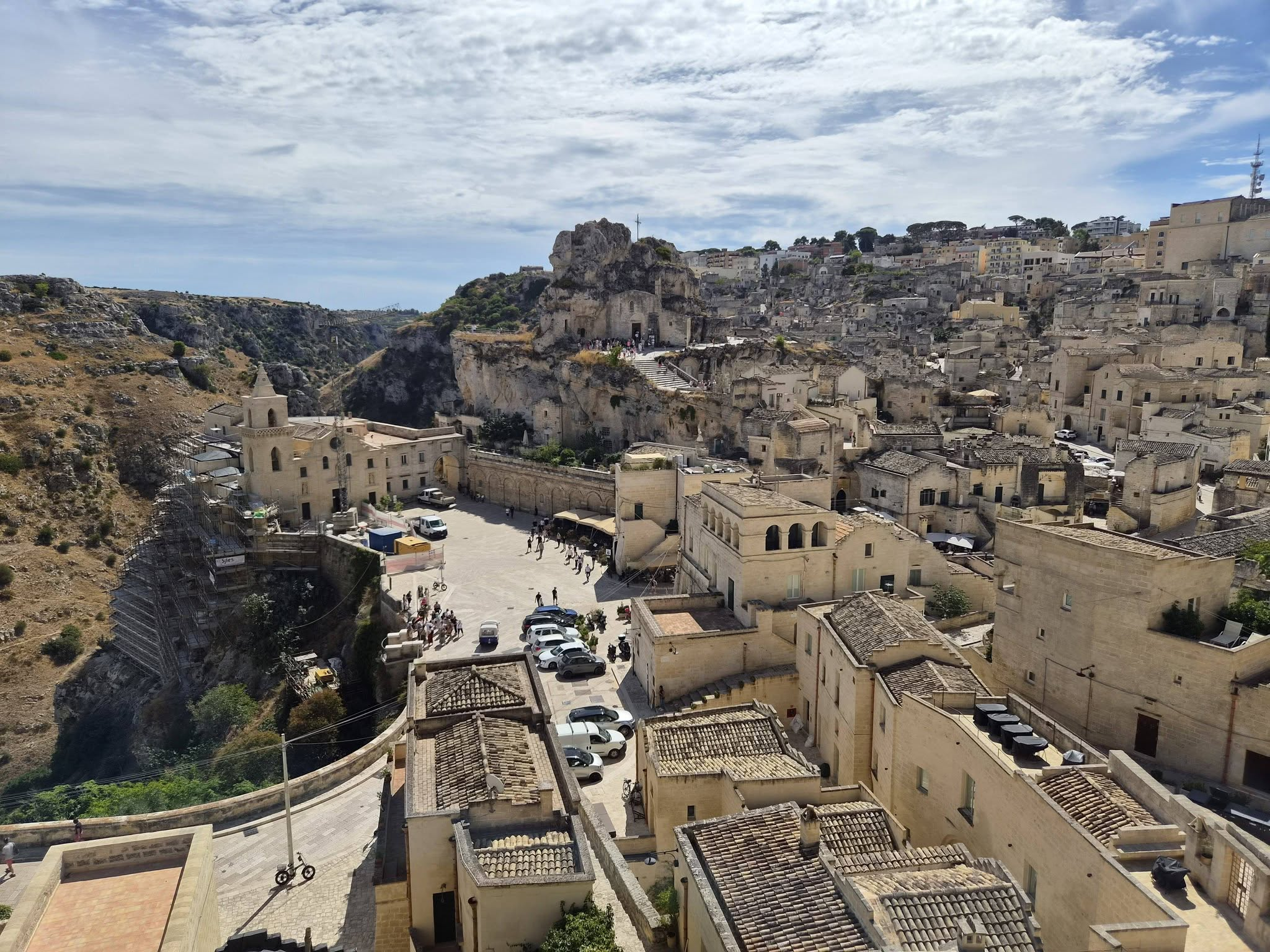
Matera, Basilicata.
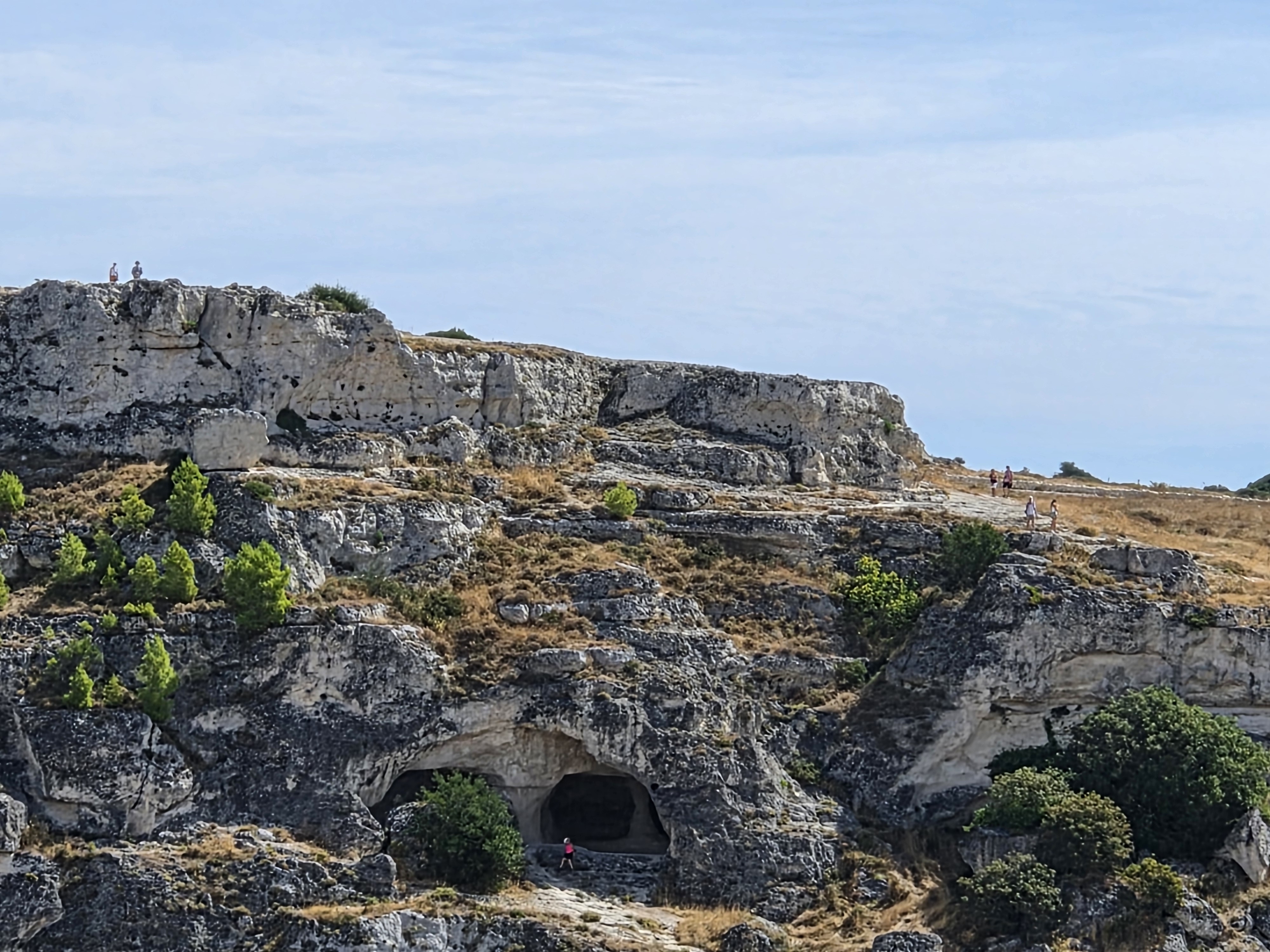
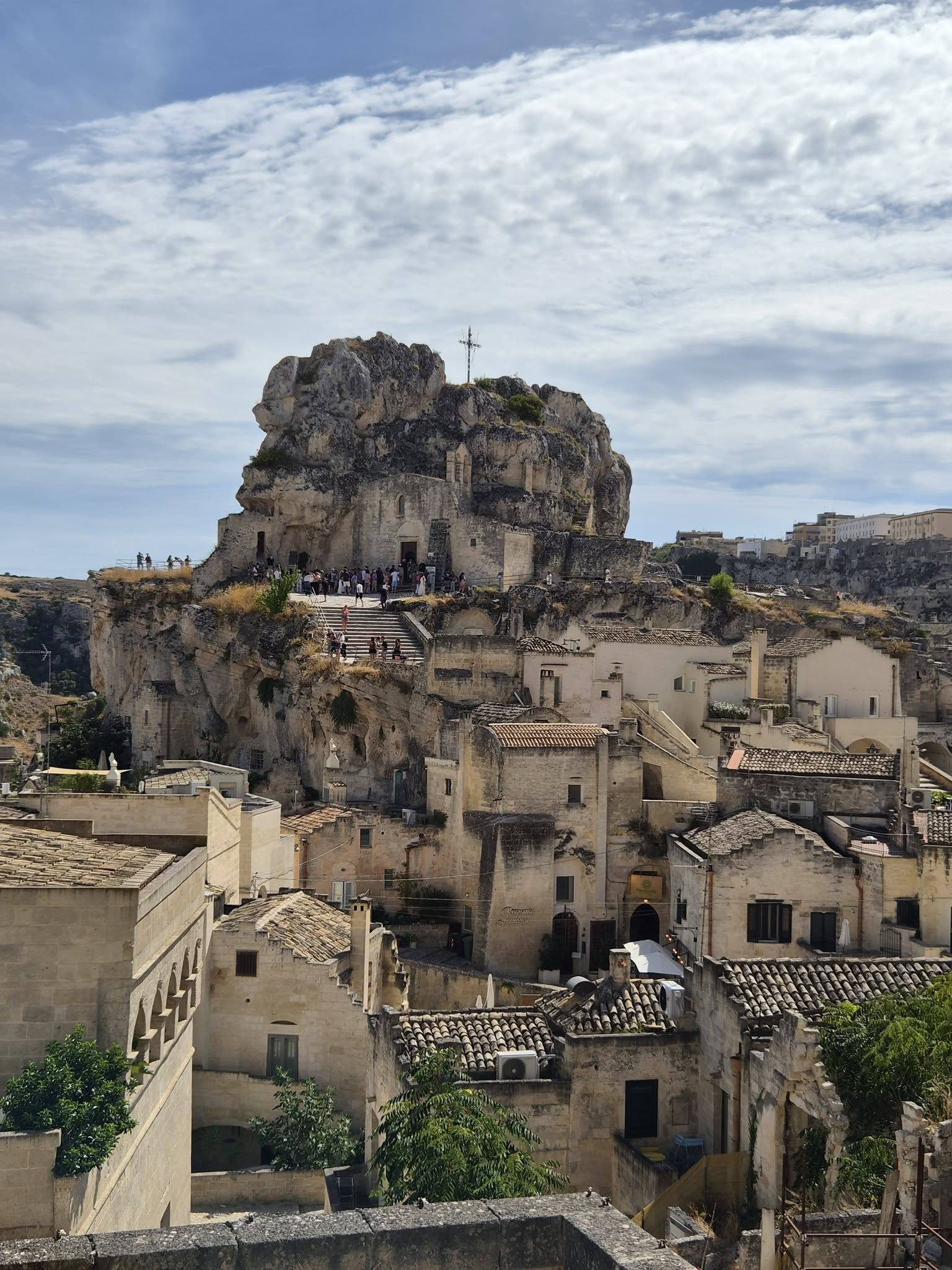
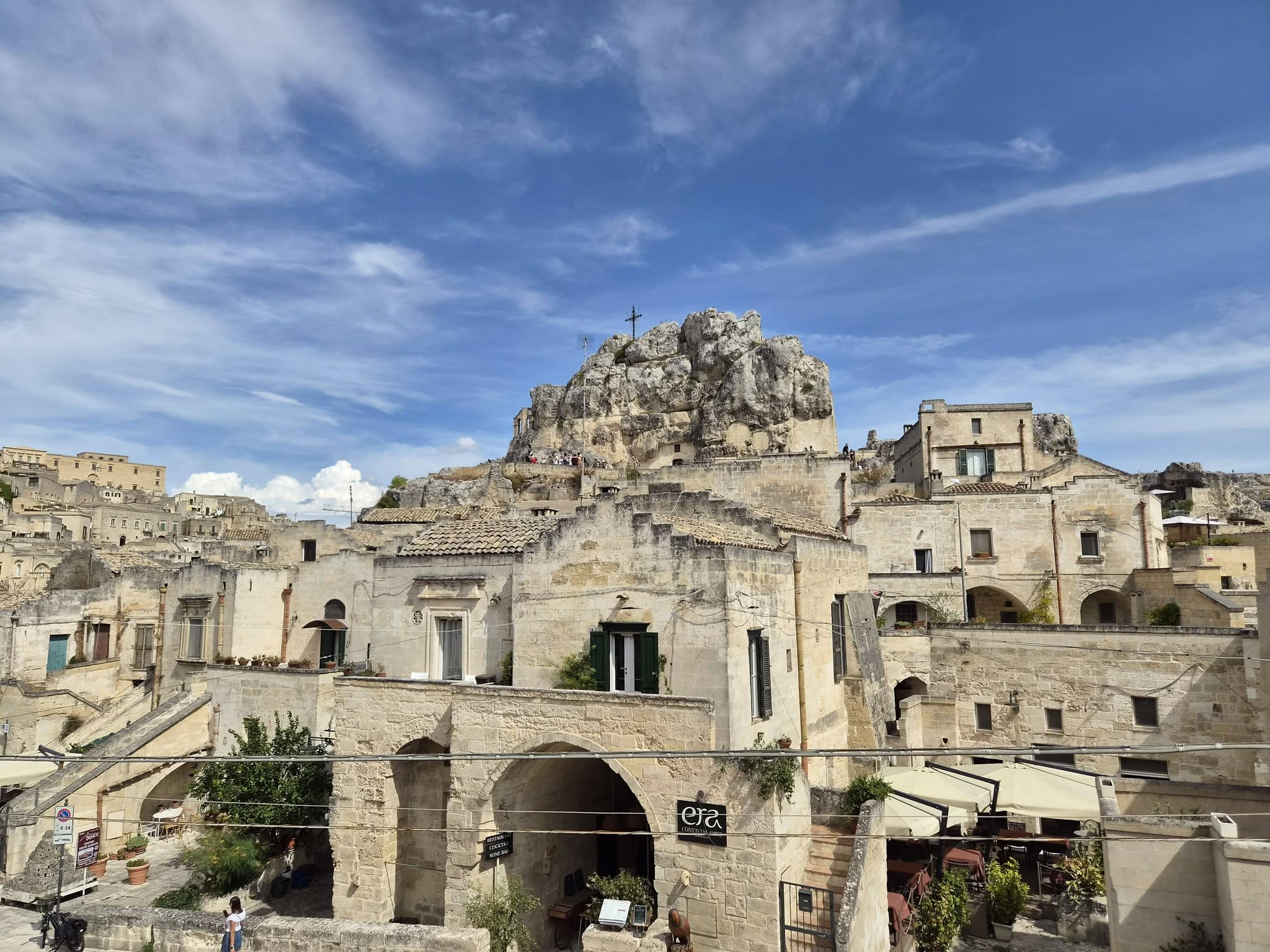
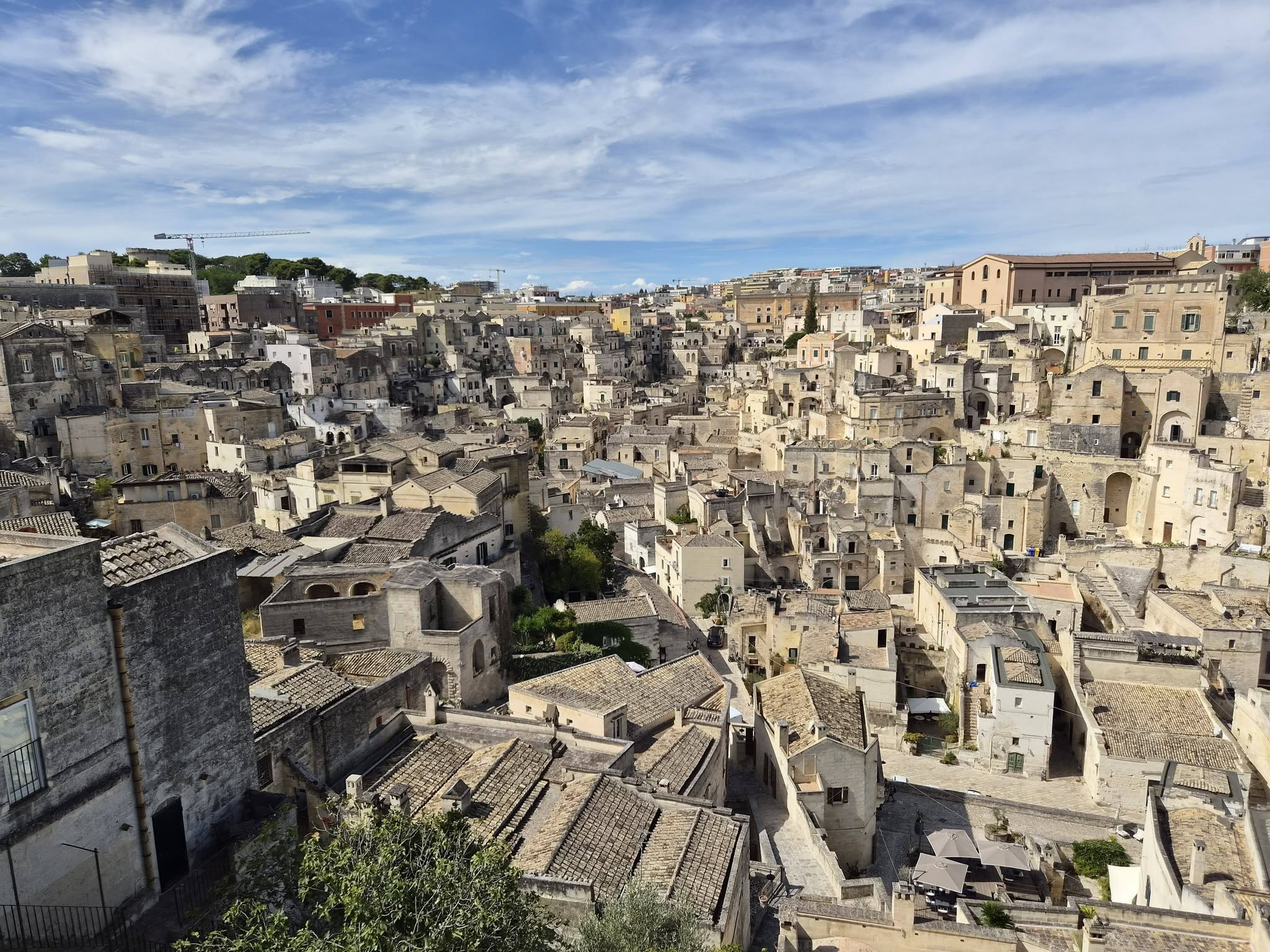
One of our most exciting excursions, one we were both very much looking forward to was our visit to Matera, which is situated on a rocky outcrop in the neighbouring region of Basilicata. Matera has a very long history, stretching back to prehistory, the eighth millennium BC, and is famous for its many cave settlements, consisting of two cliffside areas, known collectively as the Sassi. It was not until the twentieth century that the Sassi dwellings were declared unfit for modern habitation, and the people living there were moved to another part of the city, between 1952 and the 1970s. Right up to the 1980s the Sassi was still considered an area of poverty, since the cave dwellings were, almost uninhabitable and dangerous. Despite this, the city authorities, have in recent years, developed the areas tourism potential, and promoted the Sassi as a picturesque tourist attraction with the aid of the Italian government funding, UNESCO, and Hollywood movies.
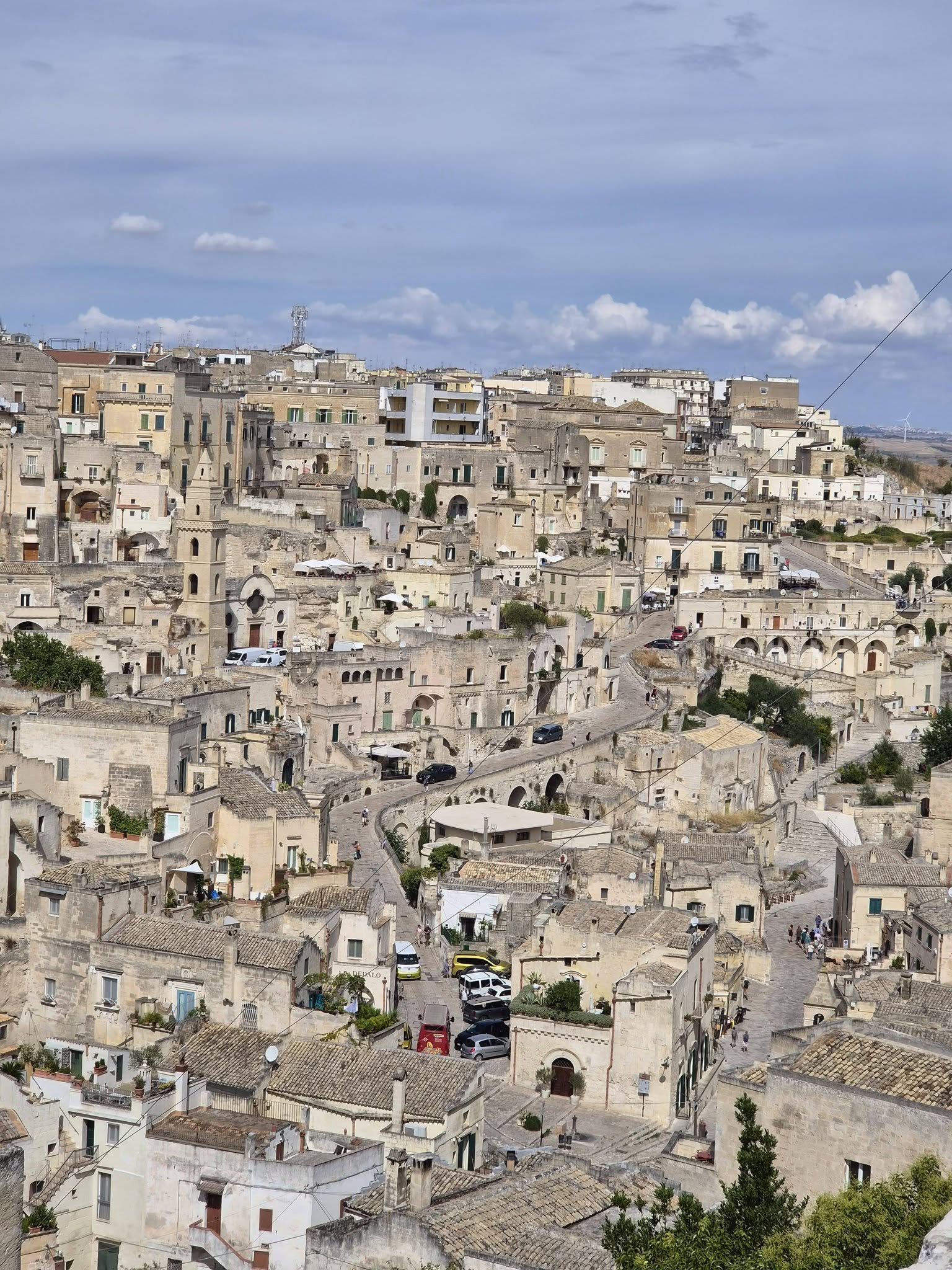
In 2019, Matera was declared a European Capital of Culture, along with Bulgaria’s second-largest city, Plovdiv. To stroll around Matera today you will find many tourist retail outlets, pubs, restaurants and fine hotels and Matera is said to be one of the fastest growing cities in southern Italy. The Mezzogiorno is still a relatively poor part of Italy, we saw plenty of abandoned buildings, some of some stature and great size, as we travelled around the two southern regions of Puglia and Basilicata.
Matera is a very popular film location and has often been labelled as “Little Jerusalem” by filmmakers, because it has been the setting for so many religious-themed films including The Gospel According to St. Matthew (1964), King David (1985), The Passion of the Christ (2004), Mary (2005), The Nativity Story (2006), The Omen (2006), amongst others.
I was particularly interested in its association with 007 James Bond. In 2021, it was the setting for many of the opening scenes in the Bond film, No Time to Die. I love this film and the ancient stone city and its unique cave dwellings forms the backdrop for a number of memorable scenes.
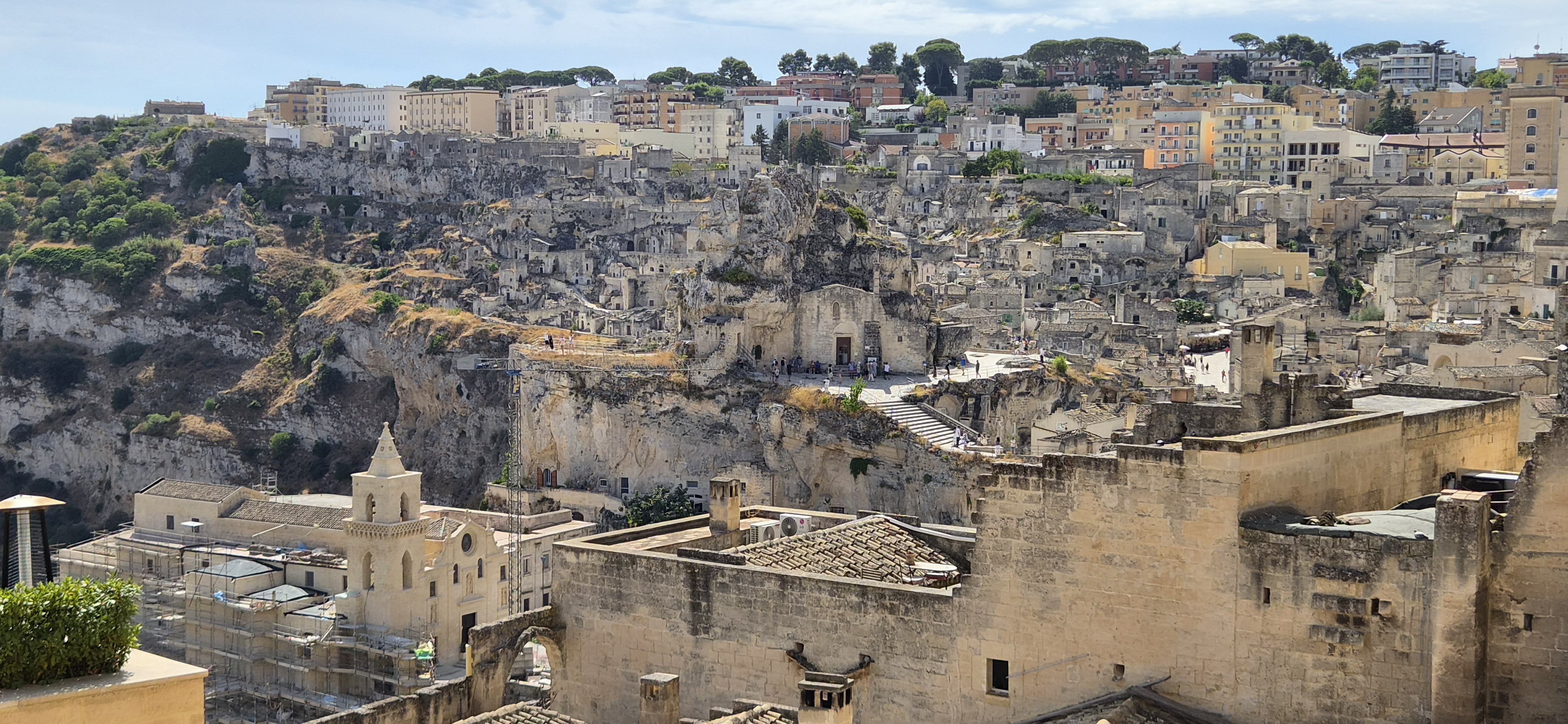
A high-speed chase around the city, ends with Bond completing his famous, DB5 Doughnut scene. Bond gets cornered in his bulletproof Aston Martin DB5 and releases a smokescreen, and spins 360 degrees while firing the mini-guns out of the headlights. Filmed at Piazza San Giovanni film crews nicknamed this specific location “Donut Square”. A dummy bell tower had to be constructed during filming, and the church exterior was covered in false walls to help protect the stonework and to hide “numerous squibs” or miniature explosive devices”. Unfortunately, we did not visit this square on our tour, much to my disappointement. Maybe, next time!
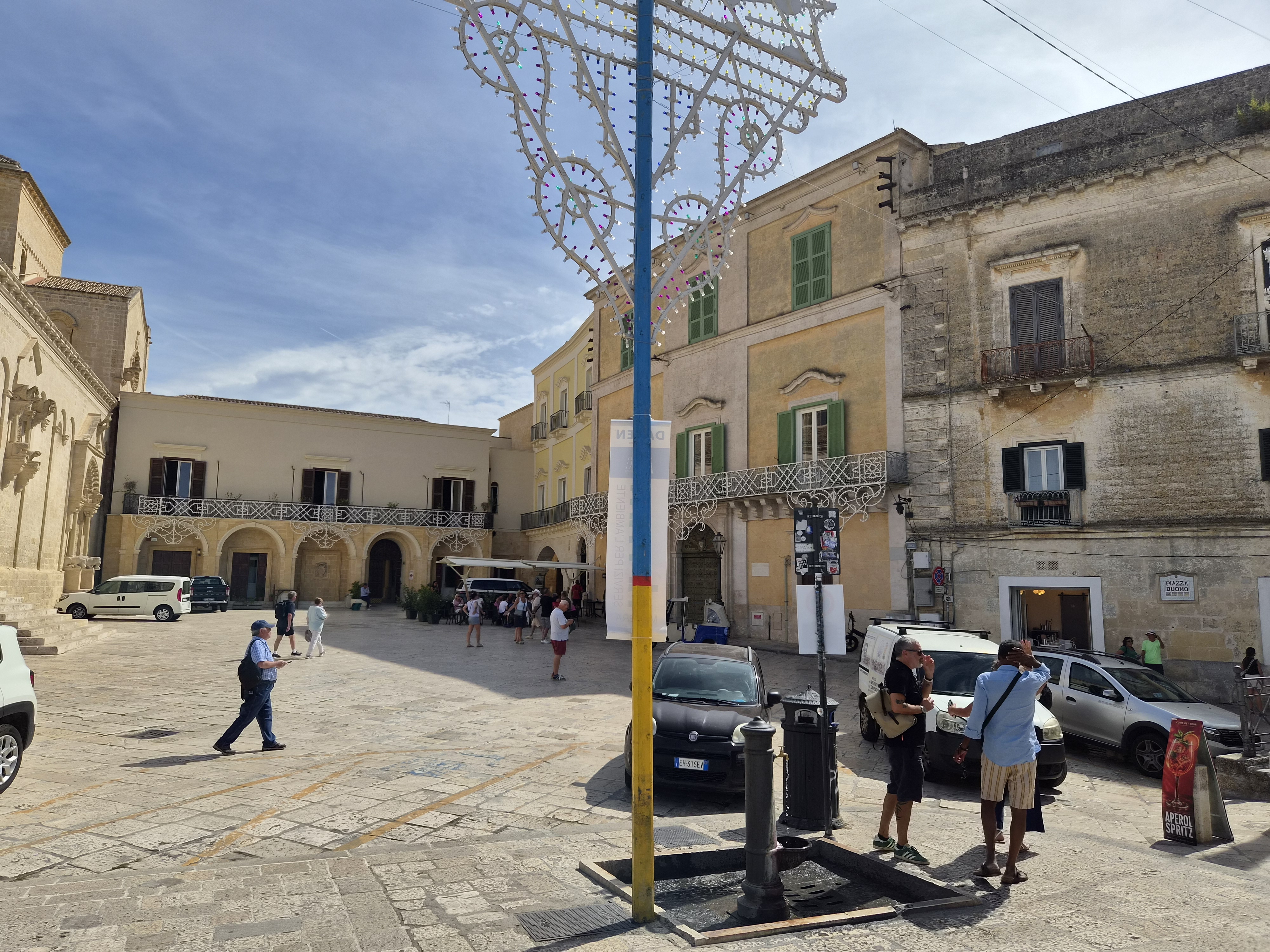
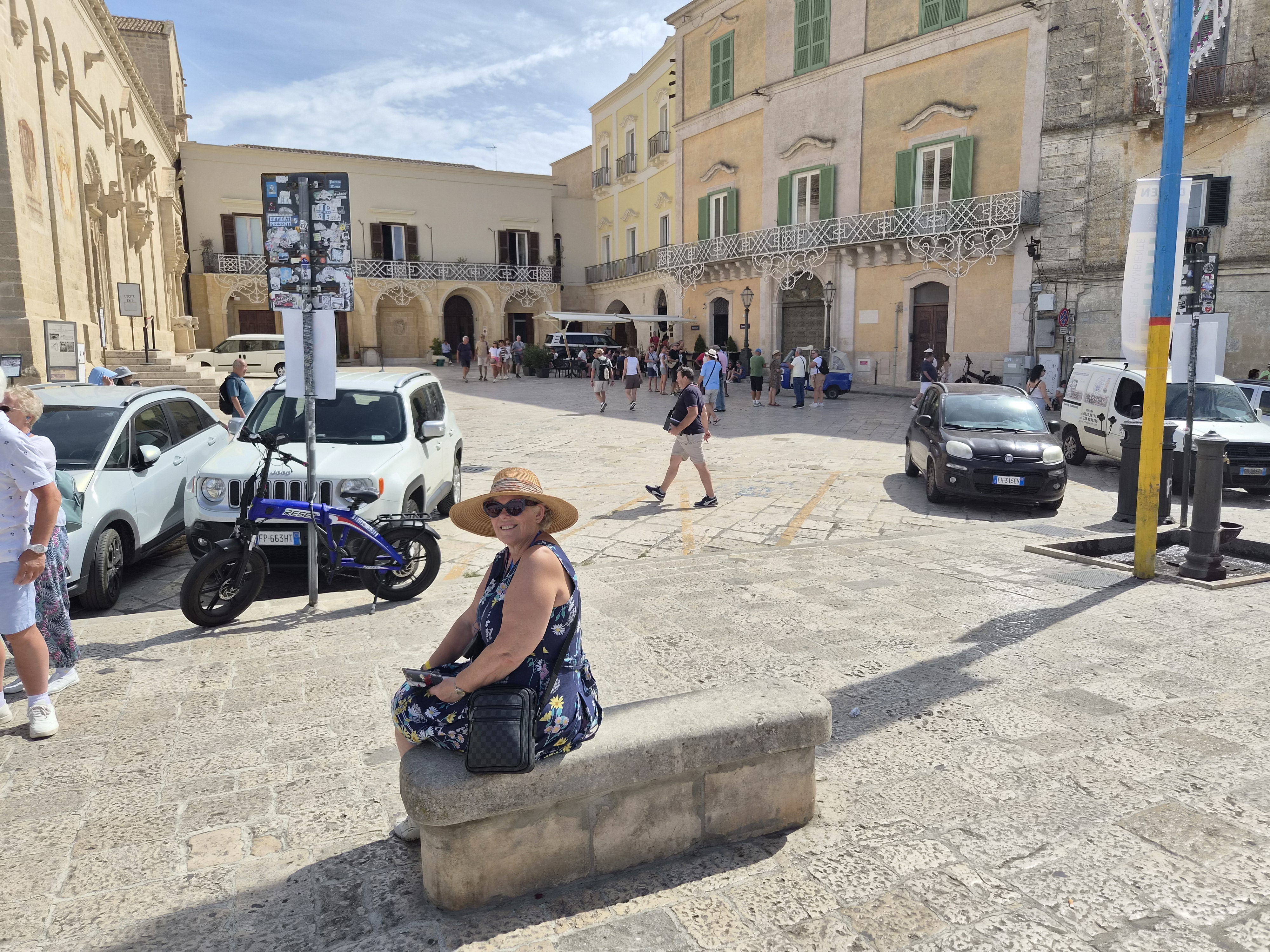
There was also another scene where Bond rides a motorbike at speed, up the Via Gradoni Duomo, a lightly stepped pedestrian pathway. The bike clears a high stone wall and lands directly in Piazza Duomo (Cathedral Square), which we did visit, swerving right past the front of the 13th-century Cathedral and through a crowded religious procession. The stunt was filmed next to Matera Cathedral, formally known as the Cathedral of Saint Mary della Bruna and Saint Eustac. A large ramp had been erected on the other side of a high stone wall, allowing Bond, or rather British stuntman Paul Edmondson, to ride up the ramp at speed and leap over the wall, and avoid hitting the procession.
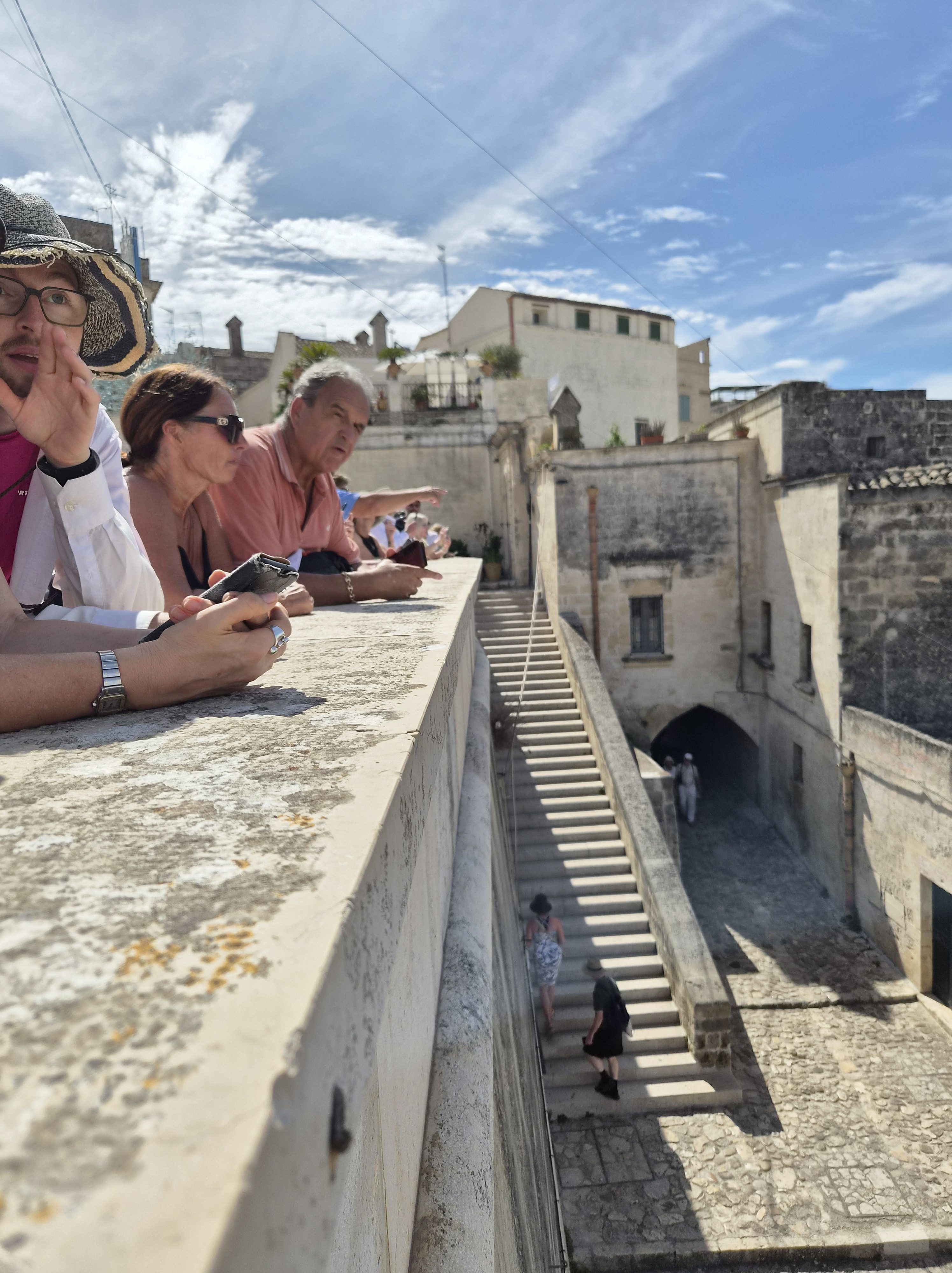
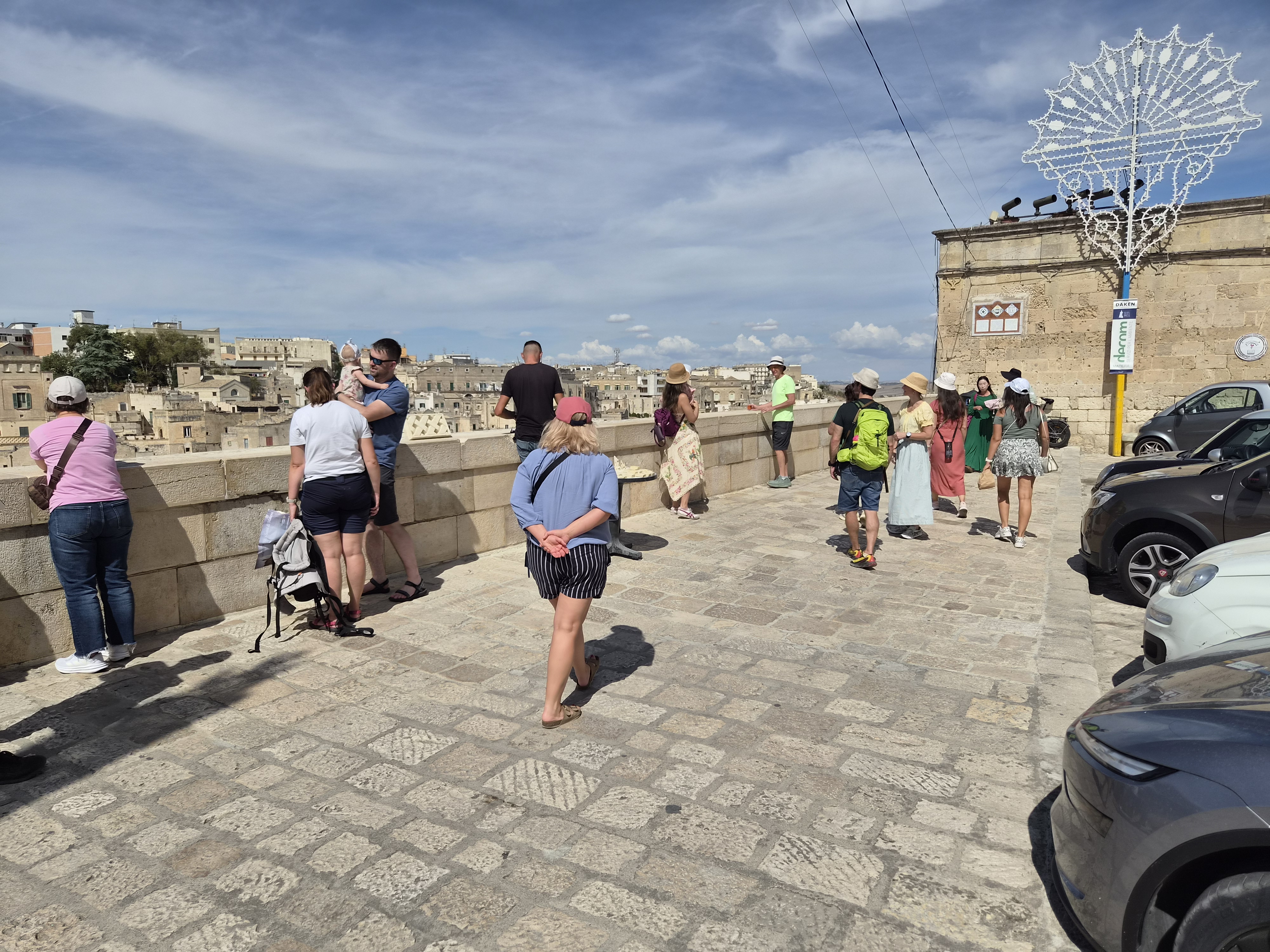
Although, in the movie, film edits can sometimes make them look like the locations are right next to each other, the real-world locations are some distance apart. For me it was special to be able to see some of the places, where these memorable scenes were filmed.
I was also looking for the stone bridge that Bond leaps from, after being shot at, in the film, but our guide told me that the bridge scene was in fact filmed in Gravina in Puglia, some twenty miles away, on the eighteenth-century bridge, the Ponte Madonna della Stella or simply il ponte di Gravina. Maybe on my visit to Southern Italy!
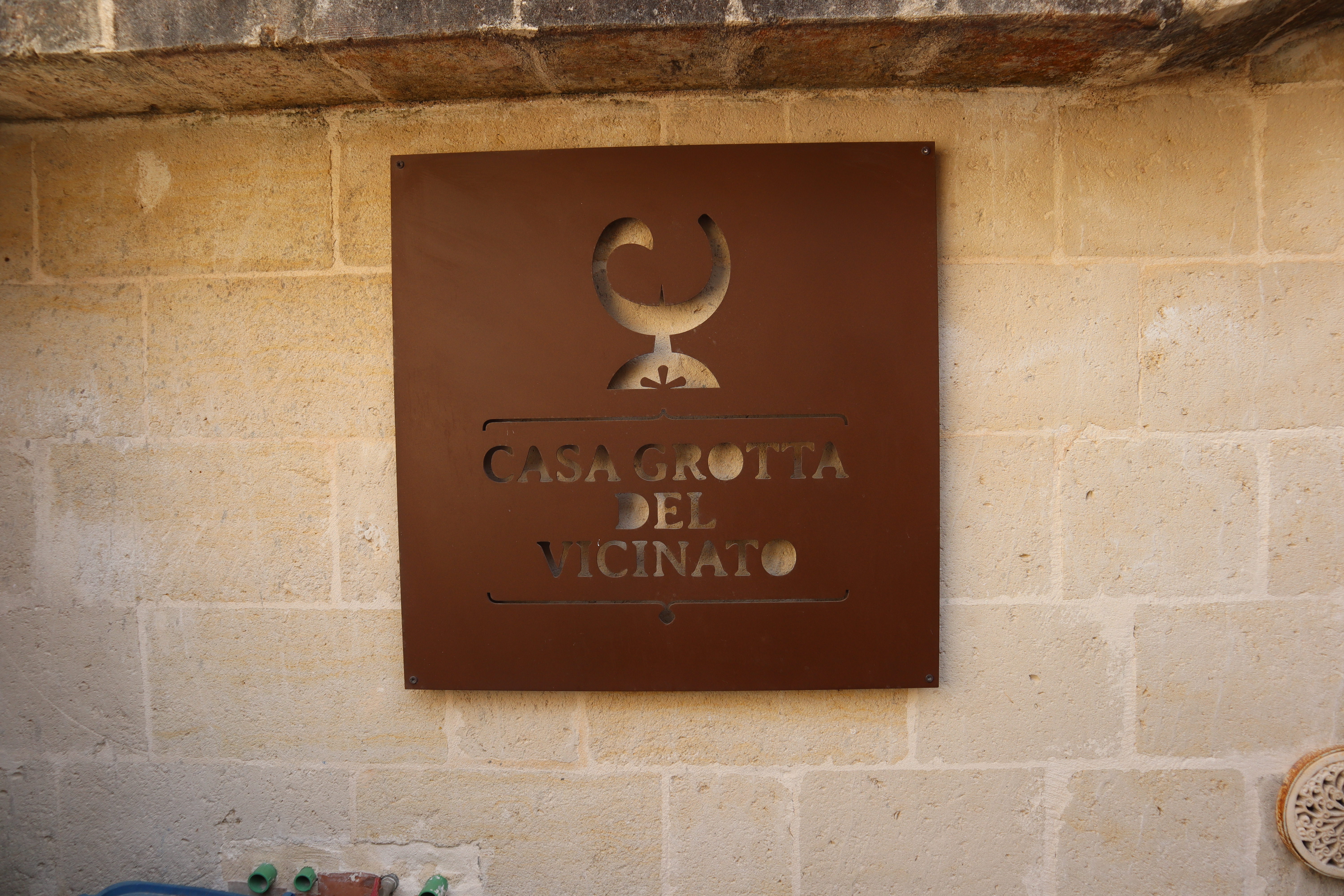
Casa Grotta Del Vicinato.
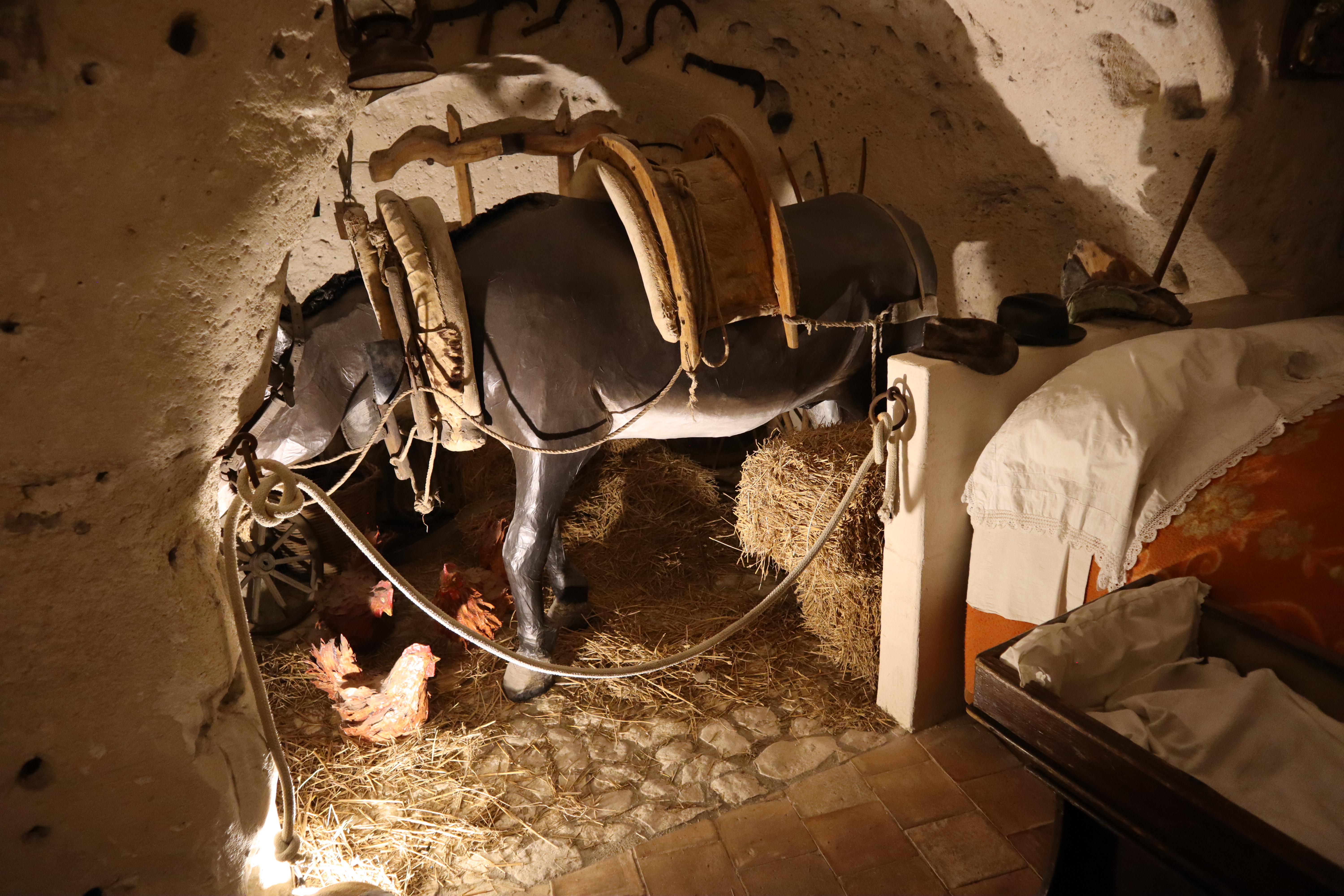
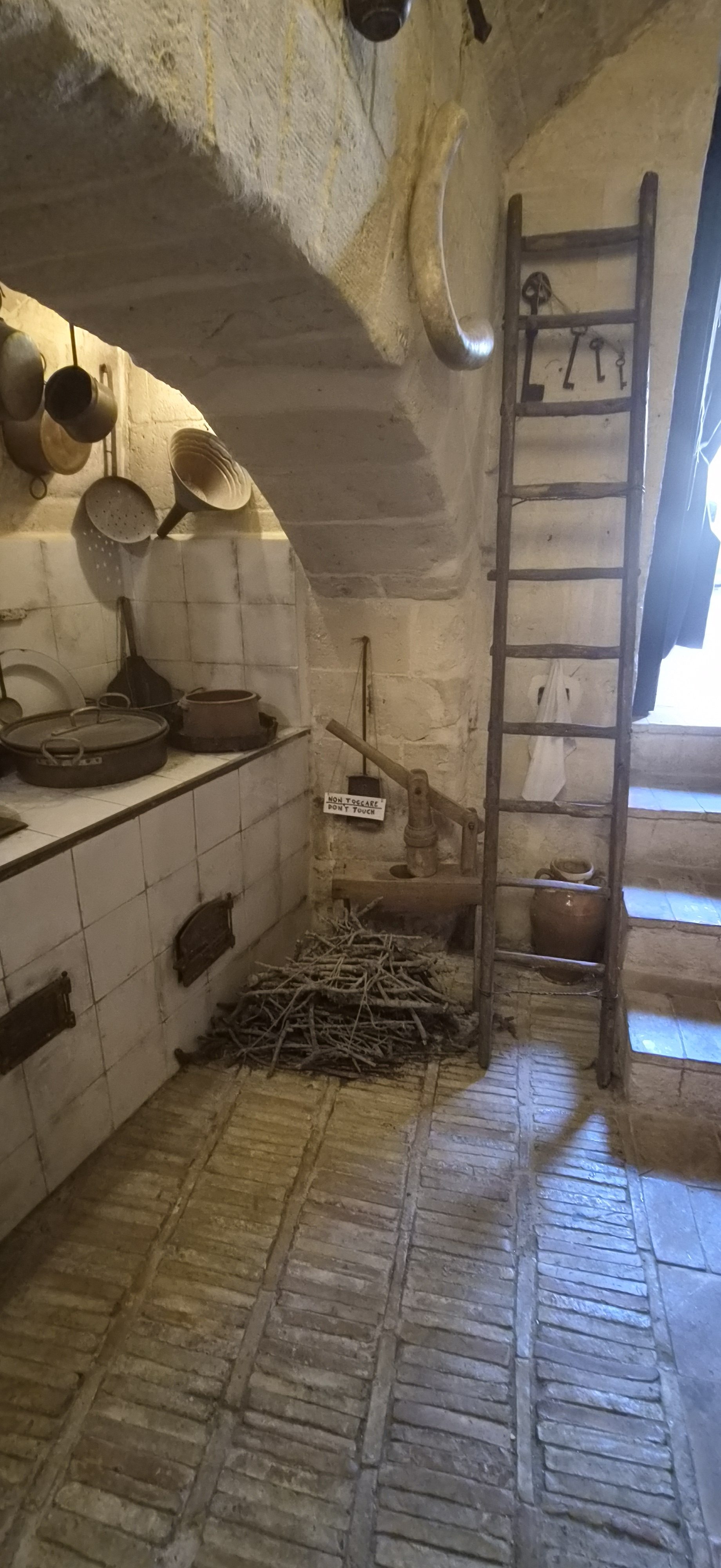
There are a number of authentic cave houses open to the public, an opportunity we were not going to miss, so we visited the Casa Grotta Del Vicinato, or Vicinato Cave House, to take a look around a typical cave-house, dug out of the rock, with recreated rooms that show something of the ancient dwellings of the Sassi of Matera. The Vicinato Cave House is an original & faithful restoration of a Sassi cave dwelling, which gave us the opportunity to see how the cave dwellers of the Sassi may have lived and worked. We walked through a small kitchen area at the entrance, with an original well for water, into what would have been the main room, which would have become a bedroom at night, for the whole family. The animals would also have shared the accommodation, so there was a model of a donkey, tied up next to a large bed, which had a baby’s cot next to it and various farming tools, pots, barrels, trays and other items, piled up high on shelving or dotted around the floor.
I really enjoyed visiting Matera, it really is an incredible place. It looks fantastic, it has so much to look at and immerse yourself in. If you get the chance to visit Southern Italy, make sure the city of Matera is on your bucket list, as it is a must – do place to visit. Get it on your bucket list, today!
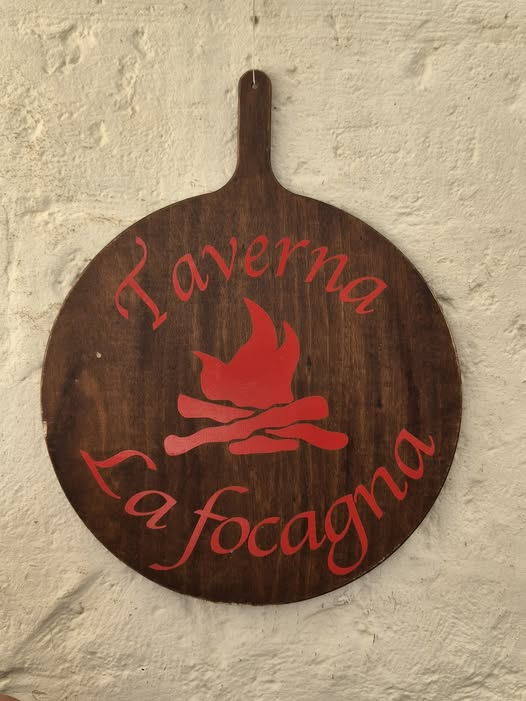
Having followed our guide through the tight, steep and sometimes very slippery cobbled streets of Matera, my wife and I decided to stop off at the historic Taverna La Focagna in Matera for a Della Bruna Sandwich of dry – cured ham, buffalo mozzarella, rocket, tomato & oil and a Pils Bitburger Premium Pale Ale, for light refreshment. The staff were very friendly and efficient, we didn’t have to wait long for our wonderful food and drink, in what turned out to be a unique building, having been built out of the rocks. A trip to the toilets became an adventure in itself, a darkened walk down into the depths of the restaurant, then back up several twisting staircases, amongst the rock walls, before eventually finding the toilets. If visiting the ancient stone neighbourhood of Sasso Caveoso, when exploring Matera, I would fully recommend this wonderful Restaurant and Taverna. I loved it!
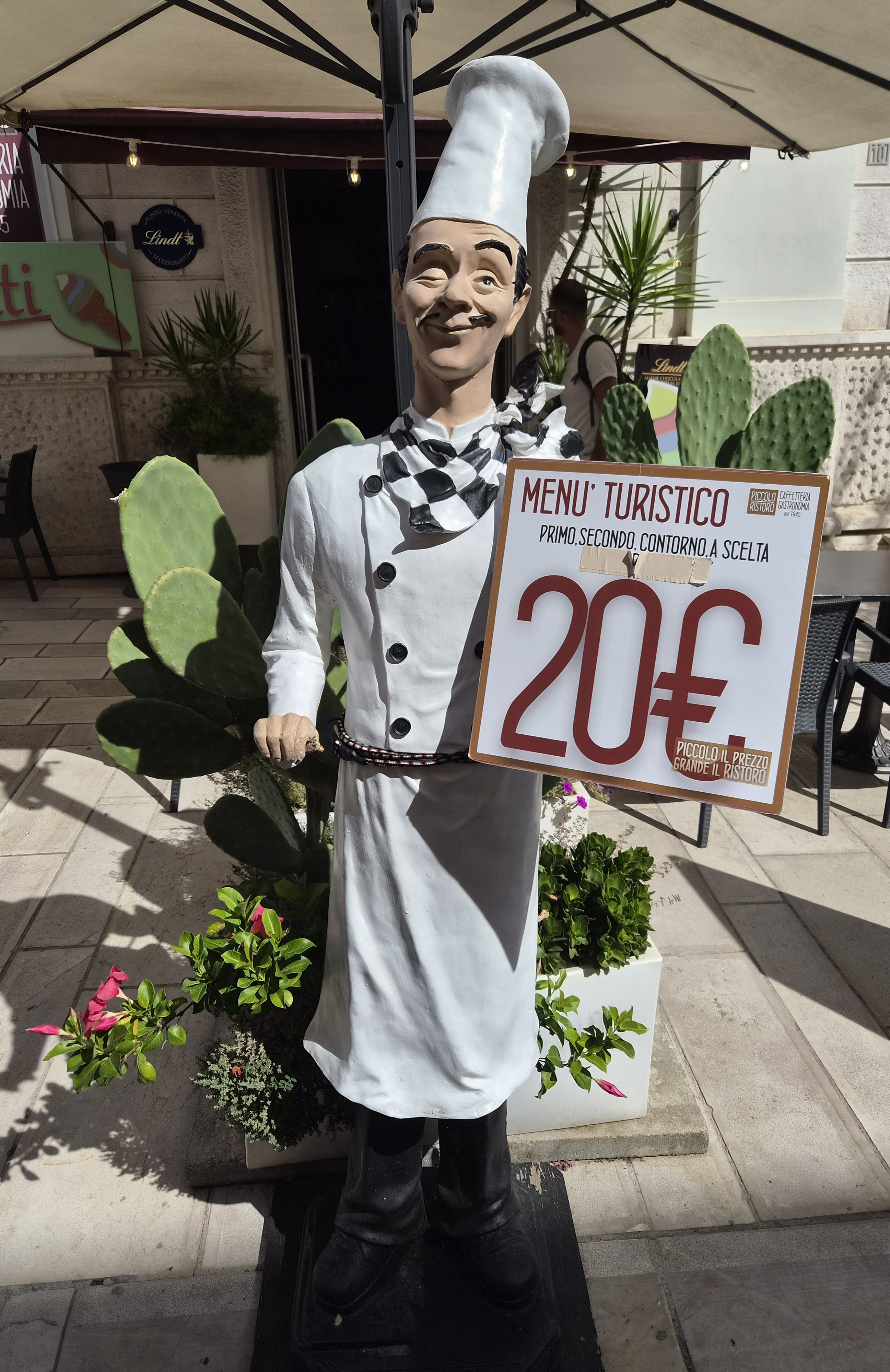
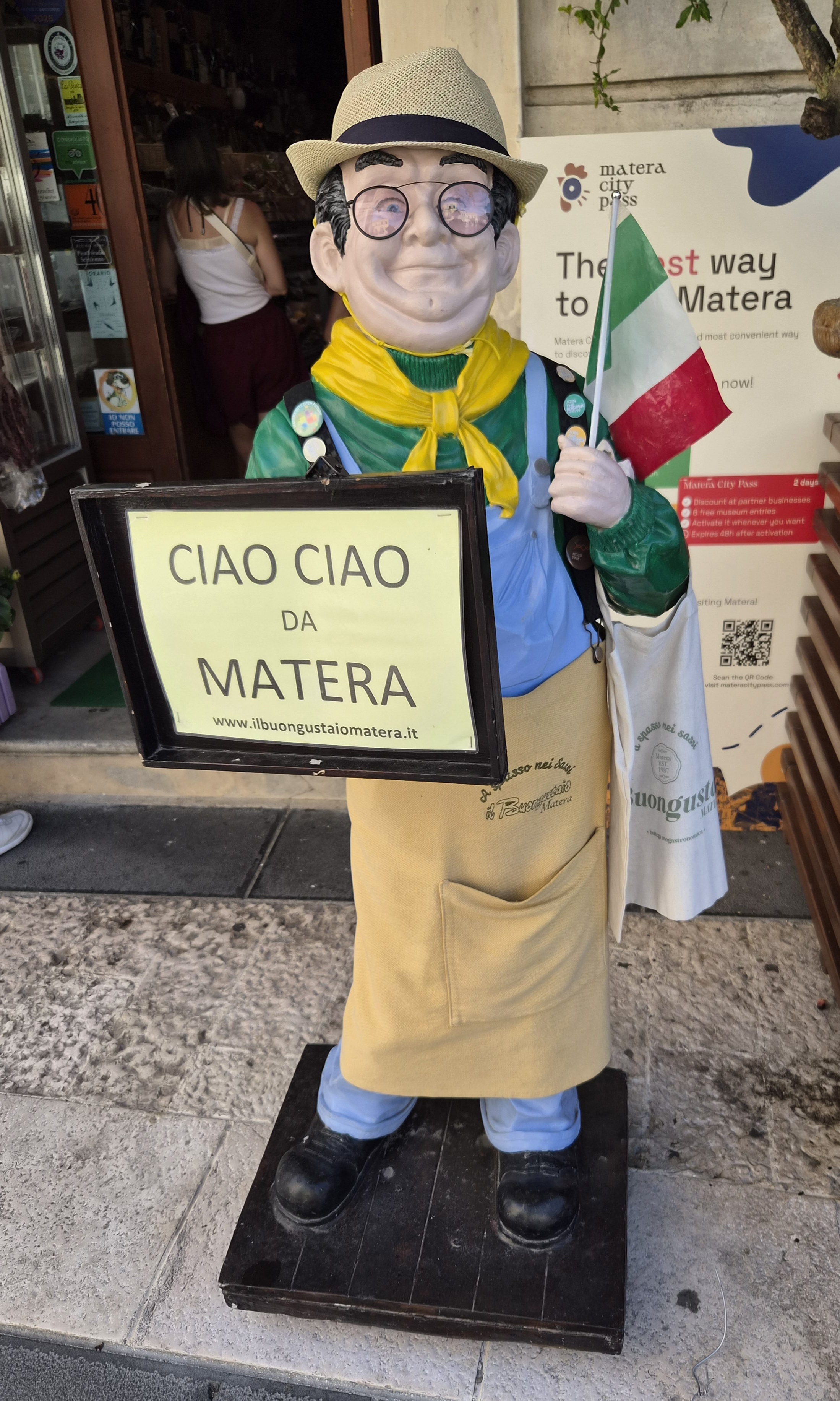
Quirky Matera – I loved these colourful promotional figurines which appeared across Matera.
Polignano a Mare, in the province of Bari (Apulia).
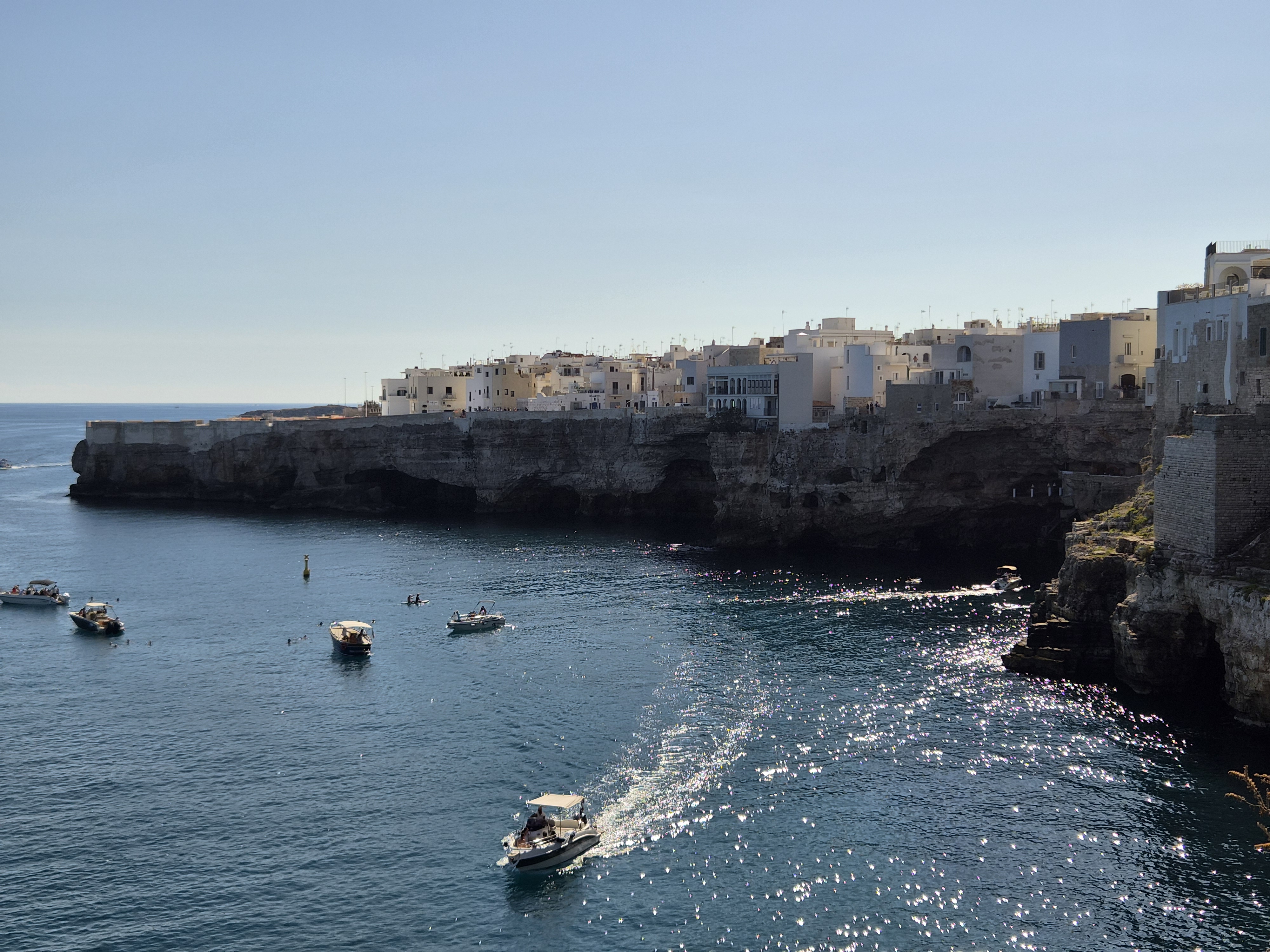
My wife was not feeling too good on the day our group was visiting Bari, so I decided to take advantage of the free resort shuttle to the nearby town of Polignano a Mare. I was surprised how short the journey was from our resort, about eight minutes, but I very much appreciated the free shuttle mini-bus to and from Polignano. What a stunning destination it is too, if only I could have stayed a little longer.
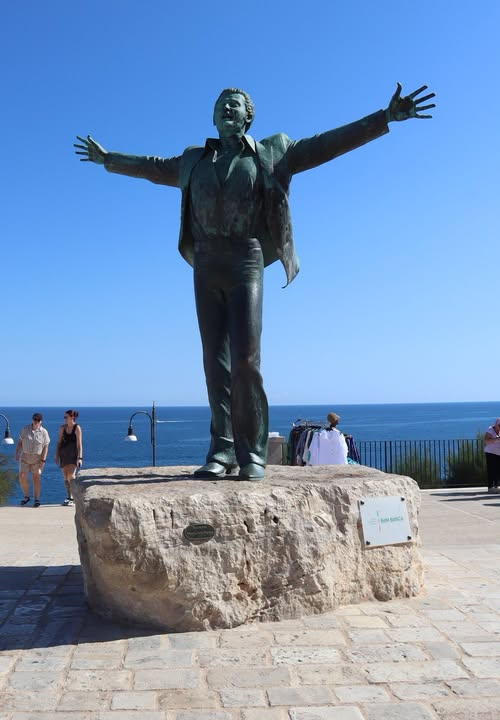
Having been dropped off in this beautiful coastal town, I walked a short distance and came across a striking statue of Domenico Modugno, a world-famous Italian singer, composer, and actor, who was born in the town. He is shown here, I am reliably informed, in his most characteristic pose, with his arms held wide open, as if at the climax of performing his legendary song “Nel blu dipinto di blu”, better known as the famous song “Volare”. Have you heard of Domenico Modugno or the song “Volare”, which came third for Italy, in the 1958 Eurovision Song Contest. I have to admit my ignorance about not knowing anything about Domenico Modugno, but I have heard the song “Volare, many times before.
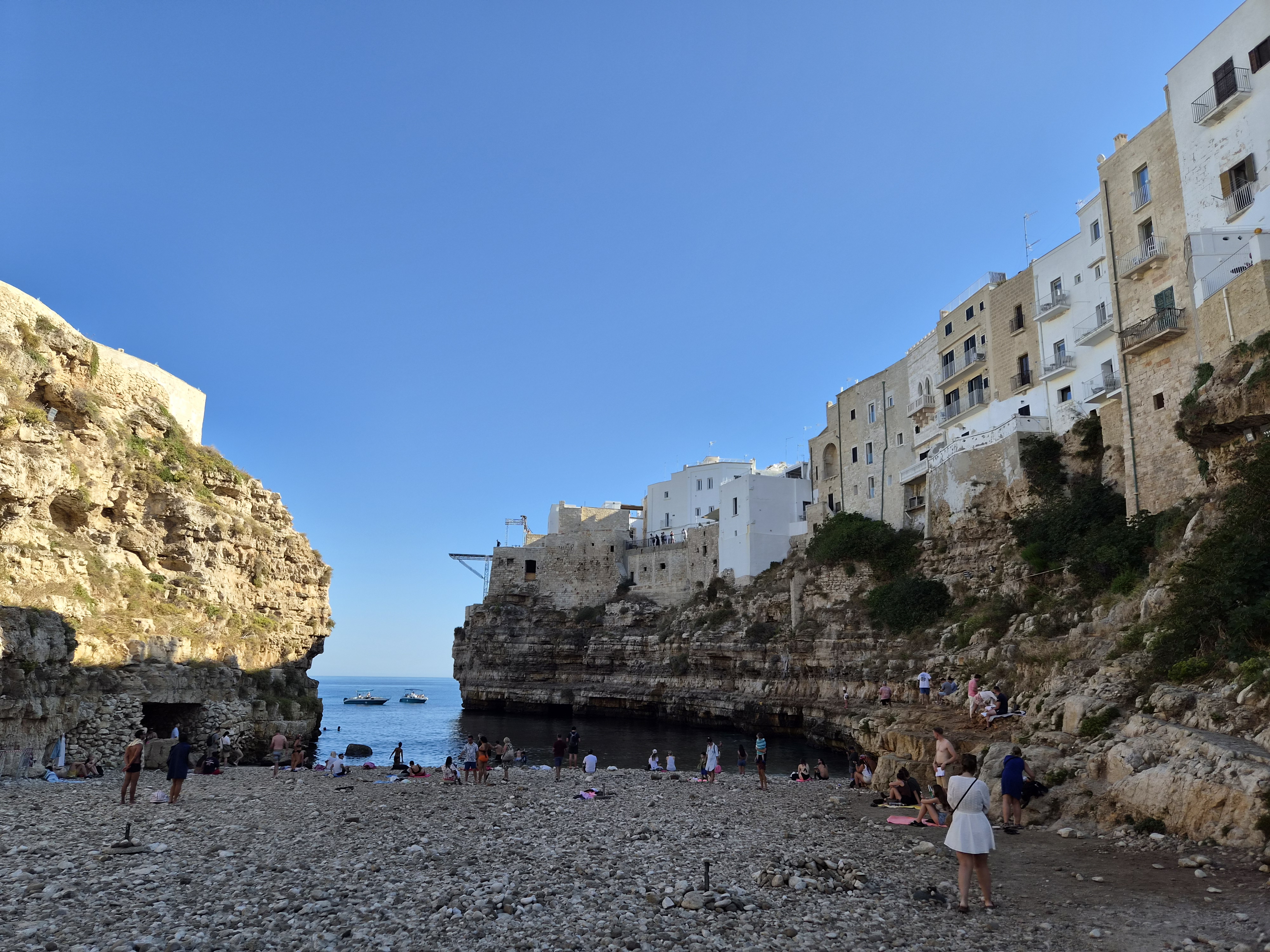
A dark, mysterious and enchanting passageway to the Cala Porto Beach, the Lama Monachile in Polignano a Mare.
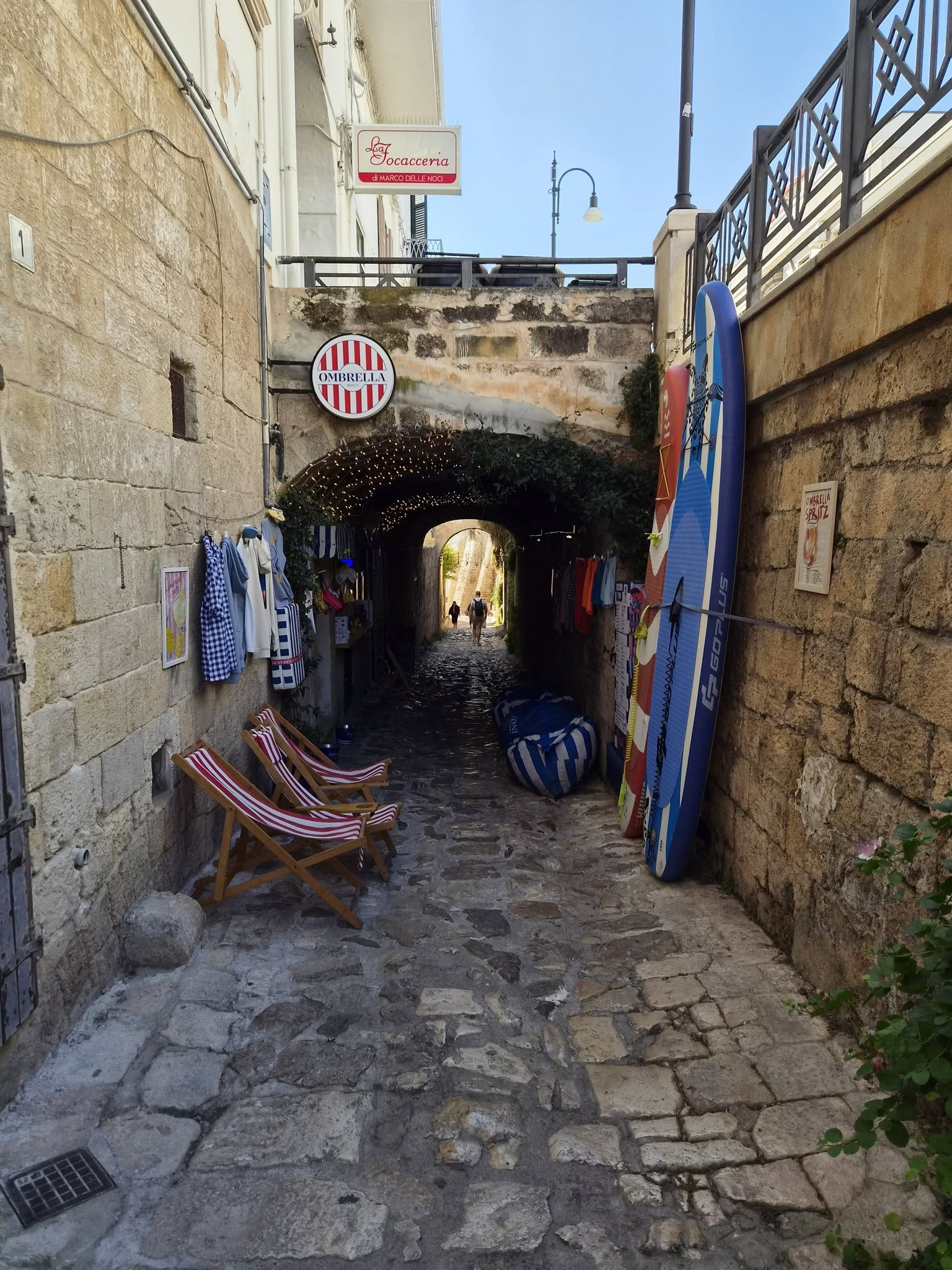
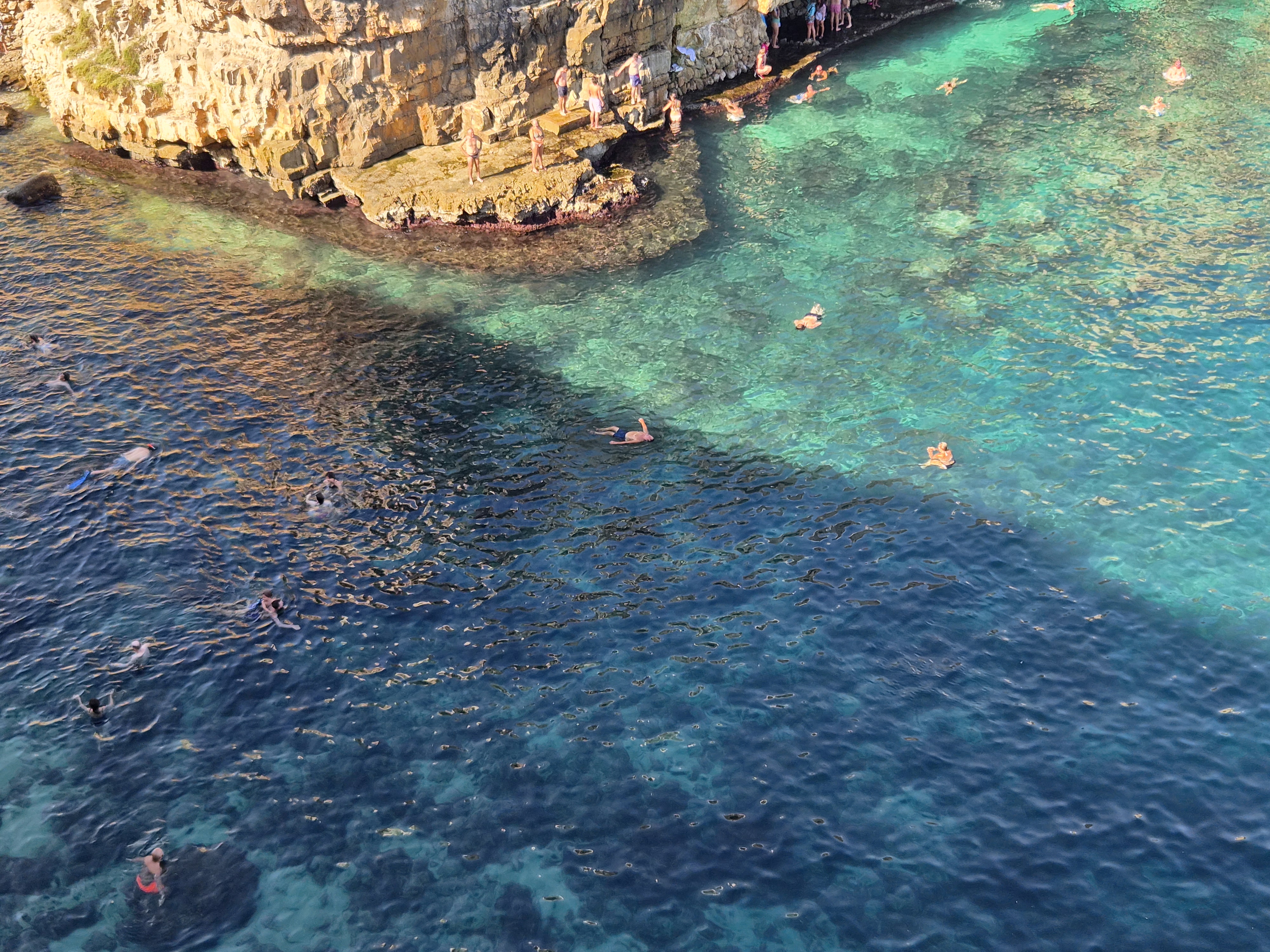
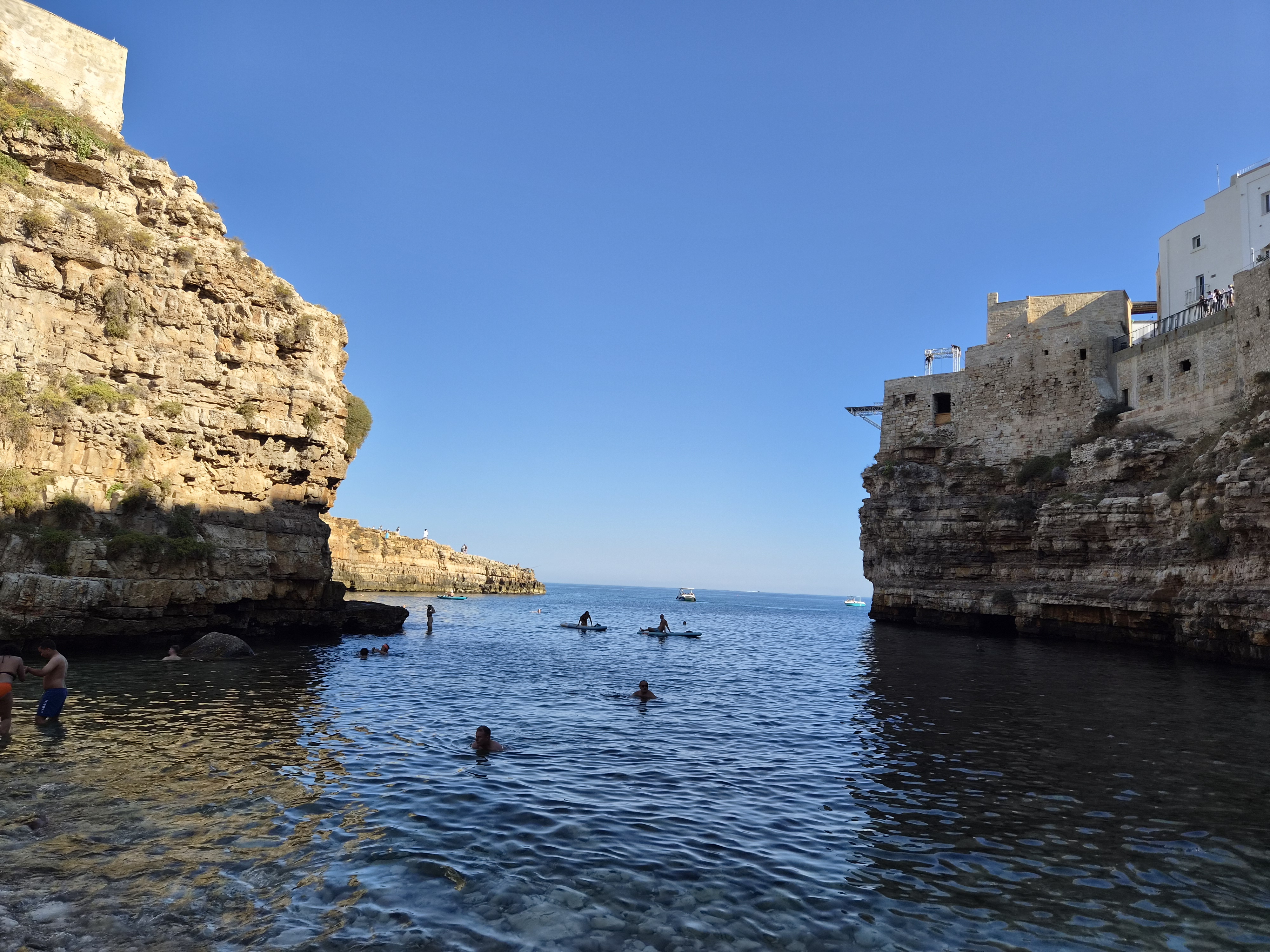
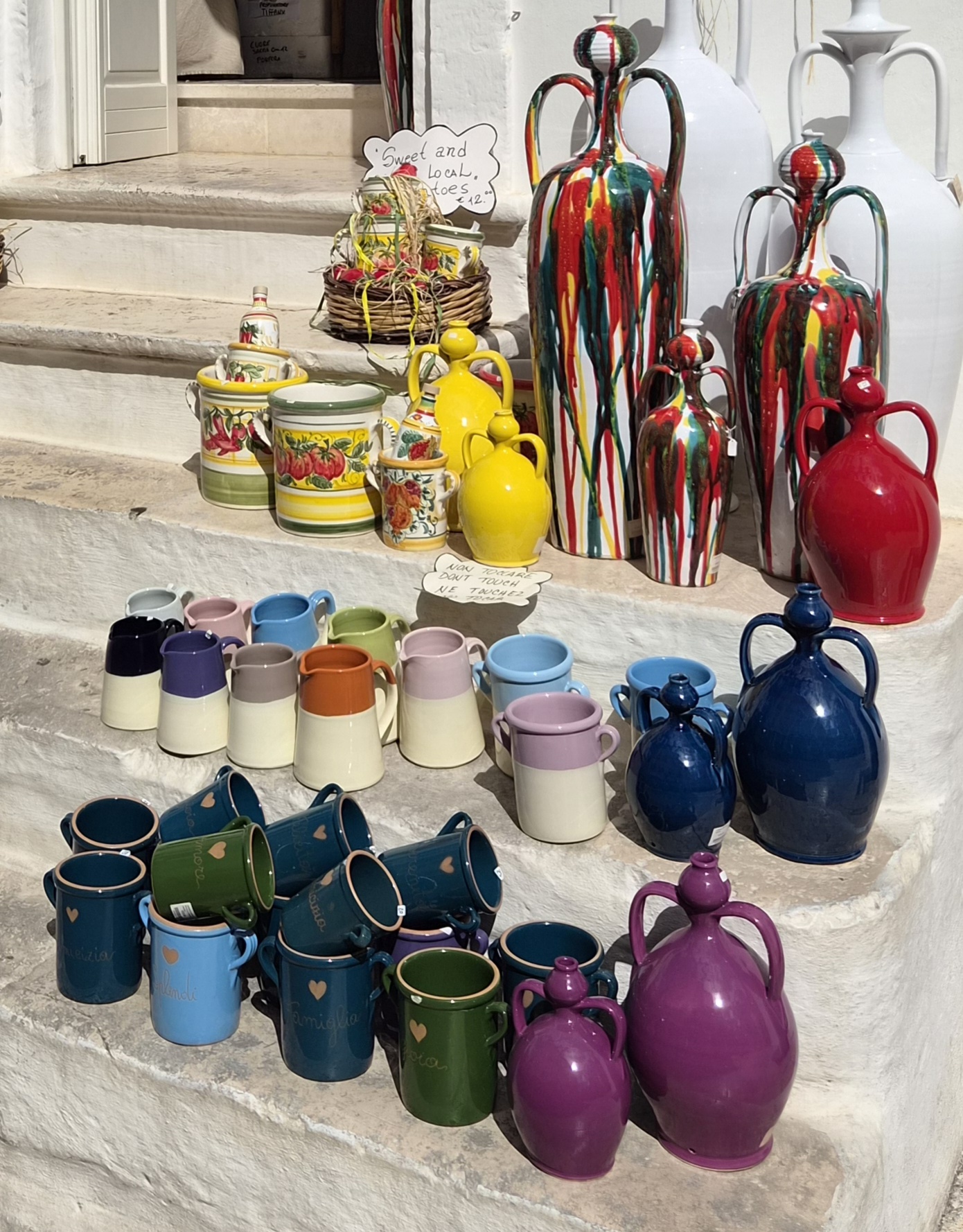
I went down on to the beach and explored the famous cove at Polignano a Mare. What a delightful and popular place it is to swim, dive or catch some sun on the rocky beach. Local divers are known to dive from the high cliffs which surround the cove, but unfortunately not on the day I was visiting. Walking the narrow streets of Polignano a Mare, I came across several beautifully presented shop fronts, such as the Ceramiche Pugliesi. I spent a good two hours exploring the stunning former medieval fishing port of Polignano a Mare and its famous cove & Cala Porto Beach, the Lama Monachile. What a delightful place to stroll, before the crowds arrive!
Lecce
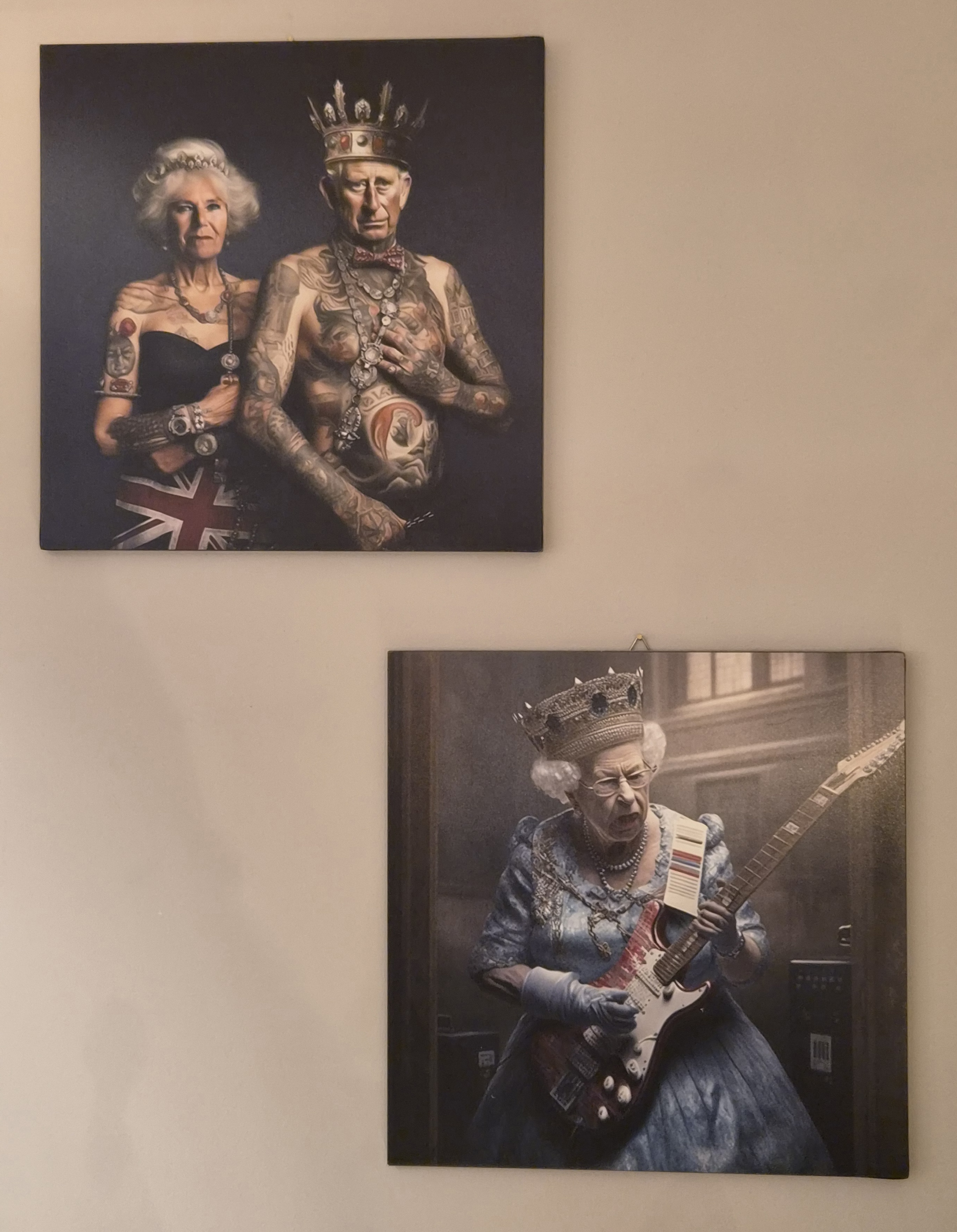
Who would have thought it! The artist who created these two pieces of AI generated photography, clearly has a wild sense of humour. Seen on a café wall in the city of Lecce, which we visited to enjoy a coffee and cake! Off with their heads, I say!
We had stopped off to enjoy a pasticciotto, one of Puglia’s most treasured pastries, the Italian equivalent of a Portugese pastel de nata. It was crispy on the outside, filled with warm, creamy custard, which can sometimes be filled with ricotta cheese, and flavoured with lemon zest or chocolate. Back home in England, I love a custard tart, but this was a level above! The pasticciotto uses a thick, crumbly, buttery shortcrust pastry (pasta frolla) and is a speciality of Lecce. It is traditionally enjoyed fresh, warm from straight from the bakery, and eaten whilst enjoying a Caffè Leccese, which is a classic speciality coffee from the Salento region of Puglia. It is made by pouring a hot shot of espresso over ice cubes with a sweet almond milk or almond syrup. The sweet, nutty almond flavour complemented the warm custard inside the pasticciotto perfectly. A real delight. I think my wife and I will be enjoying a lot more pasticciotto and Caffè Leccese, the next time we visit Puglia. A simple yet very comforting slice of heaven and of course, a very local taste of Puglia! We both enjoyed it so much, we ordered several more, when we stopped off for another coffee later in the afternoon.
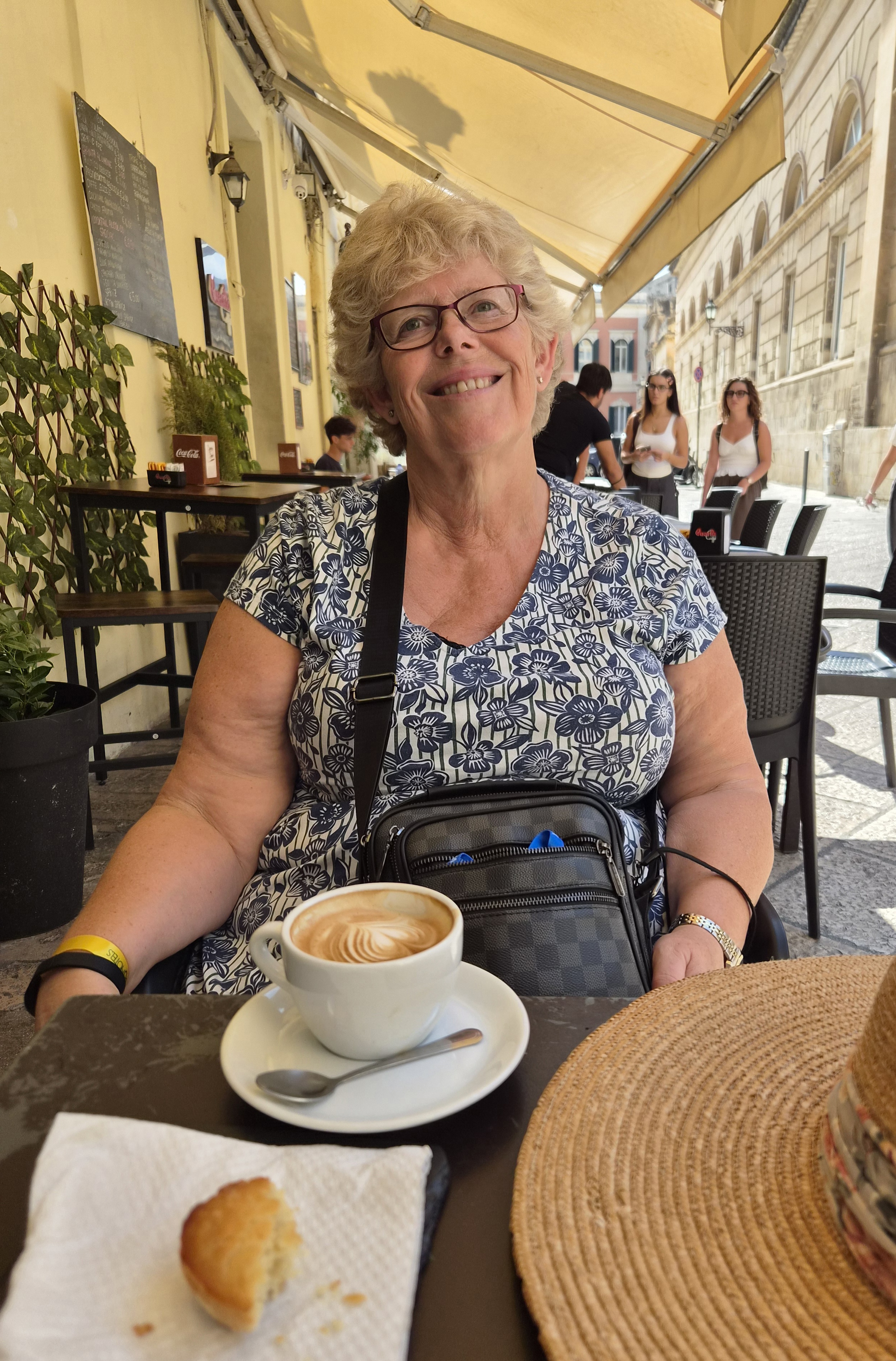
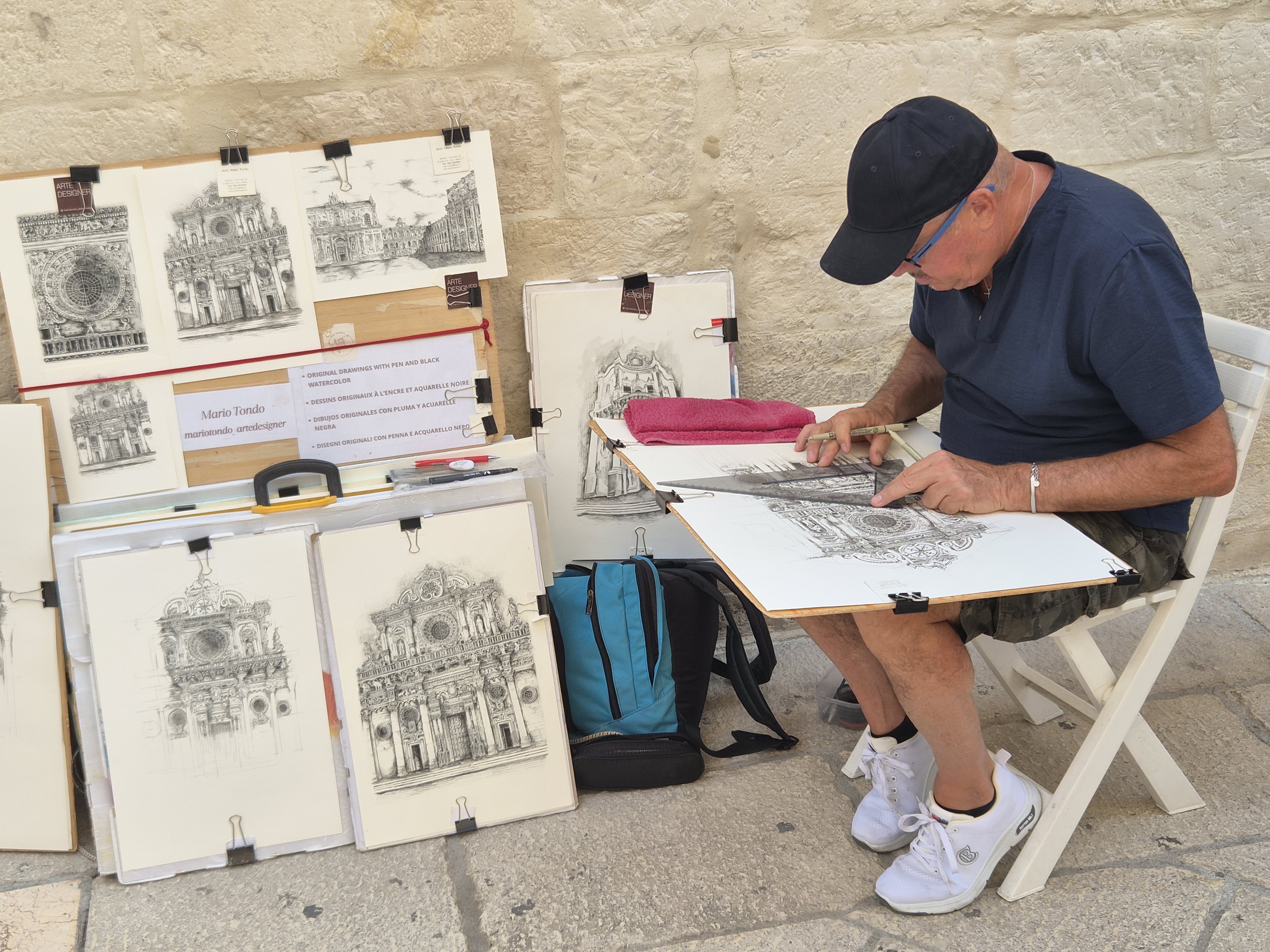
Artist at work in Lecce,
Alberobello
In the town of Alberobello, in the province of Bari, this is where you will find large concentrations of the iconic trulli houses. Alberobello is such an extraordinary place to visit. Unfortunately, many others had the same thought on the day we visited. Nevertheless, it did not distract from our visit.
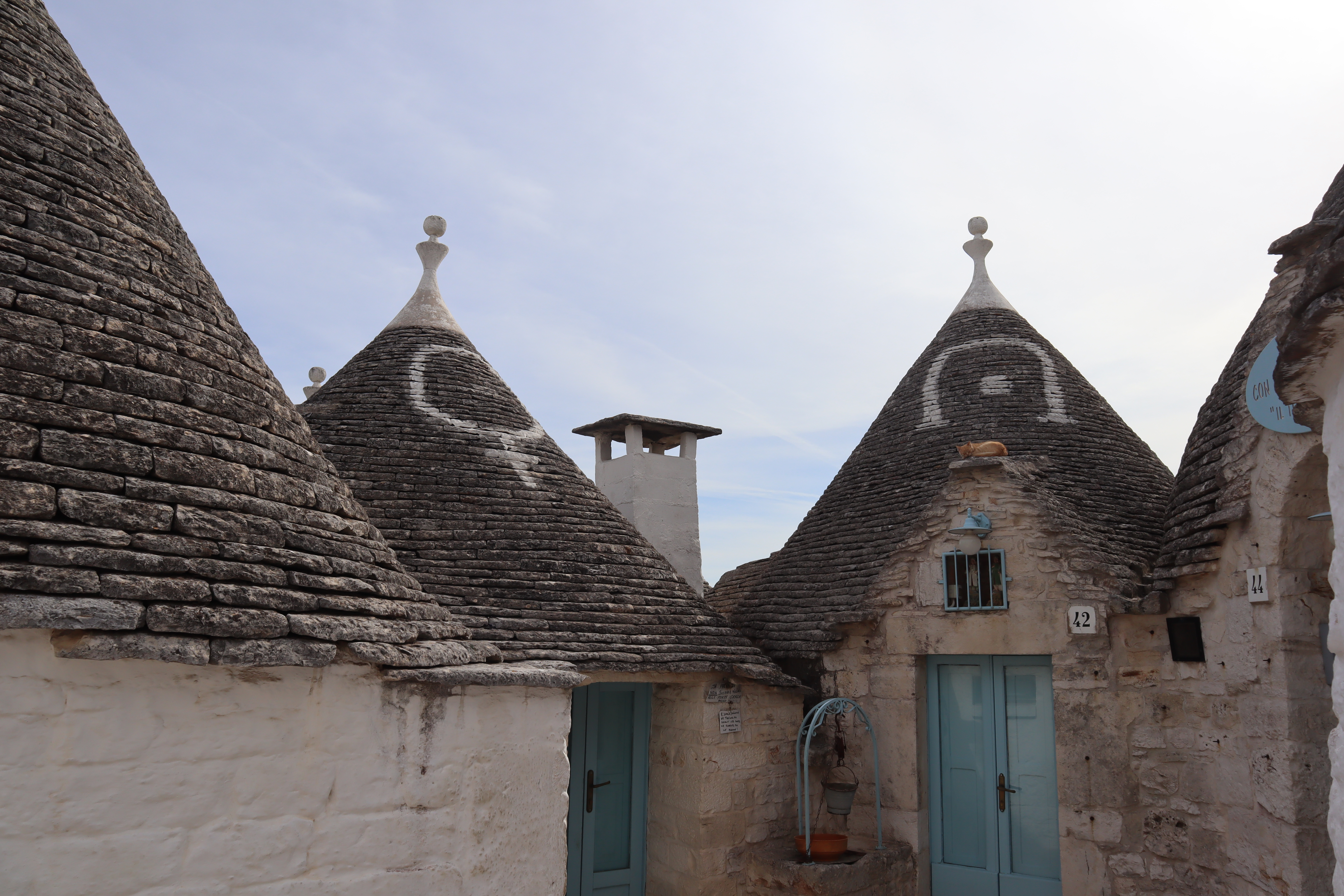
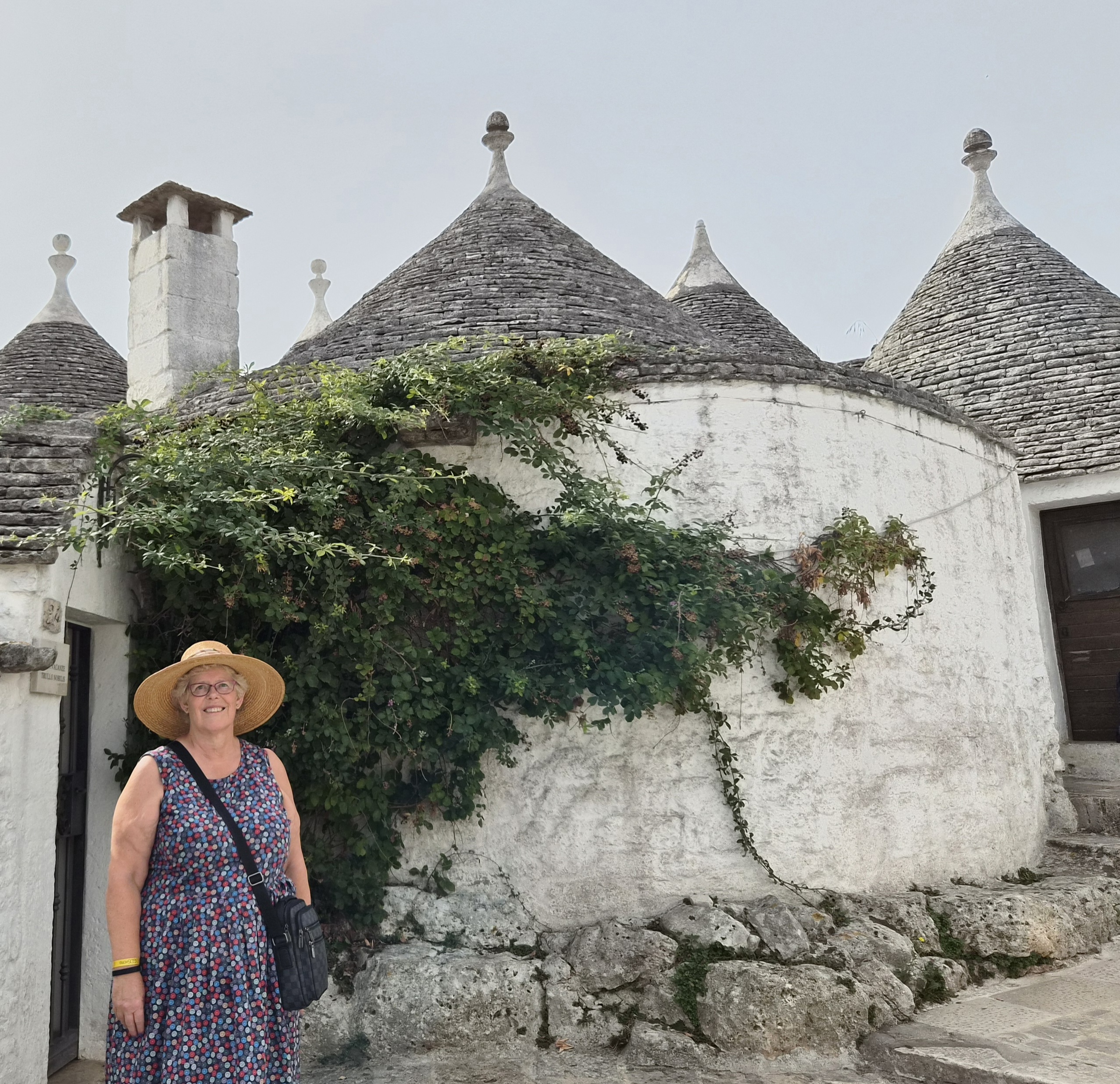
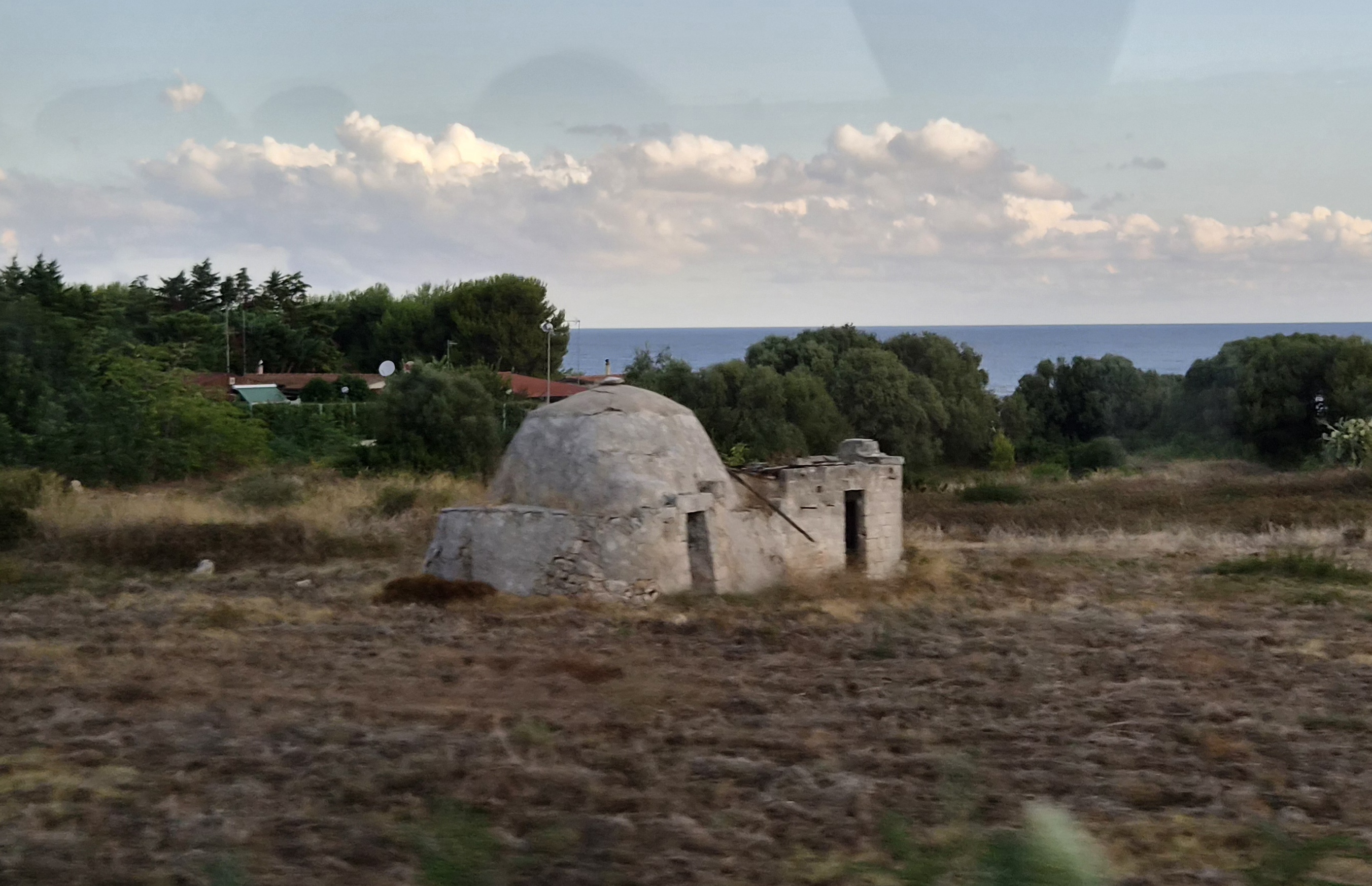
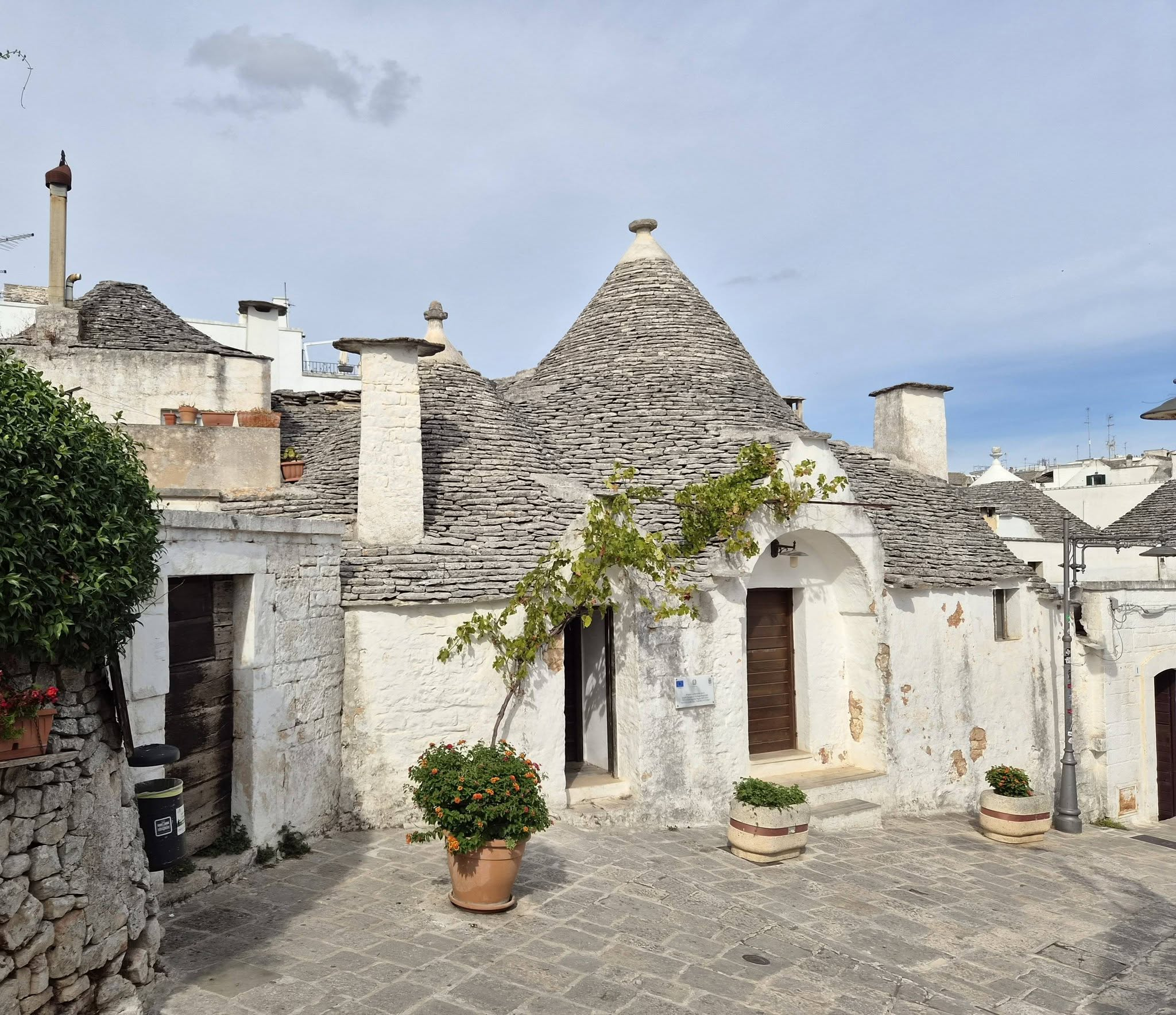
A trullo (plural, trulli) is a traditional Apulian dry stone limestone hut, with whitewashed walls and a distinctive cone – shaped, grey stone roof, built without using mortar, using corbelled limestone slabs. It is said, but no one knows for sure that Trulli were usually constructed as temporary field shelters/storehouses or as permanent dwellings by estate landowners for their agricultural labourers. It is rumoured that the trulli houses were sometimes built by local farmers, who looking to avoid property housing taxes, could quickly take apart their homes when the tax inspectors were nearby, thus avoiding the tax, then they could be quickly rebuilt, when they had gone. Local landowners could also easily throw the peasant farmers off the land, when they wanted to sack them, by taking apart their homes easily.
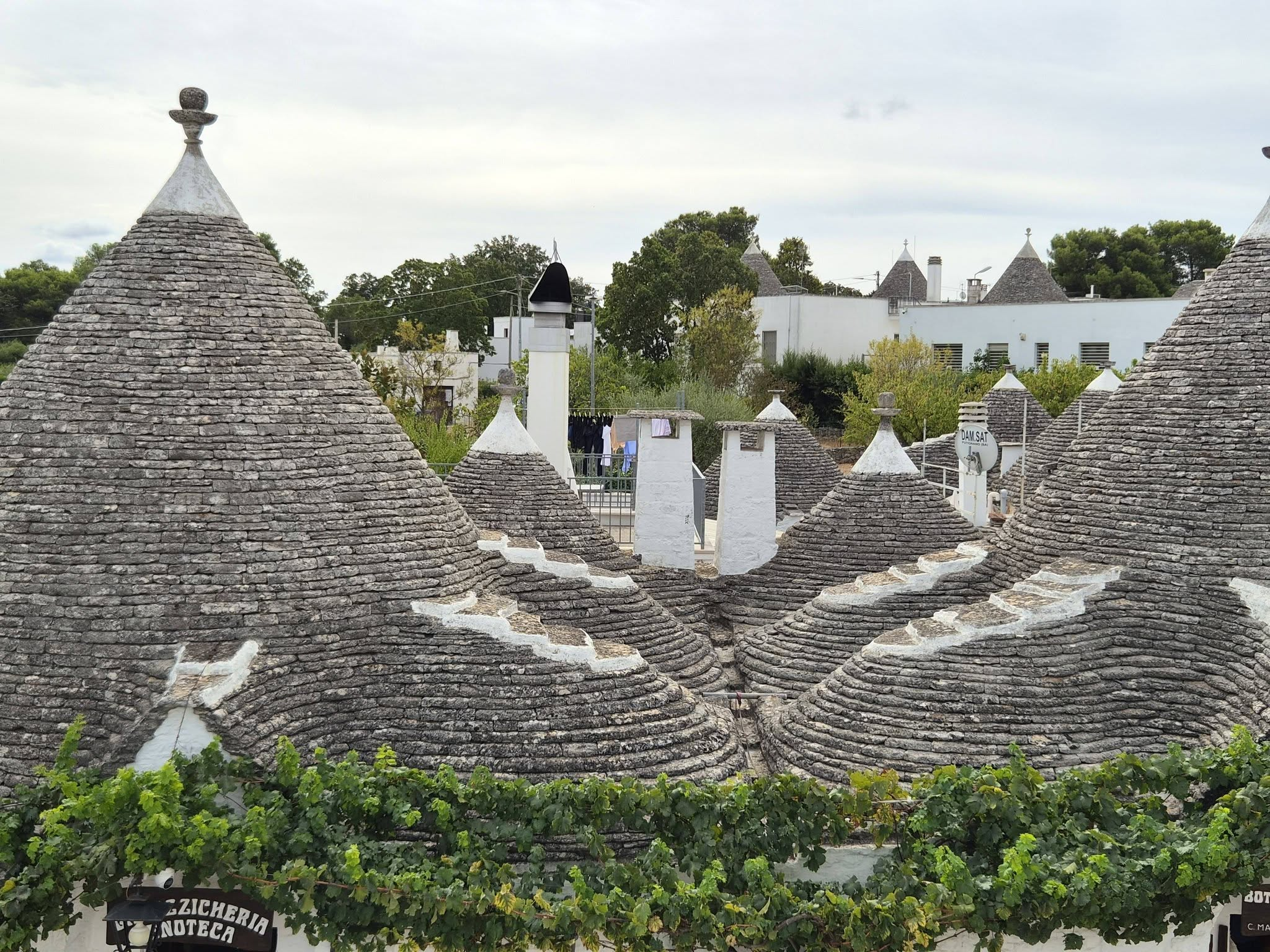
The walls are very thick, made of a double skin filled with stone rubble and the doors and windows are small, keeping the house cool in the summer and insulating the house during the colder periods. I was able to view many of these trulli houses, many now fashionable restaurants, boutique shops and tourist retail outlets, with a panoramic view of the town, from the rooftop of one of these stunning houses. Note the symbols which were sometimes painted on the roofs to ward off evil spirits and bring good luck to its occupants.
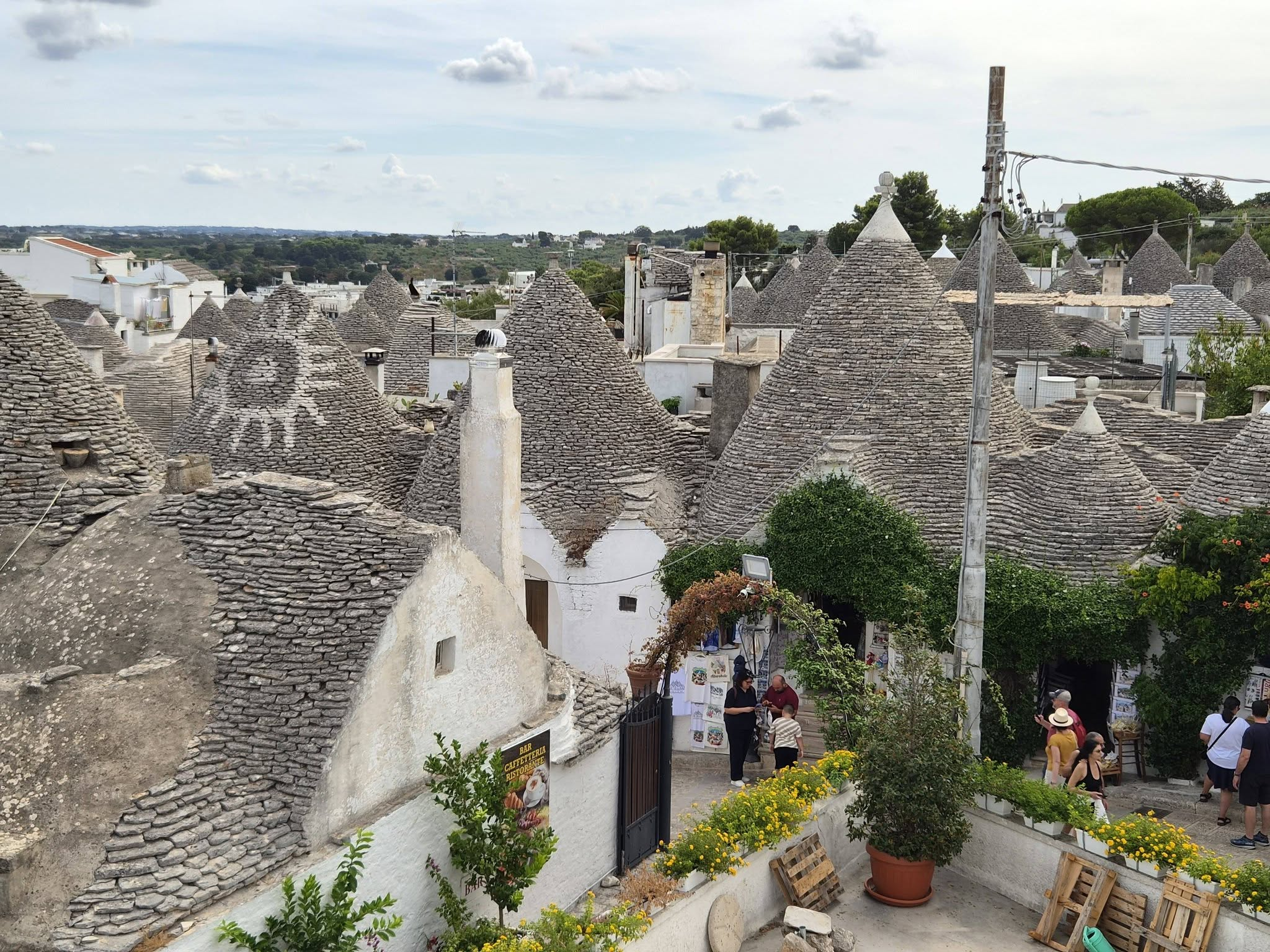
My pictures show a basic field shelter trulli and some of the more permanent trulli houses.
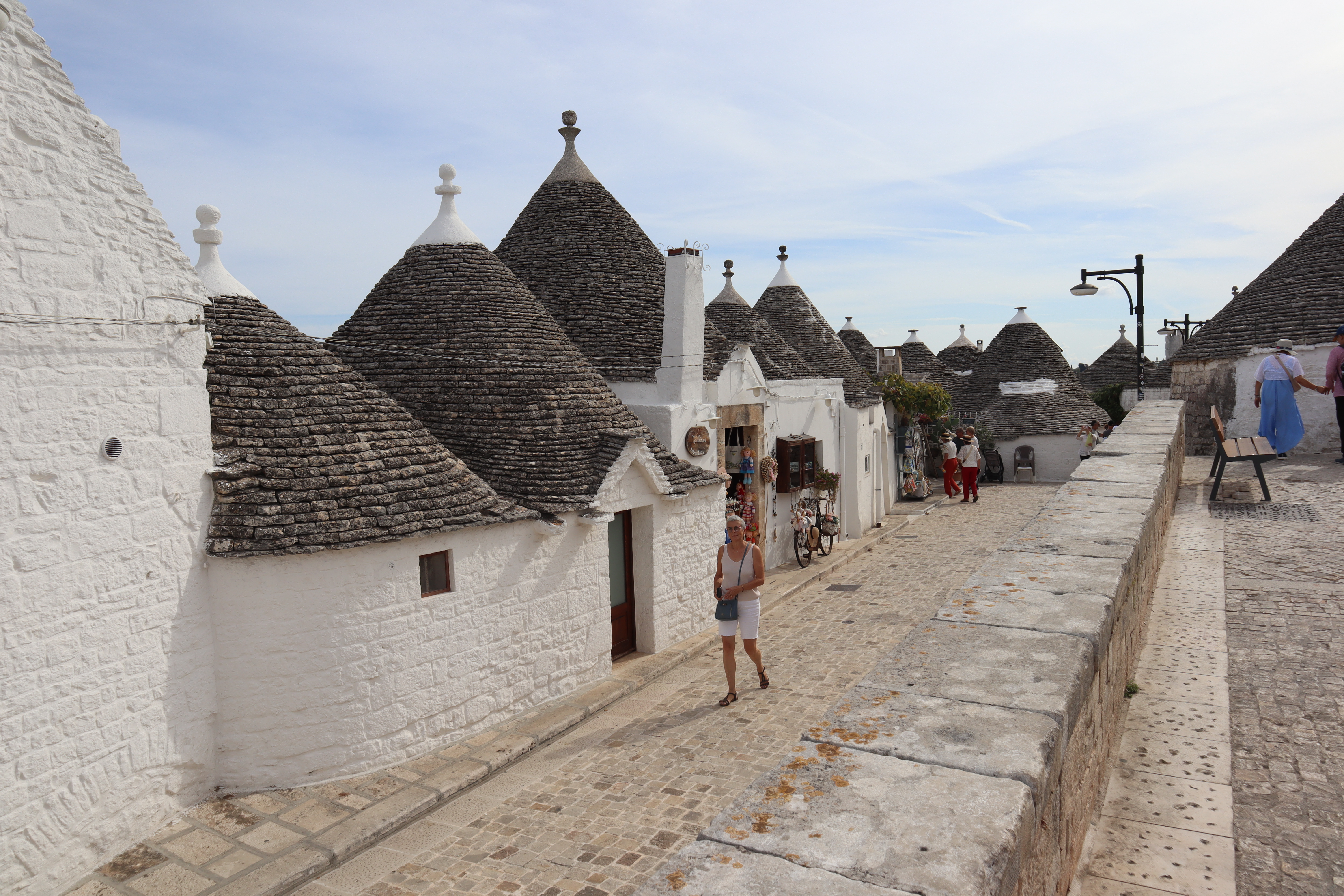
As time passed the trulli became much more sophisticated with more rooms added, improving stability and eventually became much more substantial living accommodation, with all modern conveniences. From their humble beginnings as peasant housing and field shelters, they are now all part of a very important UNESCO World Heritage site and one of Italy’s most extraordinary architectural marvels. They are a unique blend of history, craftsmanship and Puglian charm. Alberobello is a fascinating place to visit and admire these incredible structures.
When strolling around the Puglian town of Alberobello, I came across some wonderful miniature trullo houses (plural, trulli). They are made by local craftsmen and women, and are a miniature version of the traditional Apulian dry stone limestone huts. I thought they were a wonderful representation of the real trulli houses. Trulli delightful! I also saw some very beautiful Puglian ceramics in Alberobello. Unfortunately, there was no room in the flight luggage.
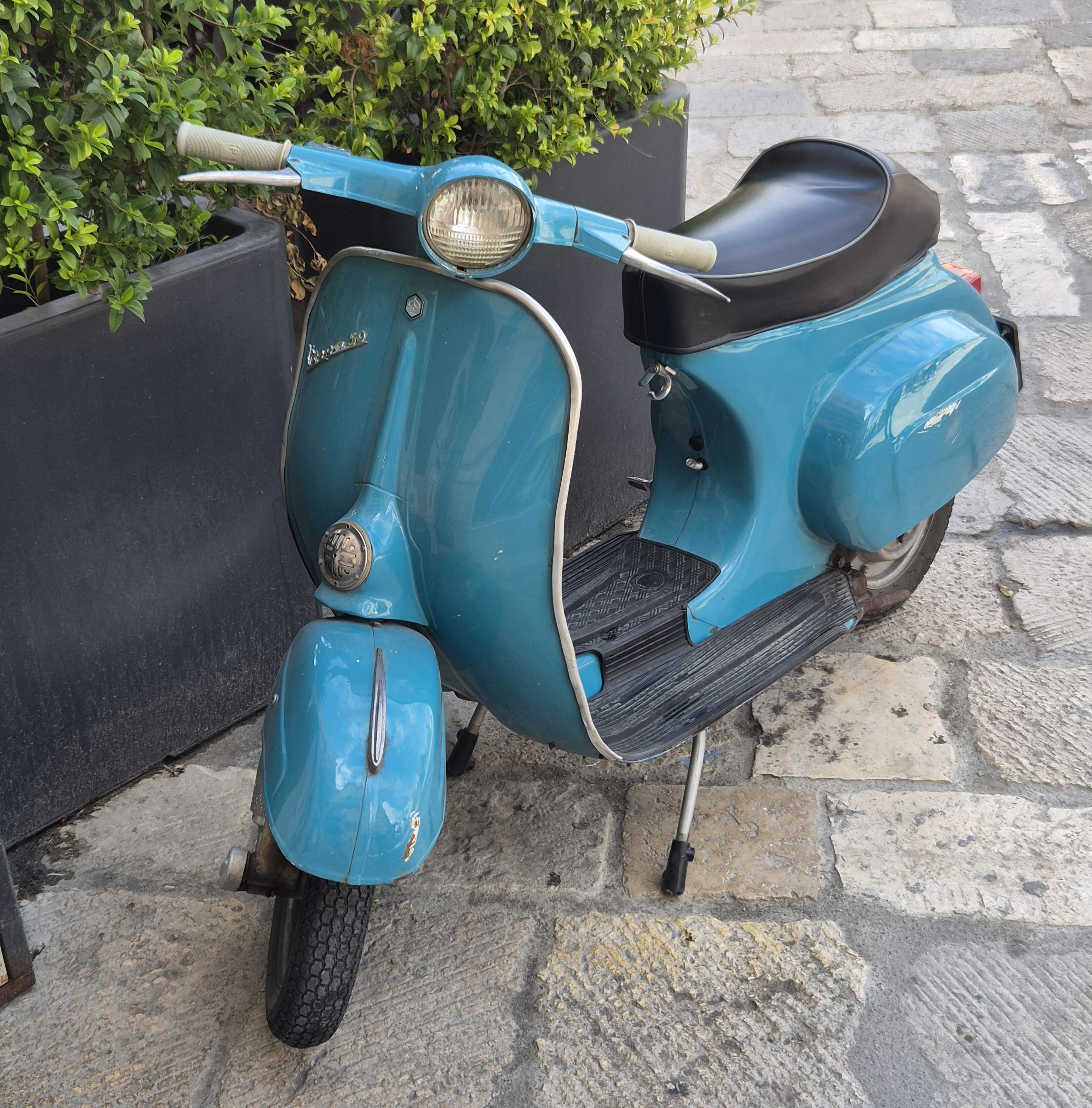
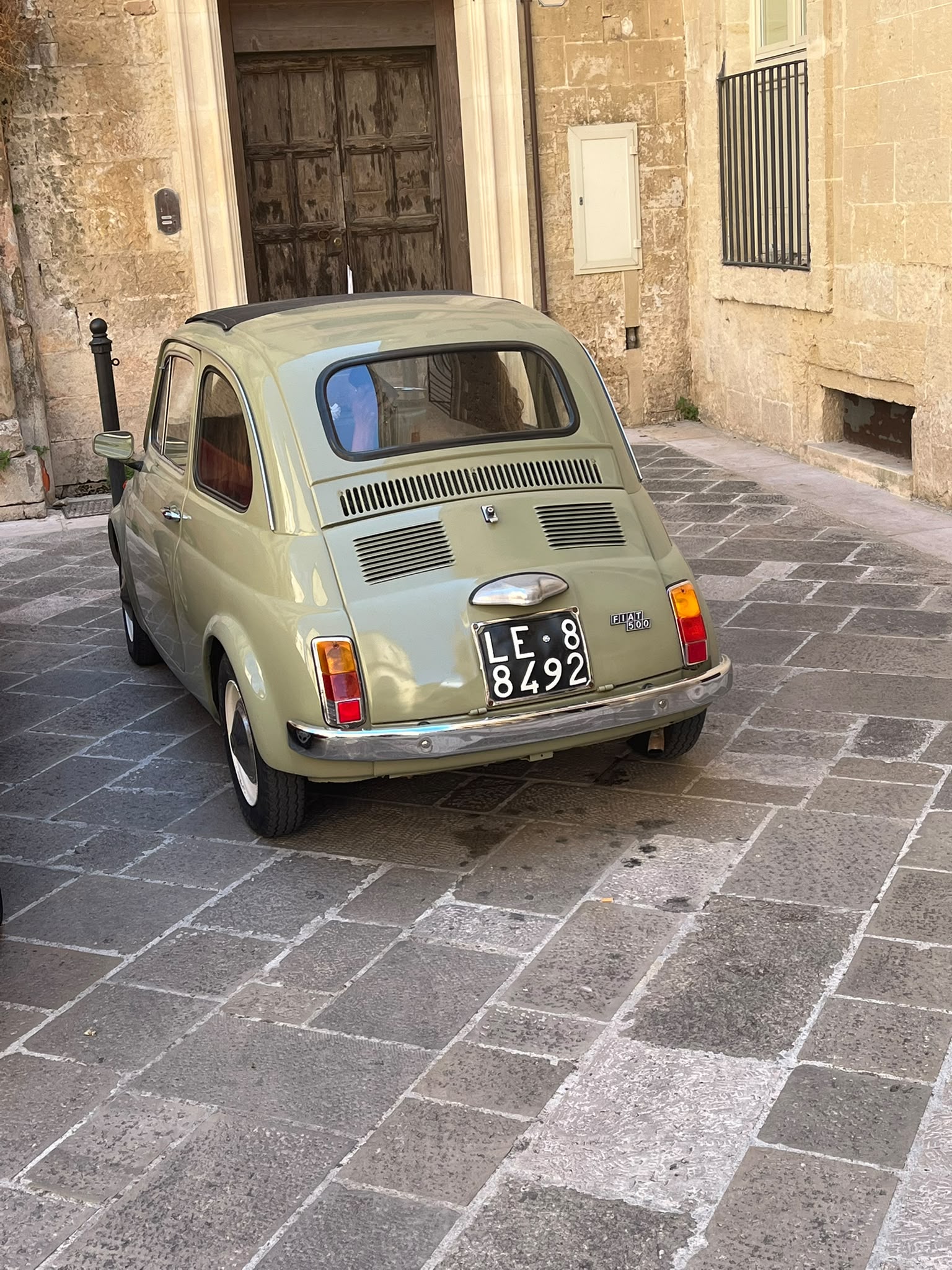
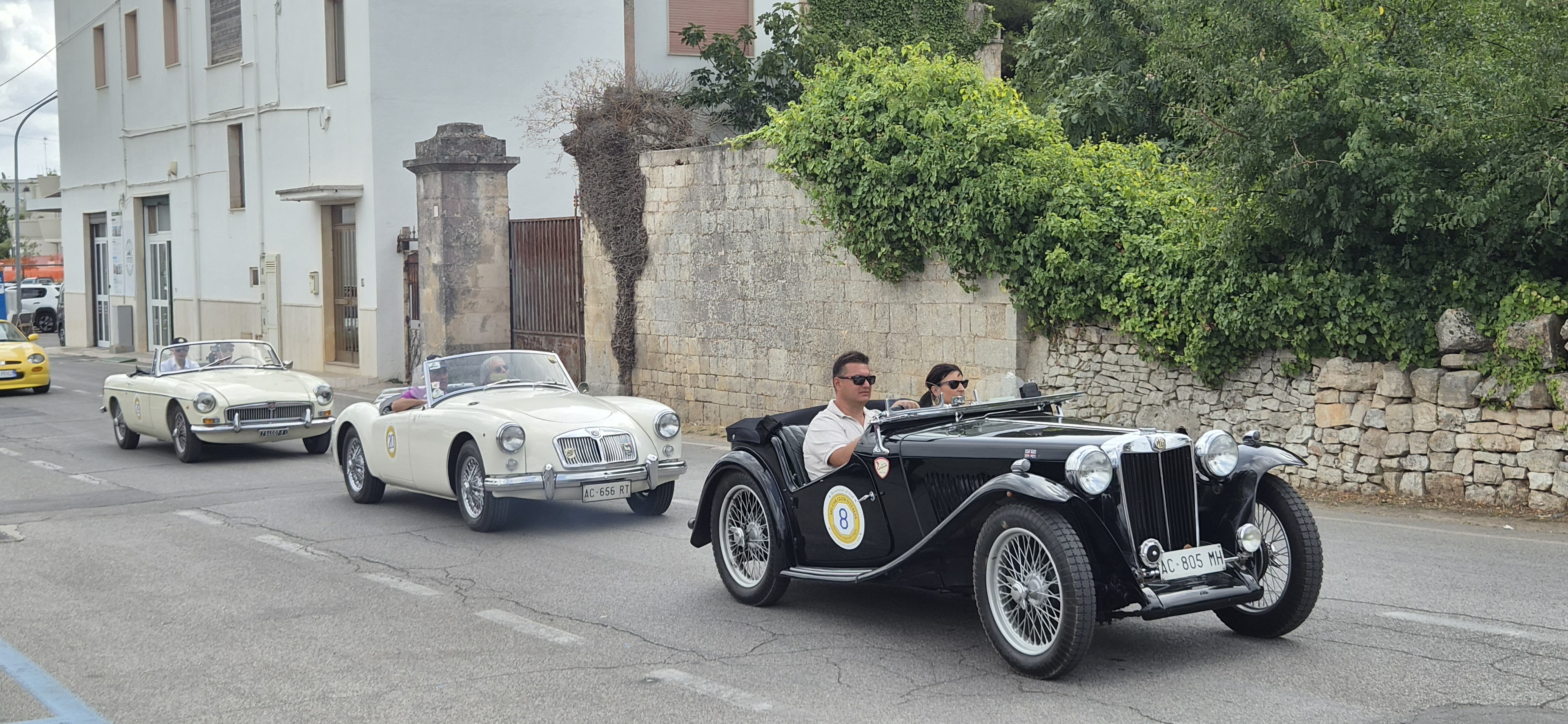
On leaving Alberobello, we came across a number of the cars in the MG Car Club D’Italia parade. The Benvenuti al Sud – Direzione regionale Puglia as we made our way back to our coach. As someone who had once owned several MG cars, this was a real treat.
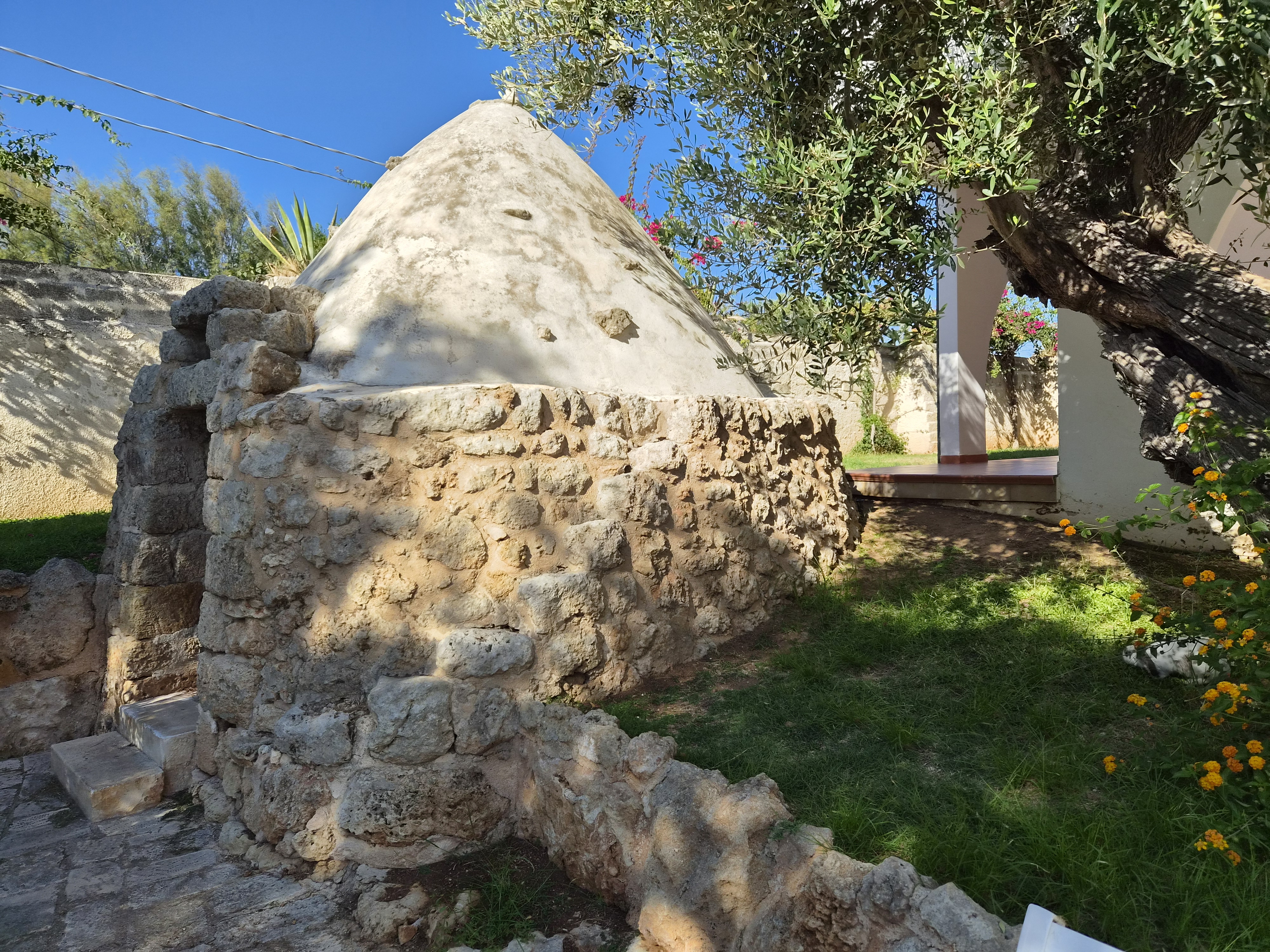
Below: Our very own Trulli structure, a conical dry stone building, originally built as a shelter for animals or farm workers, right outside our hotel room at the Pietrablu Resort & SPA – CDSHotels,
Our resort room was very smart and came with a small balcony, from which we could actually see the sea, but there were so many mosquitoes, we tended not to sit out there too often. The room was spacious and clean and had everything we needed for the week. The resort bar on the resort was quite small but the bar staff were very good and it was never too busy to get served. The food in the restaurant for breakfast, lunch and evening meal was a Buffet style affair. On one of the evenings we had table service and a limited set menu. I usually prefer table service dining but on this occasion, I felt the food choice was limited, as I don`t eat beef and there was nothing else offered as an alternative. All of the food at the Buffet was excellent and varied, with themed food evenings throughout the week and the restaurant table staff were friendly, professional and efficient.
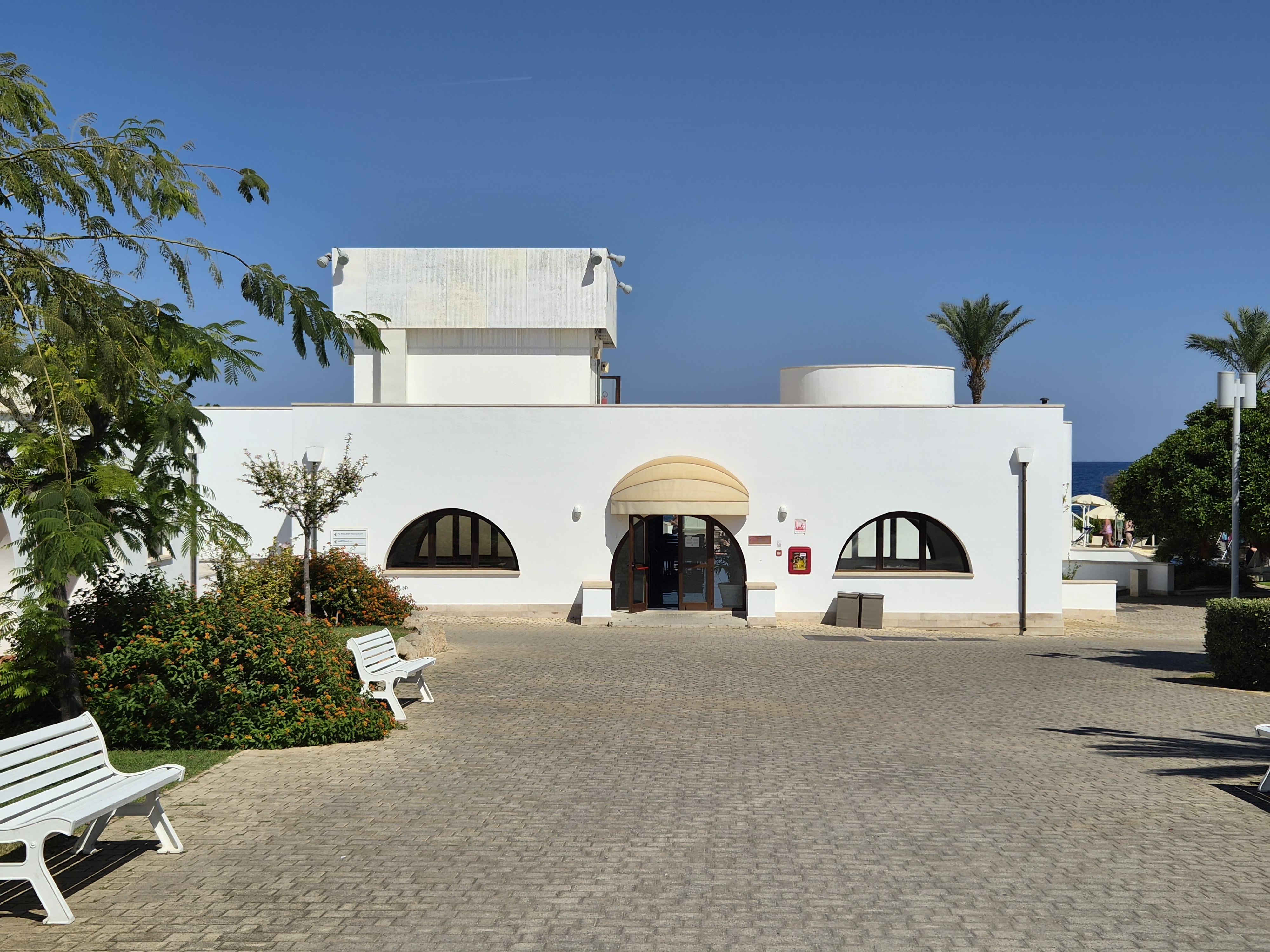
There was plenty of Italian food choice, which we would have been expected and a wide range of fresh fish dishes. The evening live musical entertainment was not to my taste, but many guests did appear to appreciate it. There were a lot of loungers around the pool, which I was told by some guests, was cold and the beach was quite rocky with very little visible sand. As a none swimmer, it didn’t in any way affect my holiday. I was quite happy to find a lounger, read a book and catch some rays. It was coming to the end of the holiday season, so I got the feeling that the resort was beginning to run down its activities.
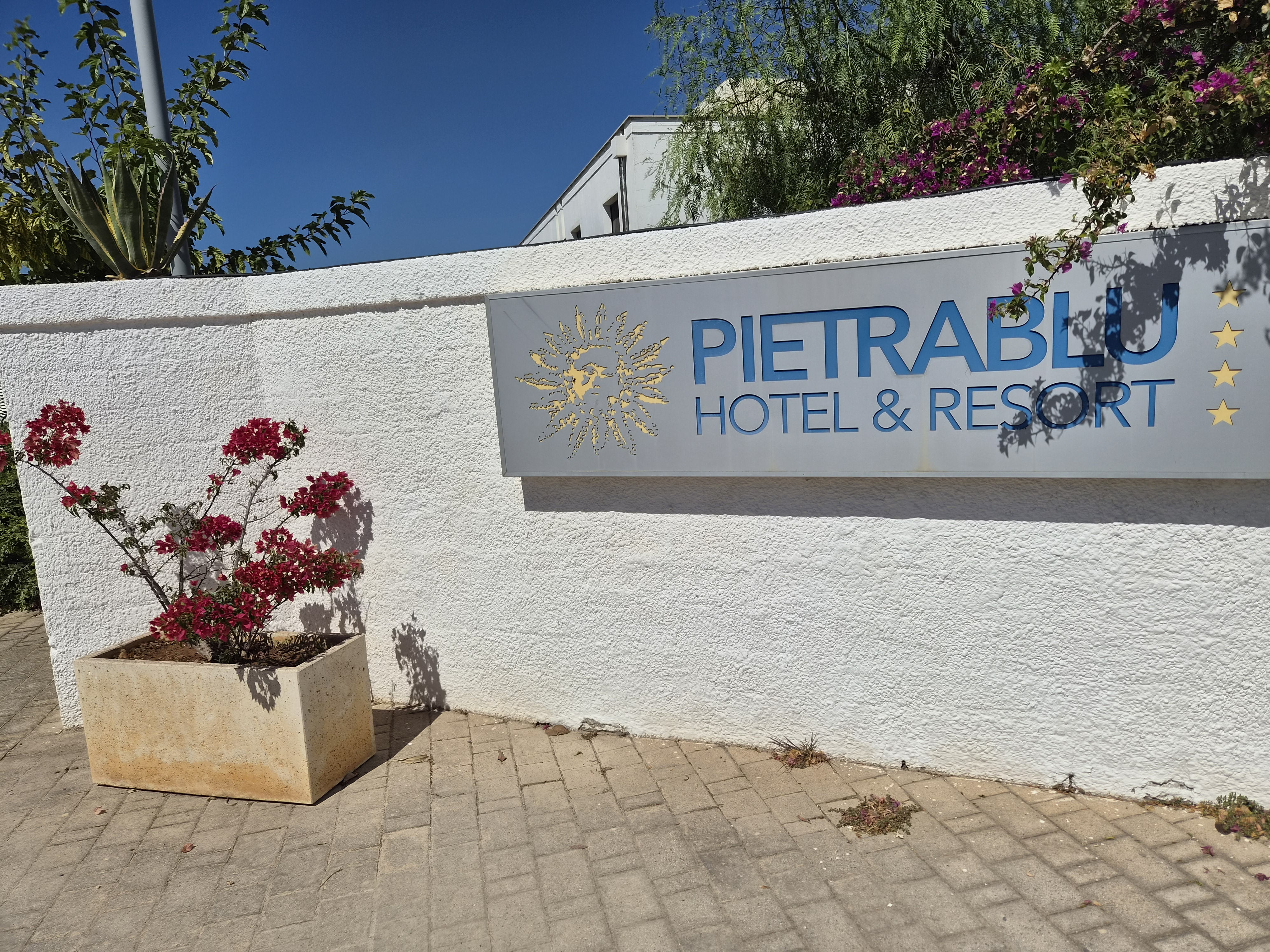
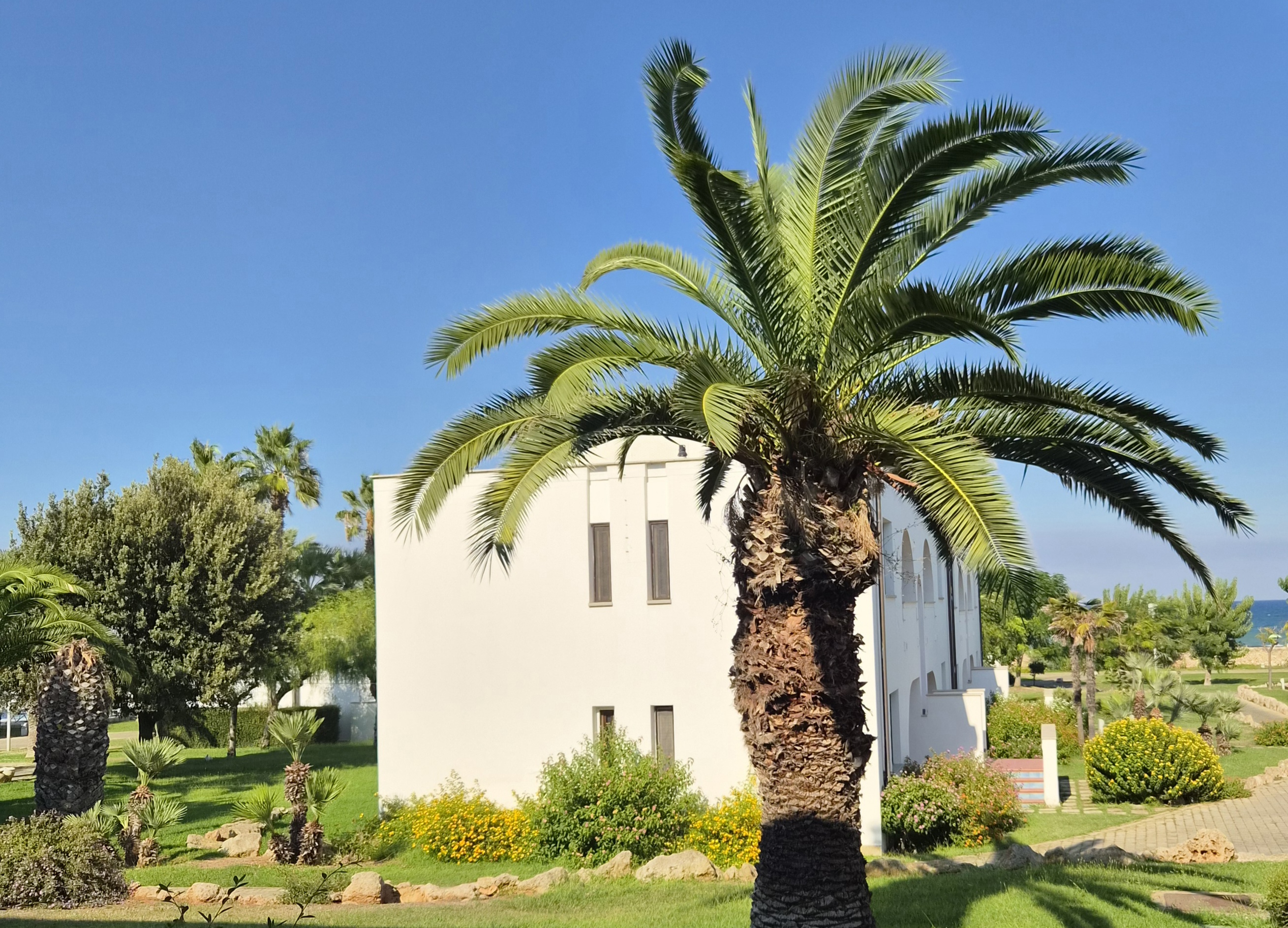
All of our meals were taken together, and the group travellers tended to mix well and you very quickly got to know others in the group, talking about the excursion that you had just enjoyed or sit around discussing the next trip. Travellers tended to interact socially, asking questions about where people have travelled from, what their occupations are or were, if retired. It is an easy way in which to share your passions for history, art and culture as the tour groups tend to be made up of like-minded people. As a single traveller, I think these kinds of tours would be a good way in which to meet new people easily, as you would not in any way feel isolated. Many of the group were of a similar age group, over fifty five, but there were some younger members of the group. I found it to be a popular and effective way to meet new people, without really having to try very hard. Someone had even set up a What’s App group by the end of the week, so that the travellers in the group, could keep in touch with each other. My wife and I would certainly consider another Great Rail Journeys tour in the future.
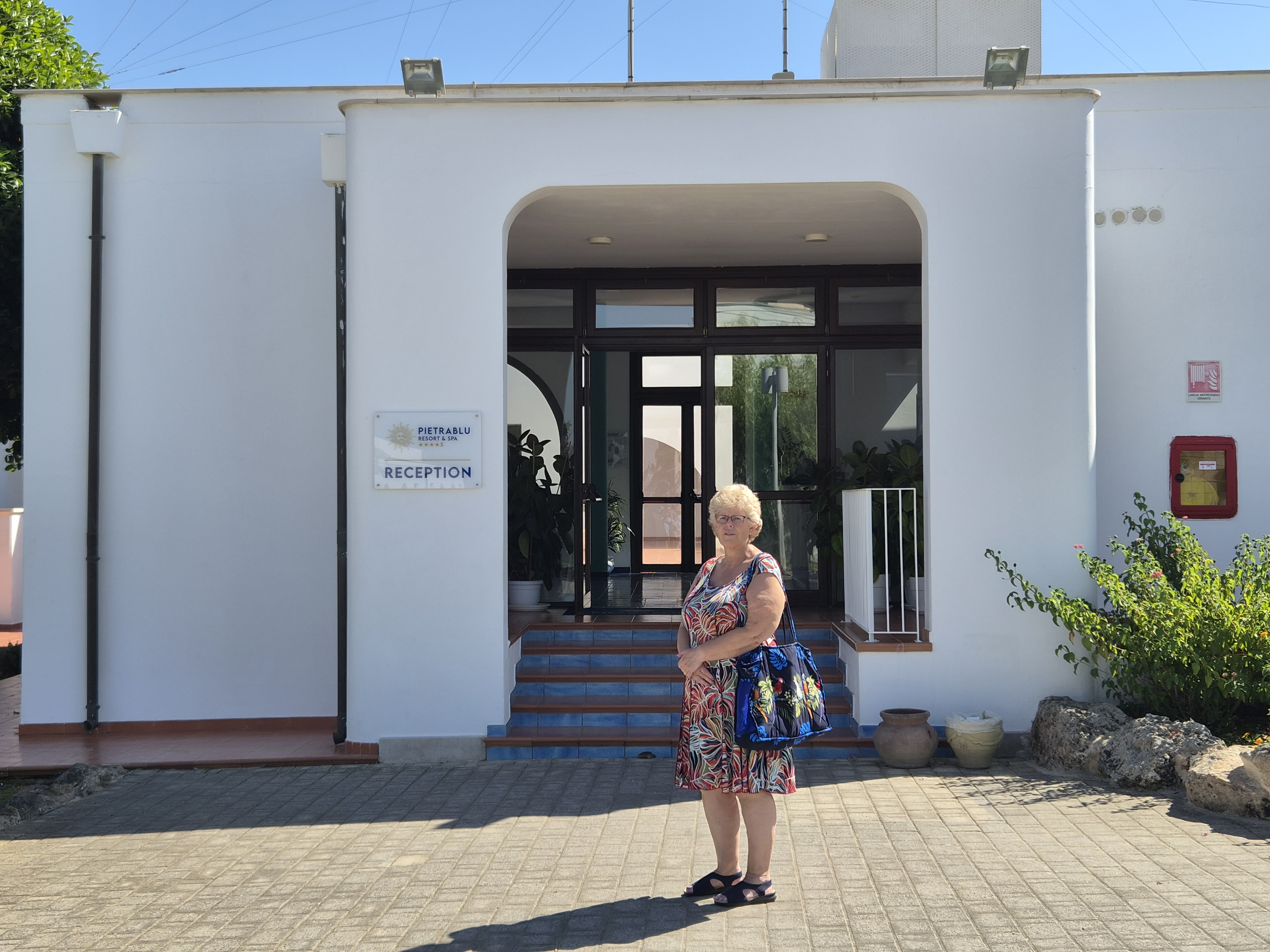
One of the unexpected but positive advantages of travelling in a group, is the friendships you build over the week. My wife and I started the week at Gatwick airport with a bunch of strangers, by the end of the week, we had made many new friends.
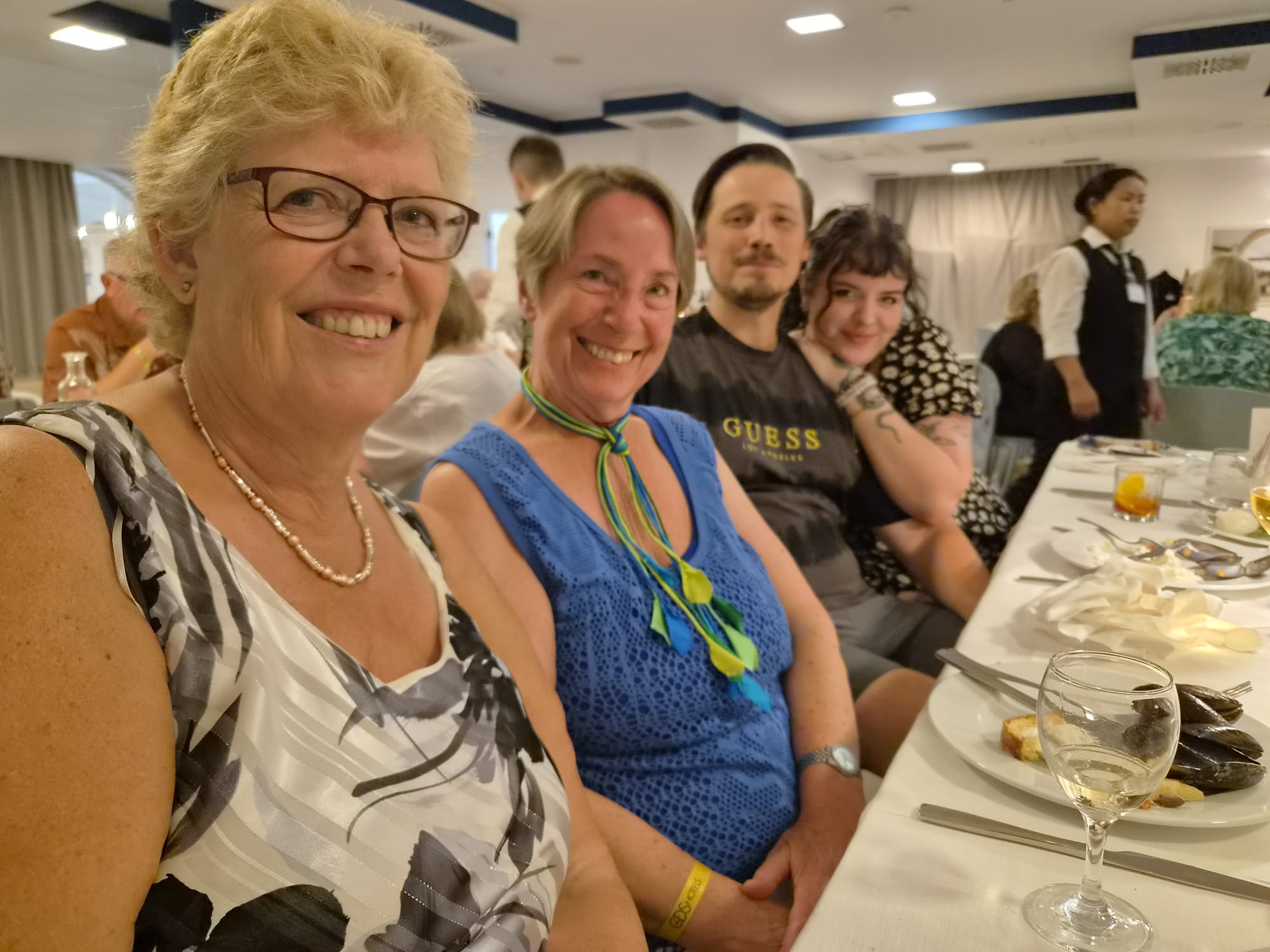
I was travelling with Great Rail Journeys and our accommodation was at the Pietrablu Resort & SPA – CDSHotels,