My recent week-long tour to the Mezzogiorno, Southern Italy included a number of cultural excursions, in Puglia & Basilicata including Matera.
Matera, Basilicata.
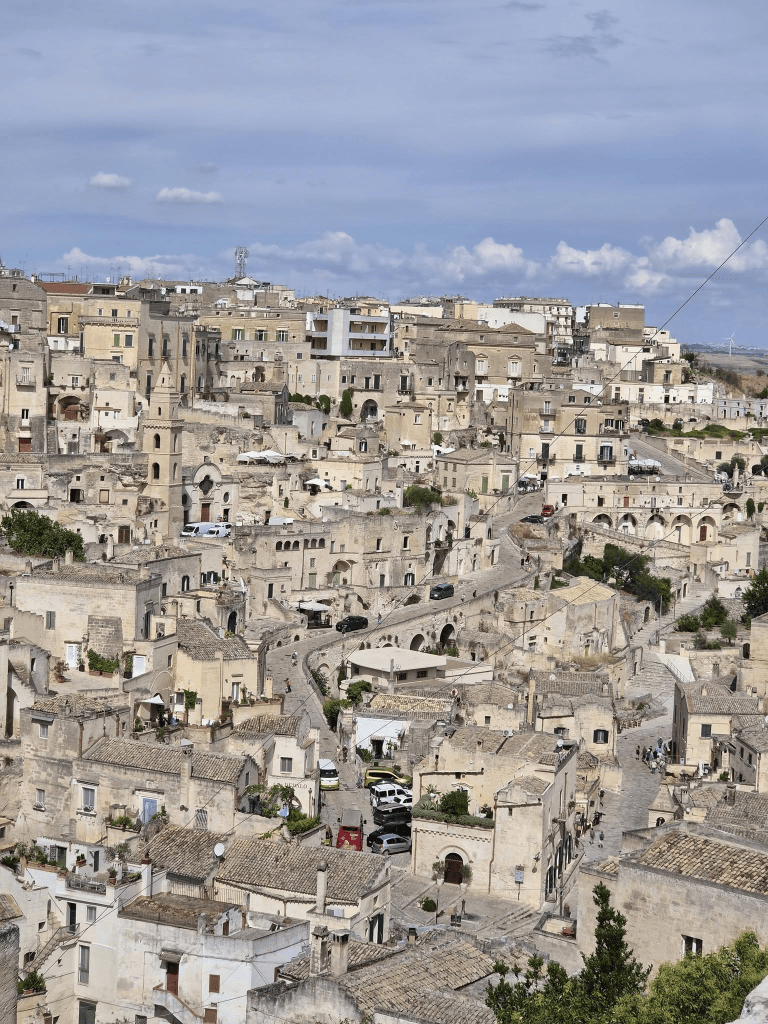
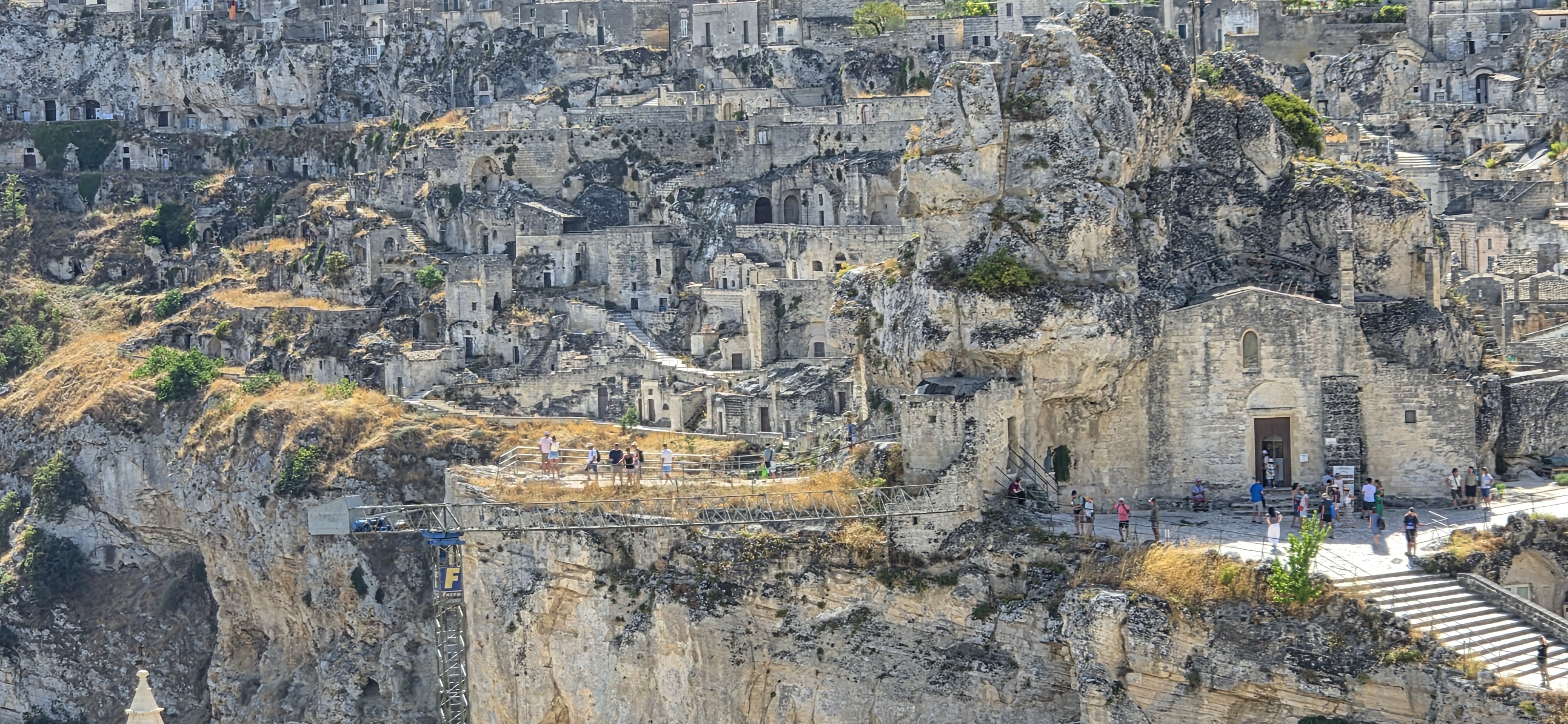
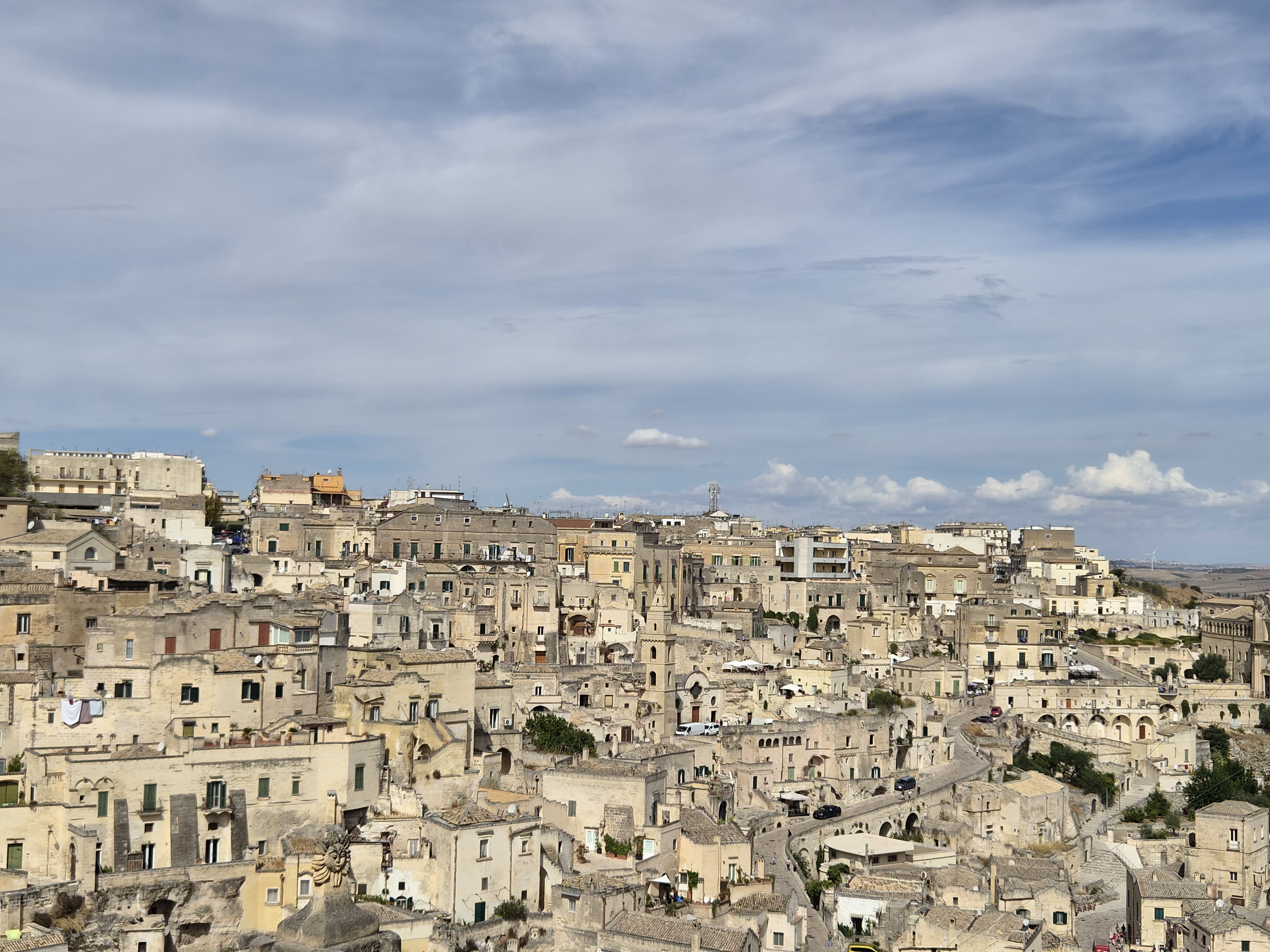
One of our most exciting excursions, one we were both very much looking forward to was our visit to Matera, which is situated on a rocky outcrop in the region of Basilicata. Matera has a very long history, stretching back to prehistory, the eighth millennium BC, and is famous for its many cave settlements, consisting of two cliffside areas, known collectively as the Sassi. It was not until the twentieth century that the Sassi dwellings were declared unfit for modern habitation, and the people living there were moved to another part of the city, between 1952 and the 1970s. Right up to the 1980s the Sassi was still considered an area of poverty, since the cave dwellings were, almost uninhabitable and dangerous. Despite this, the city authorities, have in recent years, developed the areas tourism potential, and promoted the Sassi as a picturesque tourist attraction with the aid of the Italian government funding, UNESCO, and Hollywood movies.
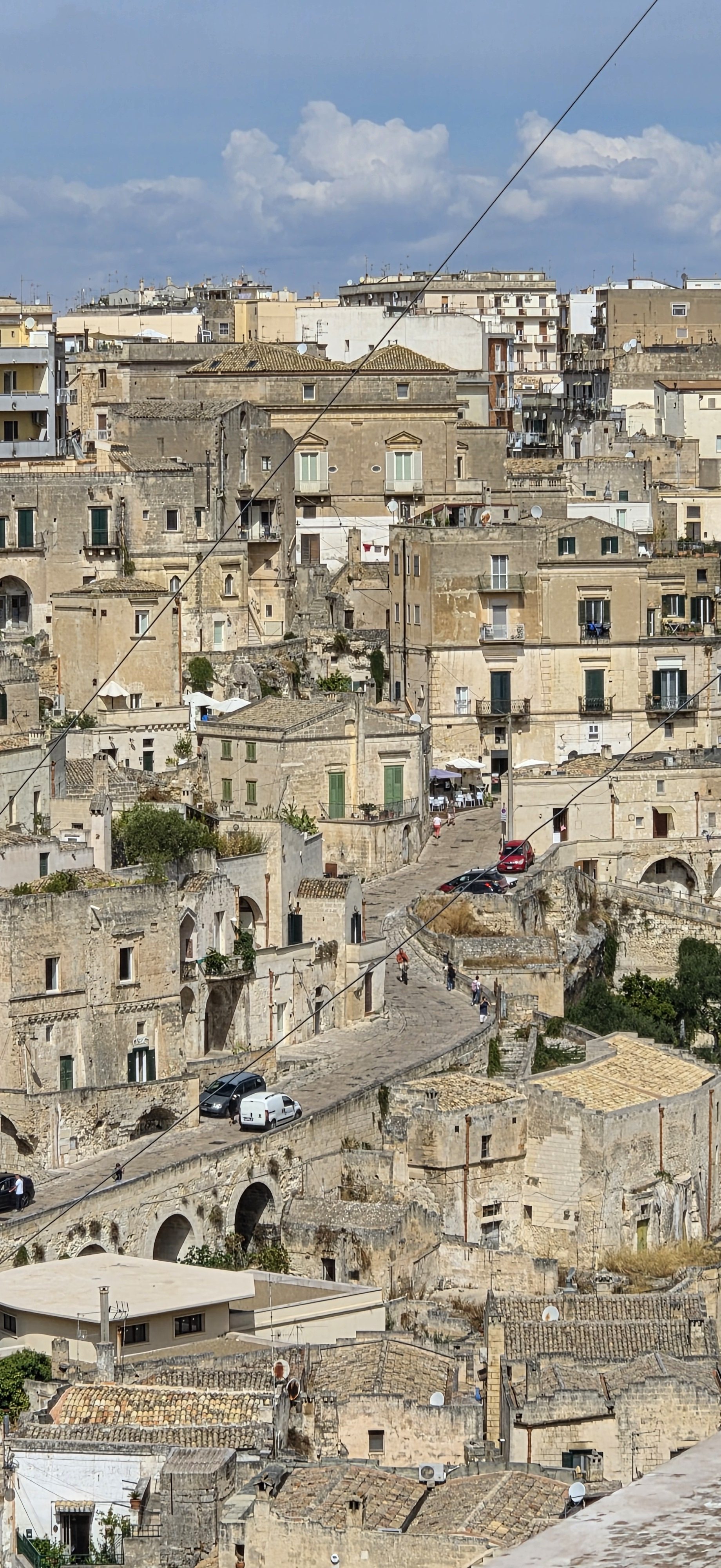
In 2019, Matera was declared a European Capital of Culture, along with Bulgaria’s second-largest city, Plovdiv. To stroll around Matera today you will find many tourist retail outlets, pubs, restaurants and fine hotels and Matera is said to be one of the fastest growing cities in southern Italy. The Mezzogiorno is still a relatively poor part of Italy, we saw plenty of abandoned buildings, some of some stature and great size, as we travelled around the two southern regions of Puglia and Basilicata.
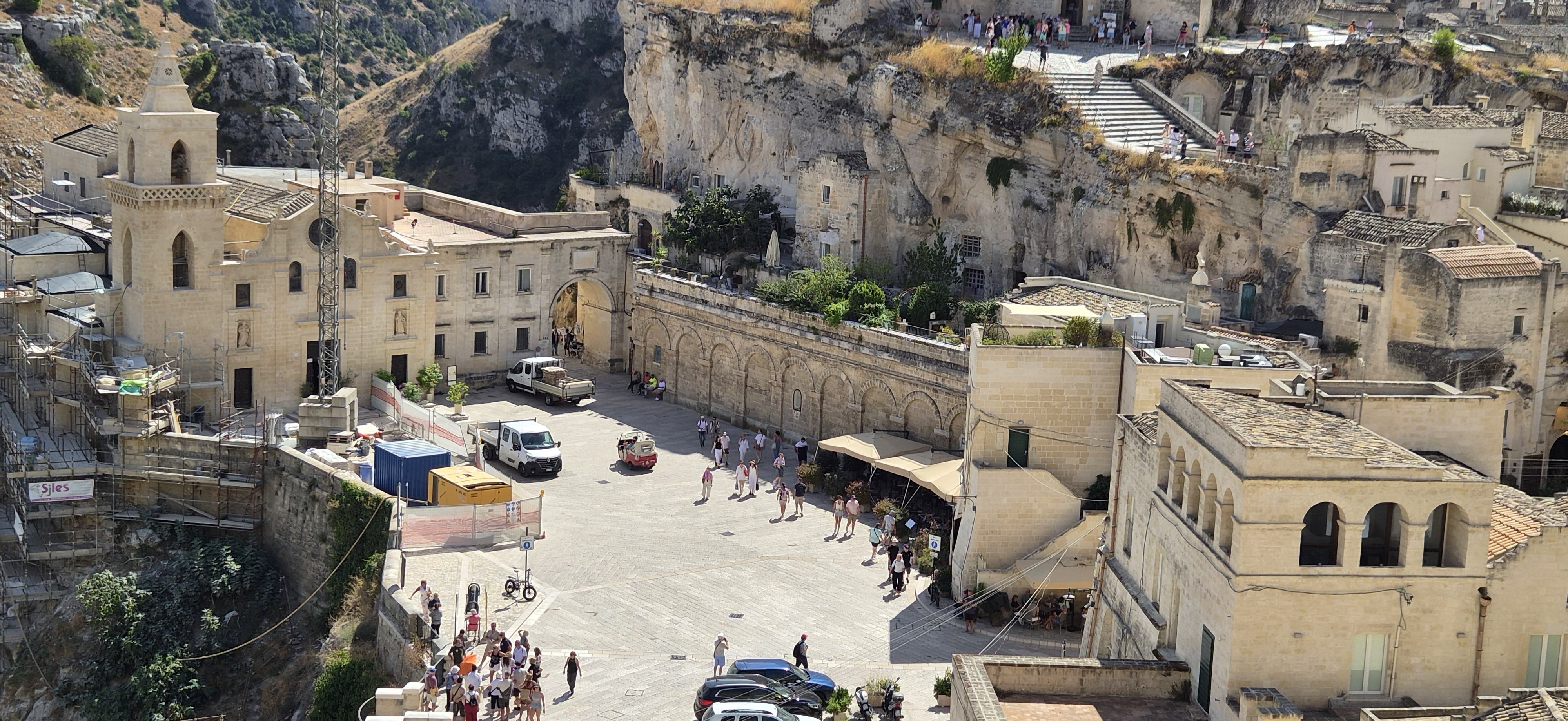
Matera is a very popular film location and has often been labelled as “Little Jerusalem” by filmmakers, because it has been the setting for so many religious-themed films including The Gospel According to St. Matthew (1964), King David (1985), The Passion of the Christ (2004), Mary (2005), The Nativity Story (2006), The Omen (2006), amongst others.
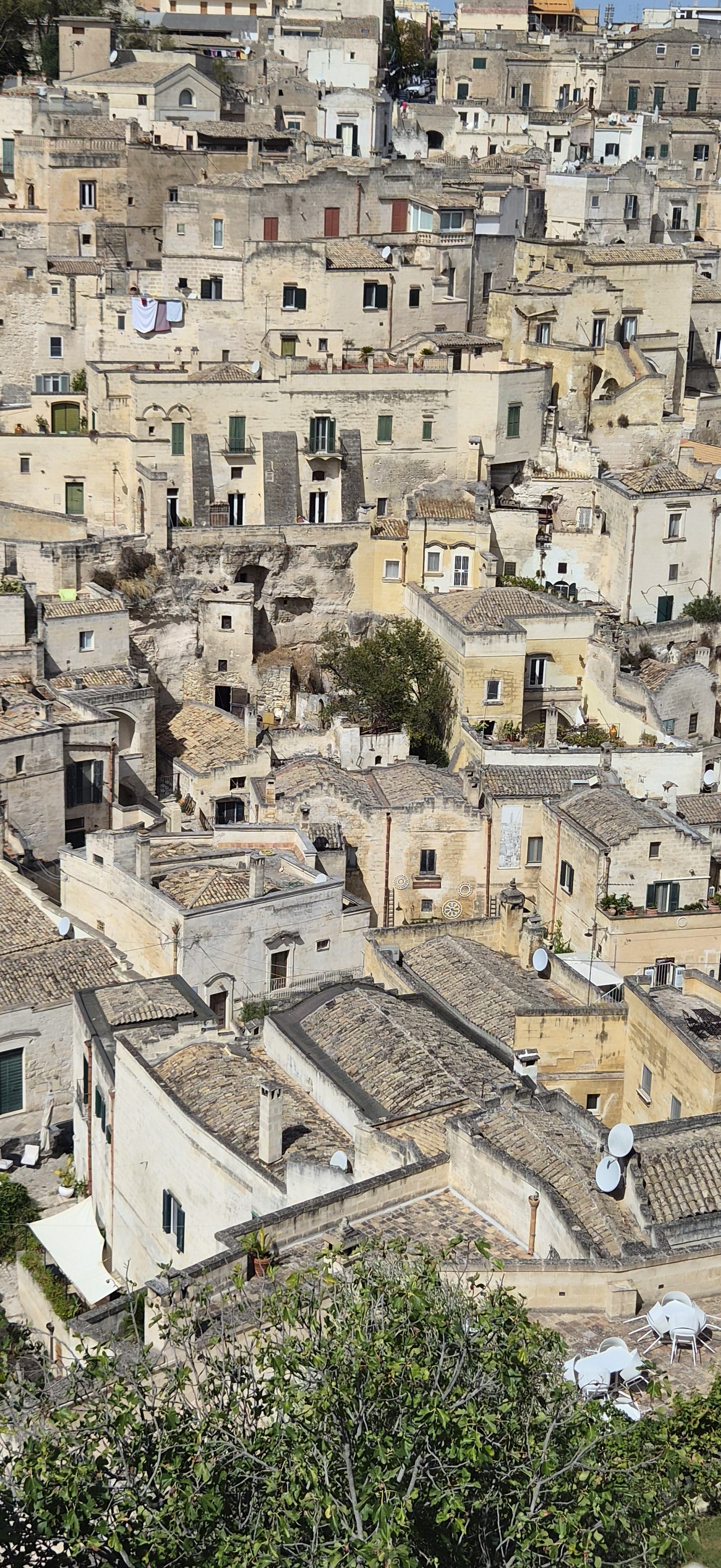
I was particularly interested in its association with 007 James Bond. In 2021, it was the setting for many of the opening scenes in the Bond film, No Time to Die. I love this film and the ancient stone city and its unique cave dwellings forms the backdrop for a number of memorable scenes.
A high-speed chase around the city, ends with Bond completing his famous, DB5 Doughnut scene. Bond gets cornered in his bulletproof Aston Martin DB5 and releases a smokescreen, and spins 360 degrees while firing the mini-guns out of the headlights. Filmed at Piazza San Giovanni film crews nicknamed this specific location “Donut Square”. A dummy bell tower had to be constructed during filming, and the church exterior was covered in false walls to help protect the stonework and to hide “numerous squibs” or miniature explosive devices”. Unfortunately, we did not visit this square on our tour, much to my disappointement. Maybe, next time!
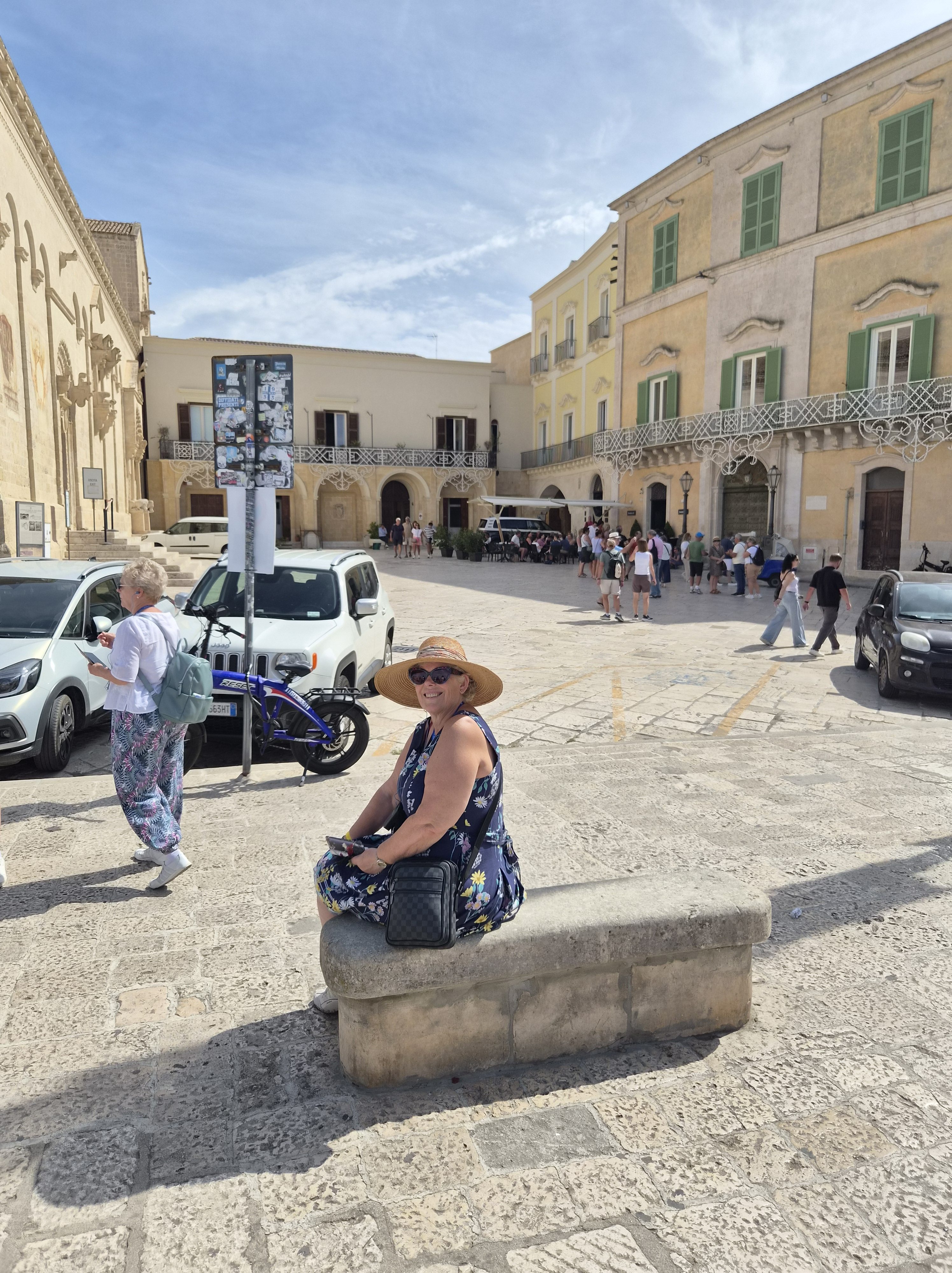
There was also another scene where Bond rides a motorbike at speed, up the Via Gradoni Duomo, a lightly stepped pedestrian pathway. The bike clears a high stone wall and lands directly in Piazza Duomo (Cathedral Square), which we did visit, swerving right past the front of the 13th-century Cathedral and through a crowded religious procession. The stunt was filmed next to Matera Cathedral, formally known as the Cathedral of Saint Mary della Bruna and Saint Eustac. A large ramp had been erected on the other side of a high stone wall, allowing Bond, or rather British stuntman Paul Edmondson, to ride up the ramp at speed and leap over the wall, and avoid hitting the procession.
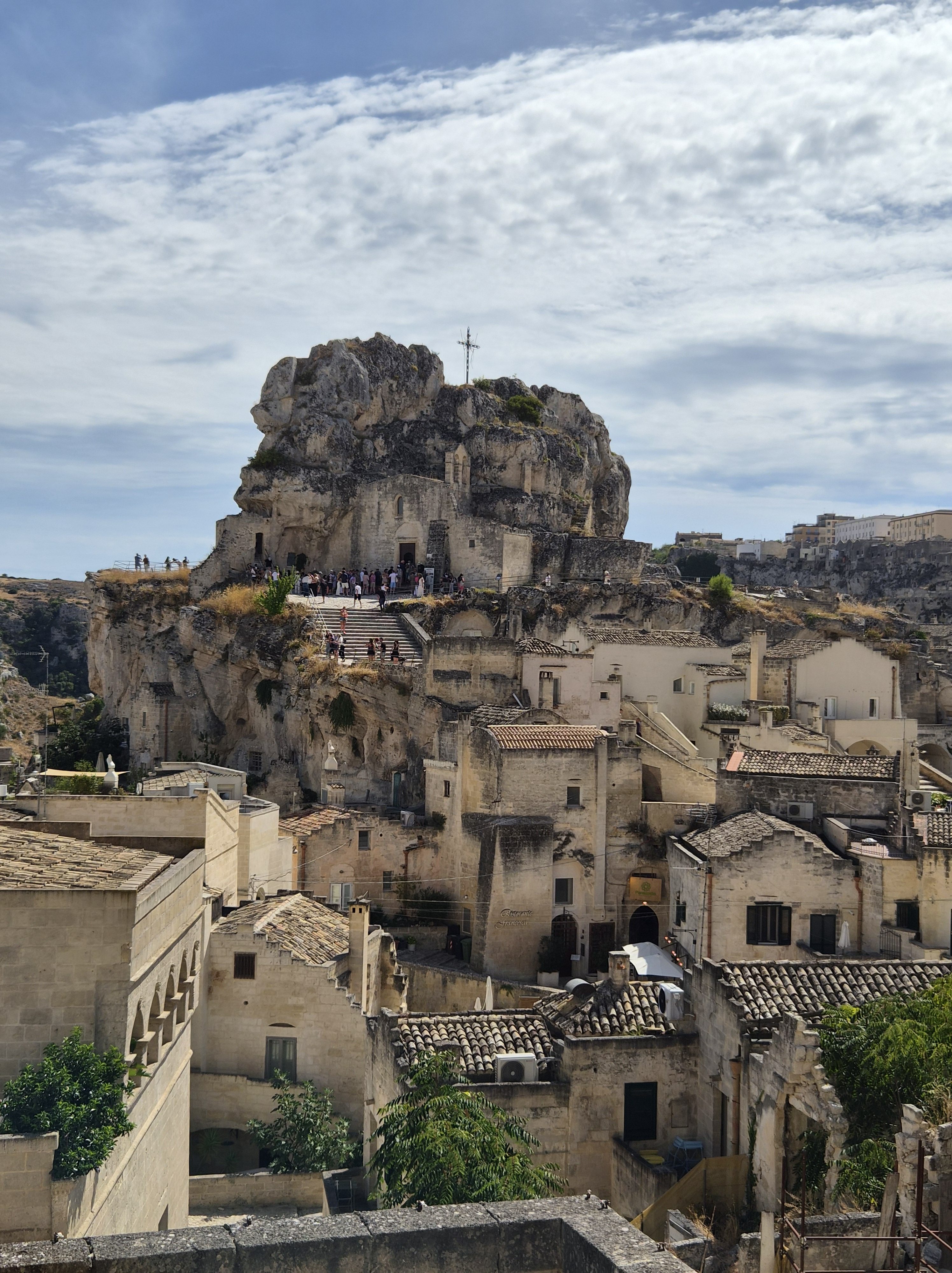
Although, in the movie, film edits can sometimes make them look like the locations are right next to each other, the real-world locations are some distance apart. For me it was special to be able to see some of the places, where these memorable scenes were filmed.
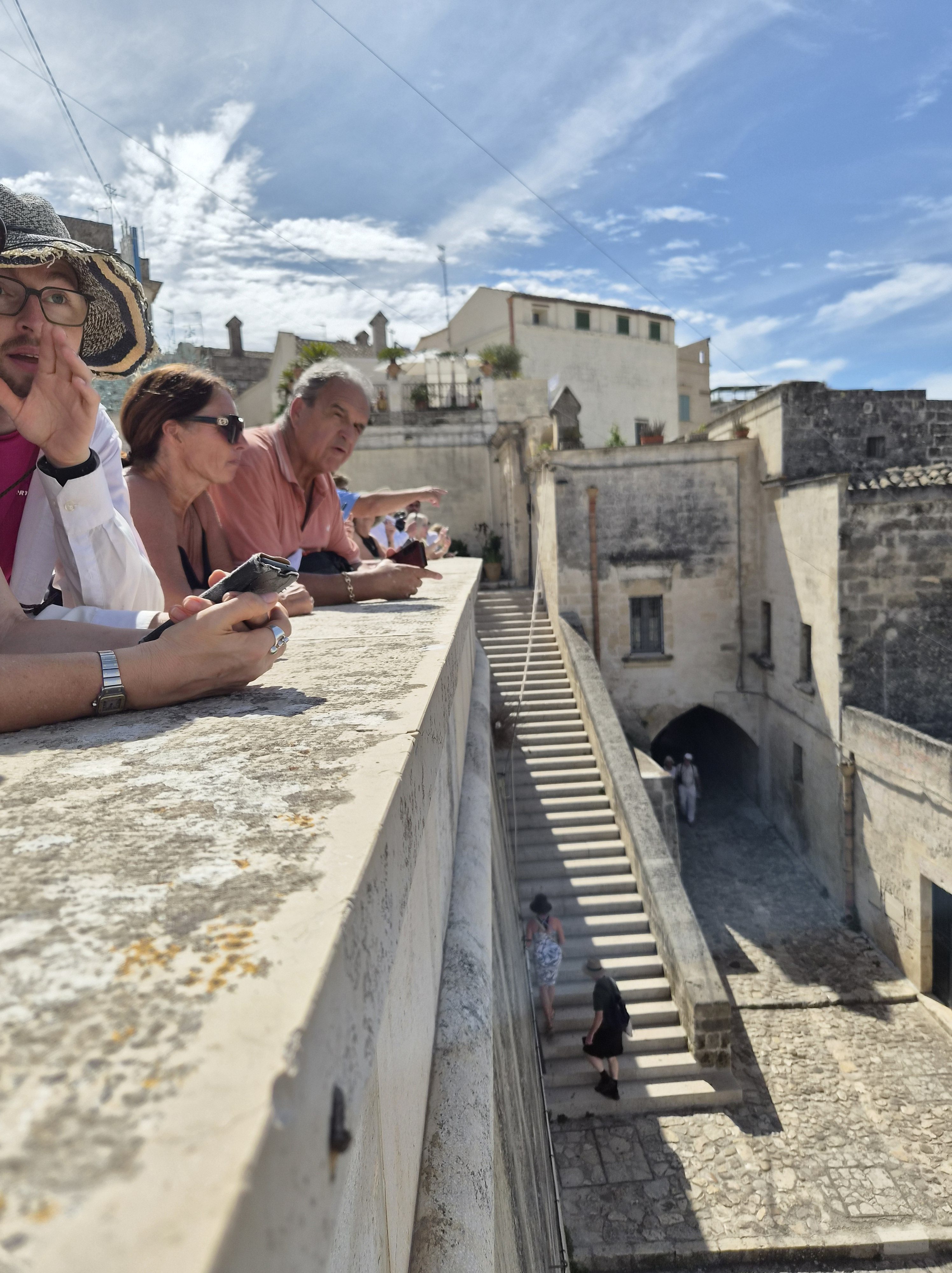
I was also looking for the stone bridge that Bond leaps from, after being shot at, in the film, but our guide told me that the bridge scene was in fact filmed in Gravina in Puglia, some twenty miles away, on the eighteenth-century bridge, the Ponte Madonna della Stella or simply il ponte di Gravina. Maybe on my visit to Southern Italy!
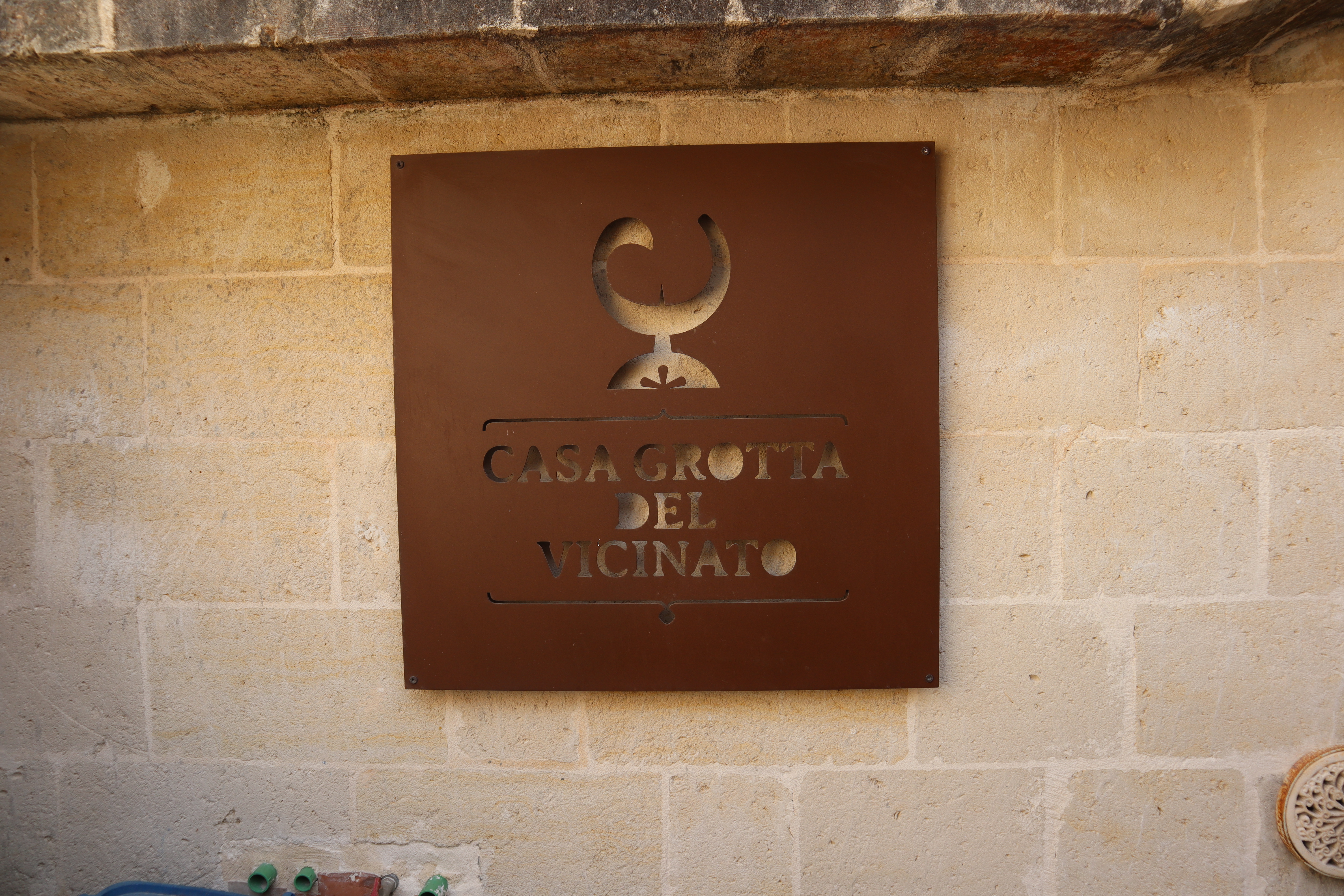
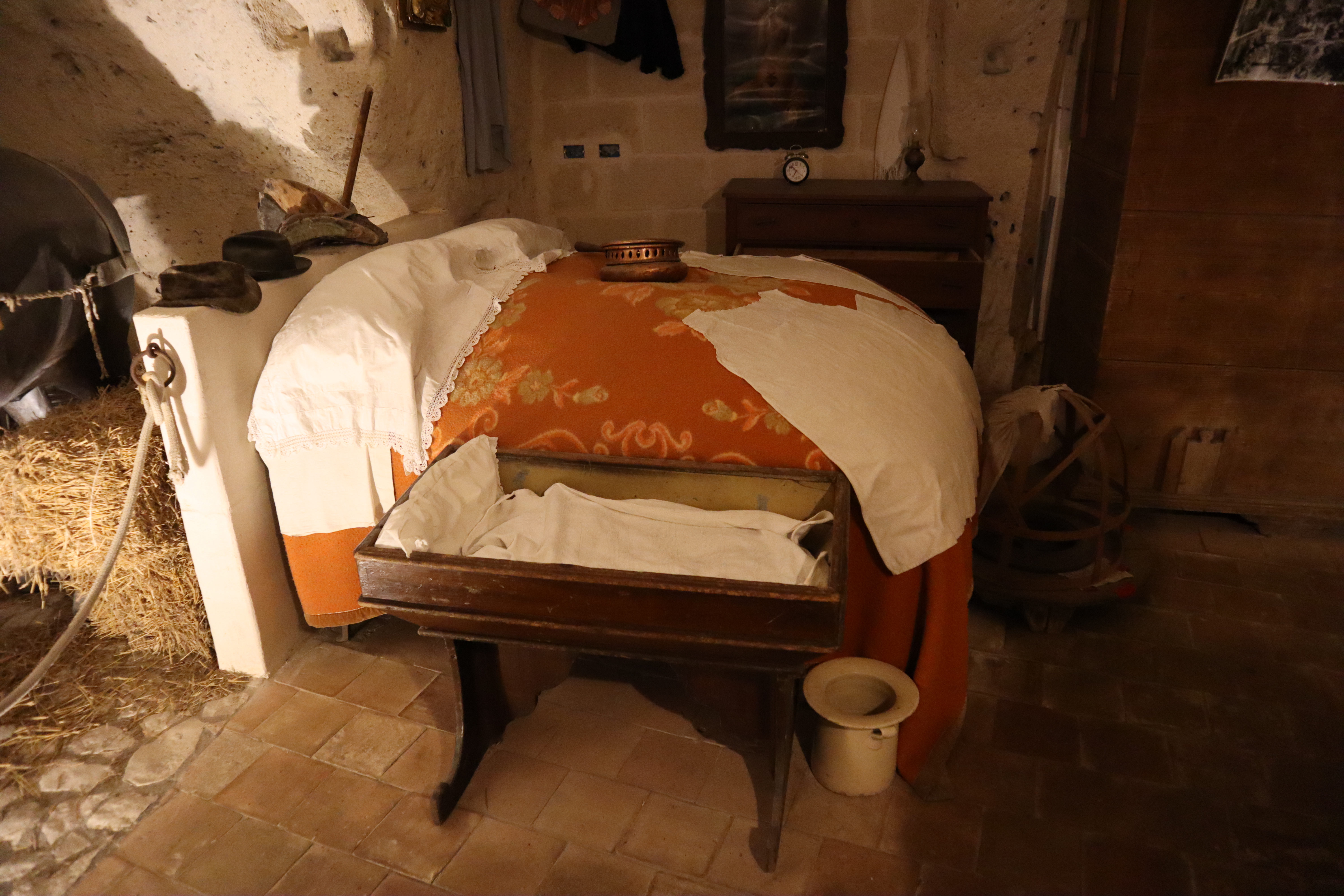
Casa Grotta Del Vicinato.
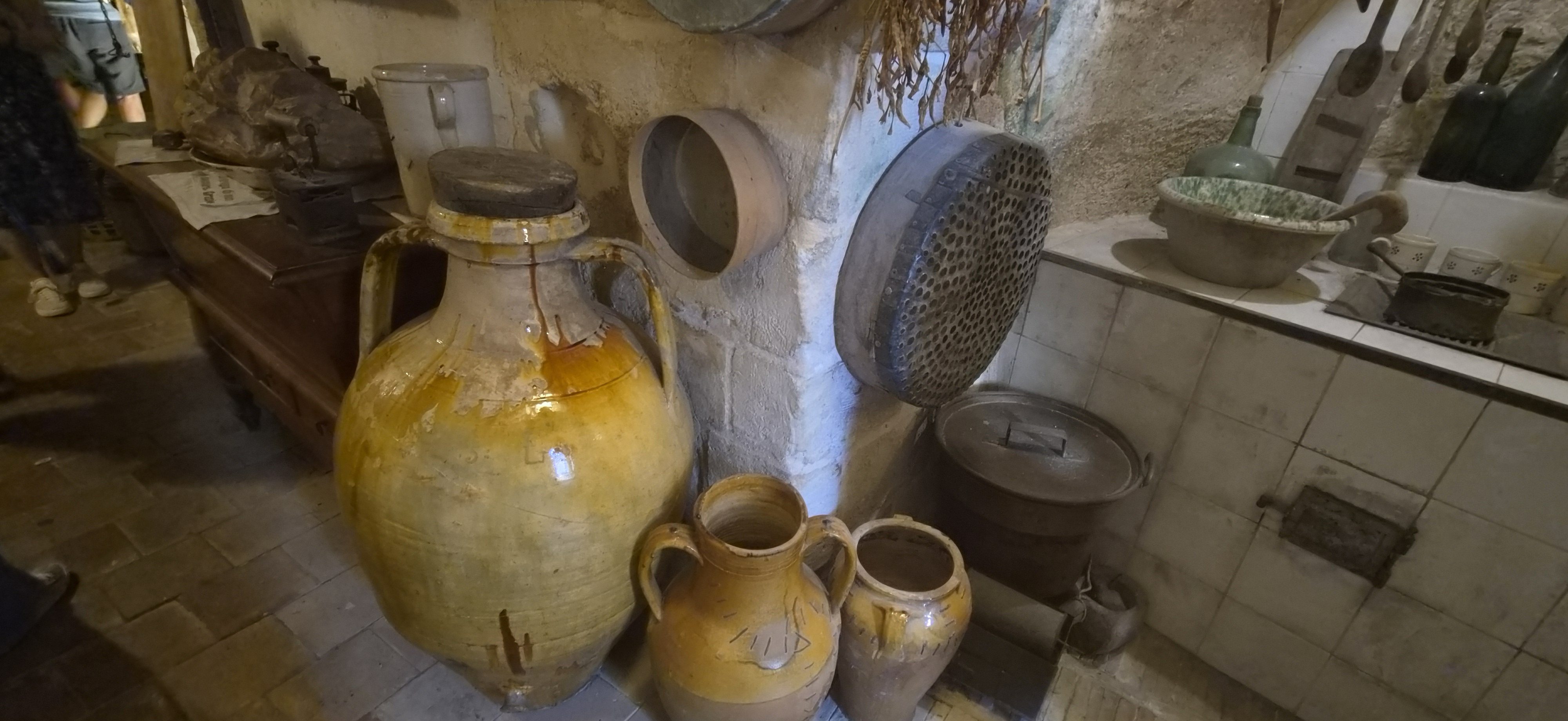
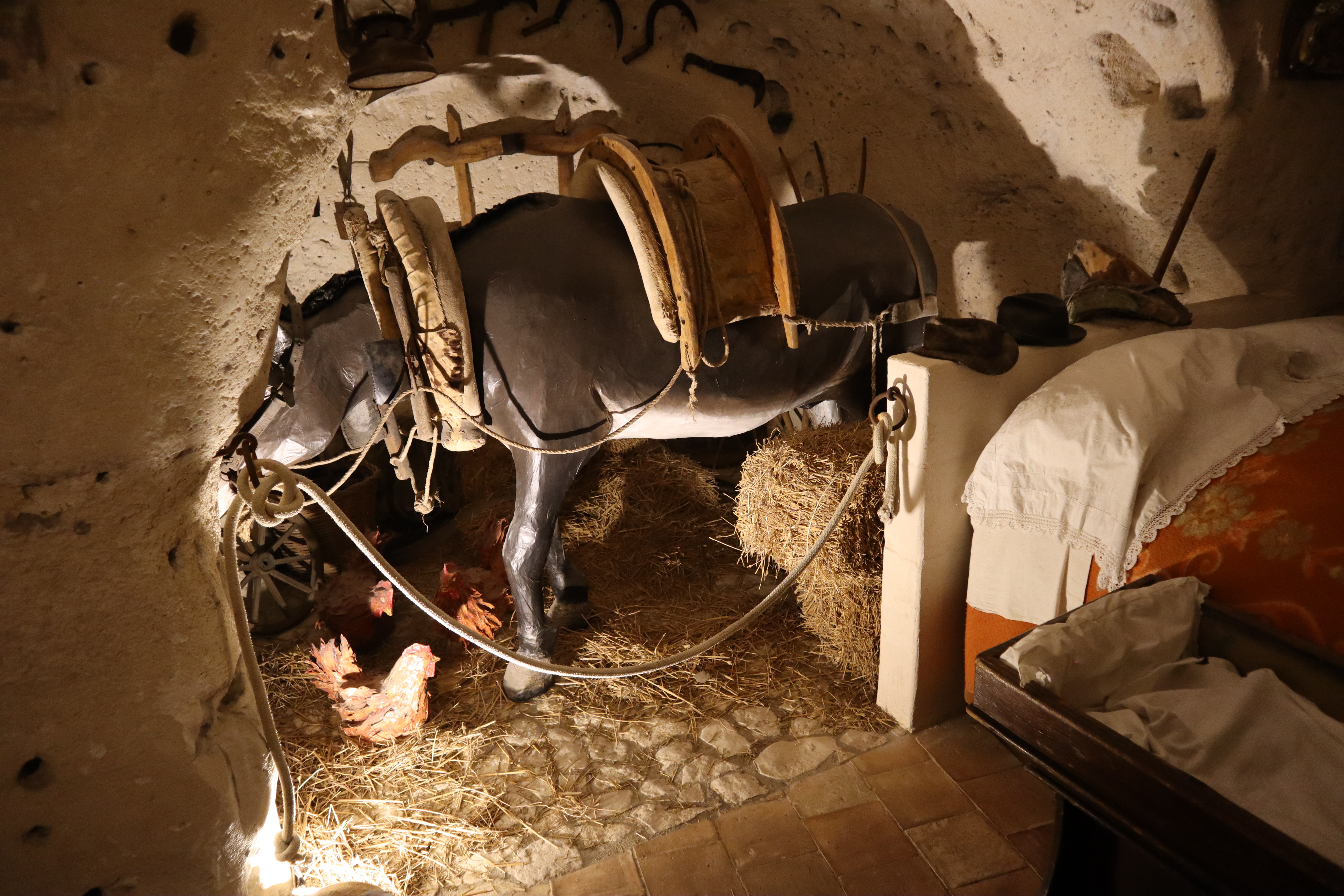
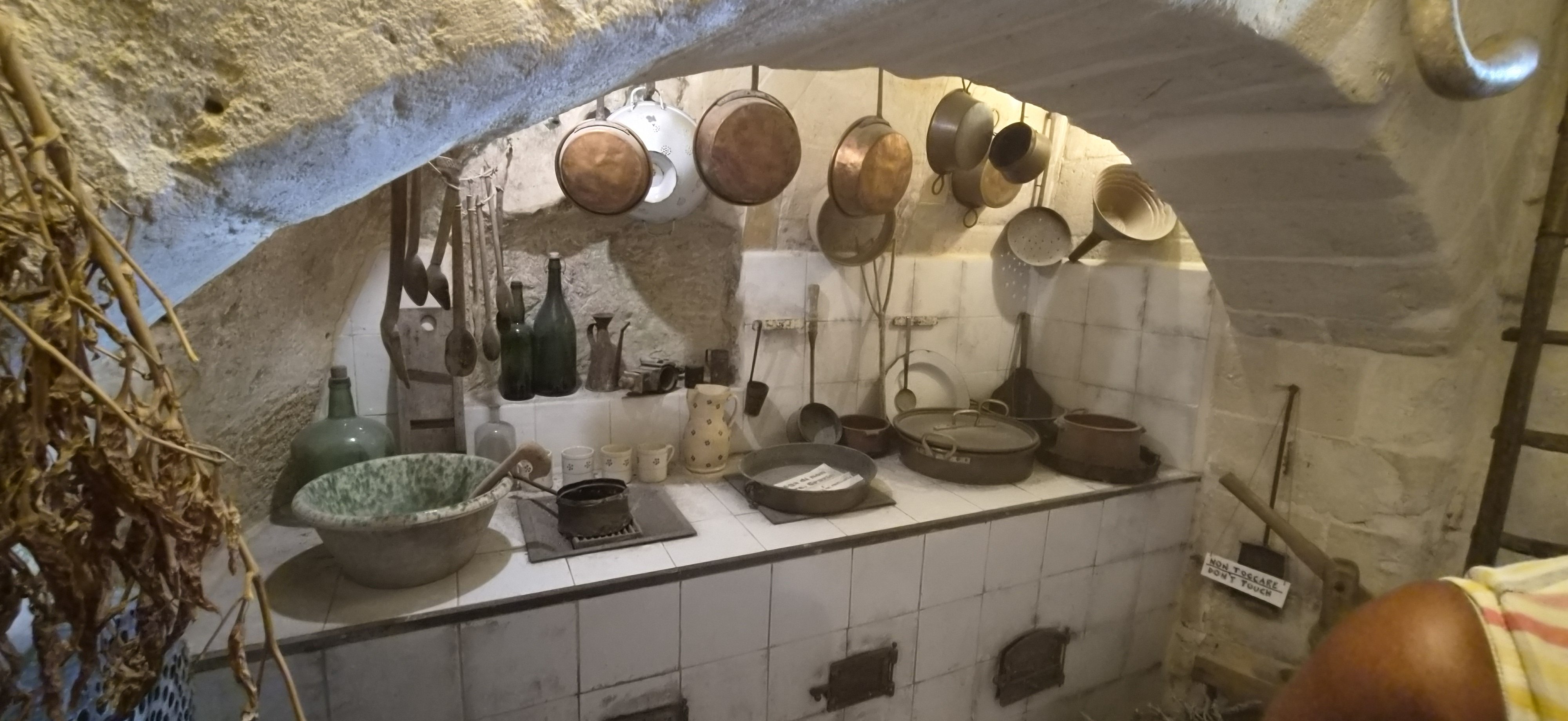
There are a number of authentic cave houses open to the public, an opportunity we were not going to miss, so we visited the Casa Grotta Del Vicinato, or Vicinato Cave House, to take a look around a typical cave-house, dug out of the rock, with recreated rooms that show something of the ancient dwellings of the Sassi of Matera. The Vicinato Cave House is an original & faithful restoration of a Sassi cave dwelling, which gave us the opportunity to see how the cave dwellers of the Sassi may have lived and worked. We walked through a small kitchen area at the entrance, with an original well for water, into what would have been the main room, which would have become a bedroom at night, for the whole family. The animals would also have shared the accommodation, so there was a model of a donkey, tied up next to a large bed, which had a baby’s cot next to it and various farming tools, pots, barrels, trays and other items, piled up high on shelving or dotted around the floor.
I really enjoyed visiting Matera, it really is an incredible place. It looks fantastic, it has so much to look at and immerse yourself in. If you get the chance to visit Southern Italy, make sure the city of Matera is on your bucket list, as it is a must – do place to visit.