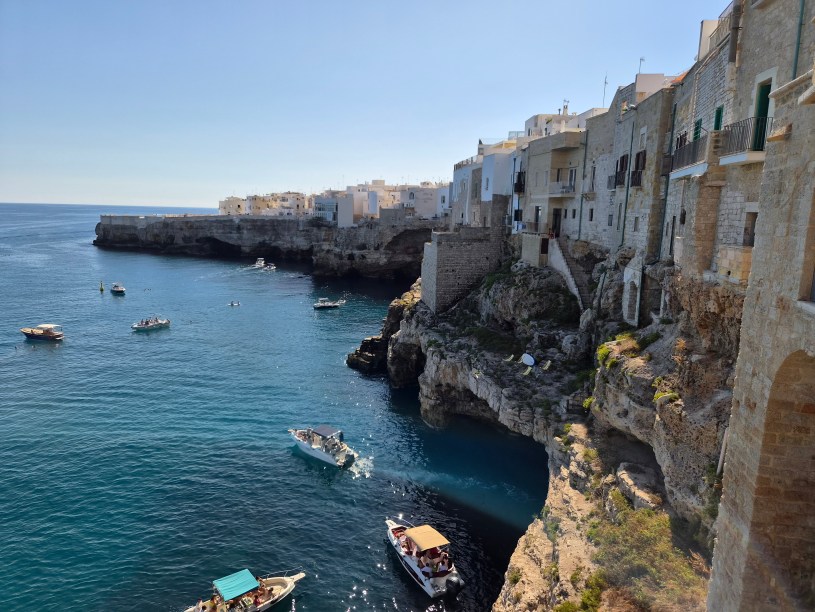
Polignano a Mare.
My recent week-long tour to the Mezzogiorno, Southern Italy included a number of cultural excursions, in Puglia & Basilicata including Polignano a Mare.
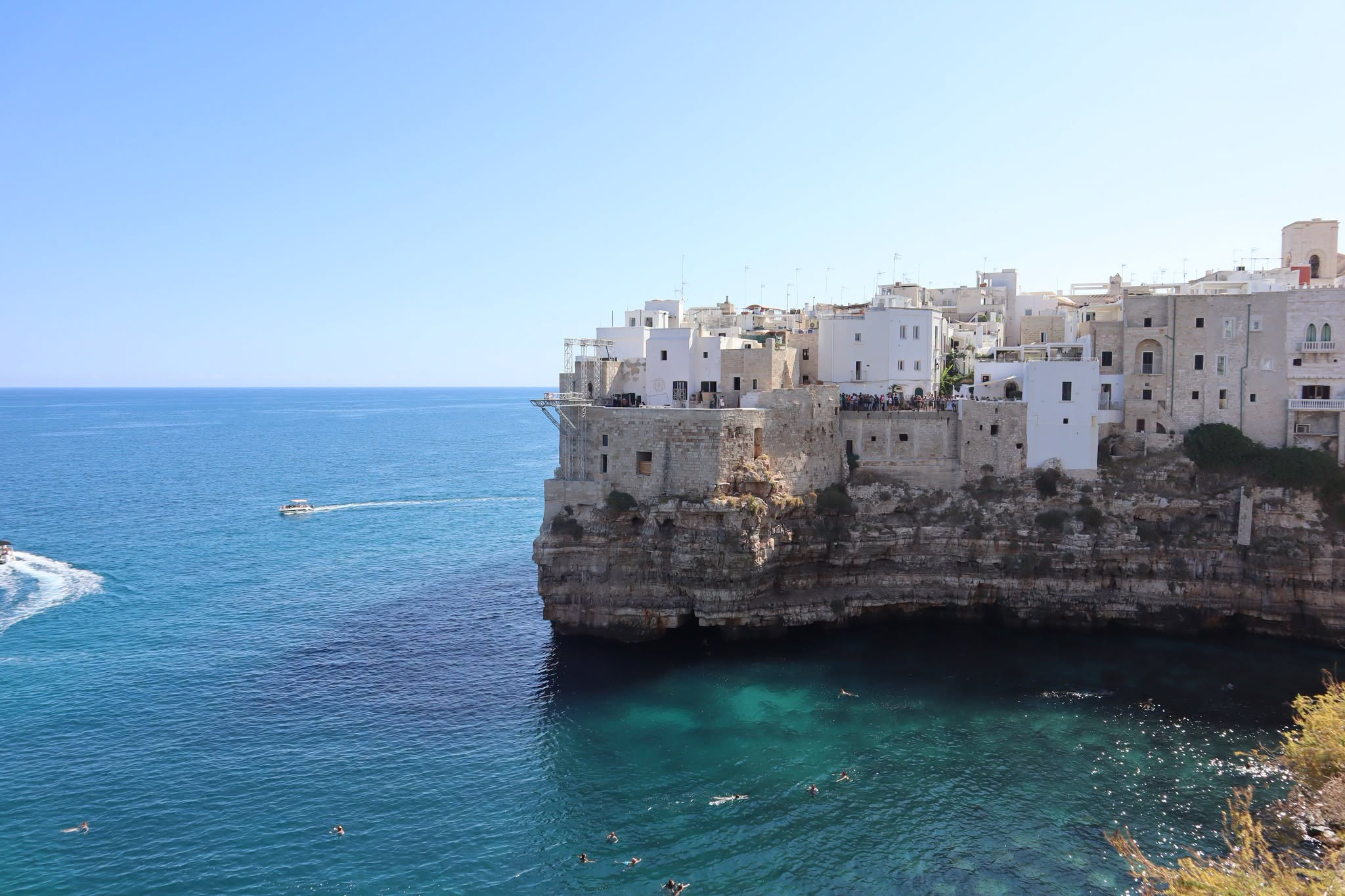
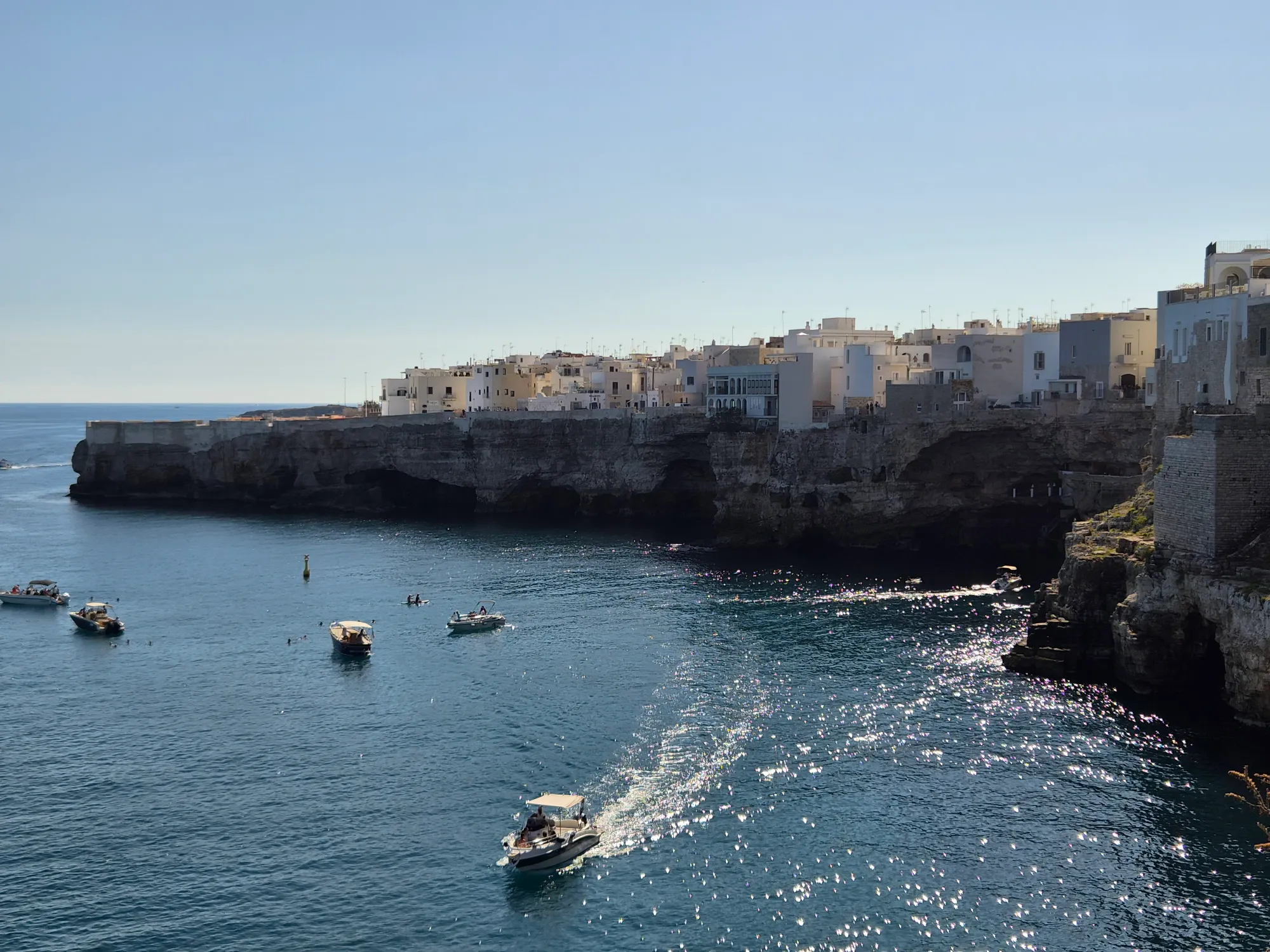
My wife was not feeling too good on the day our tour group was visiting Bari, so I decided to take advantage of the free resort shuttle from our resort, to the nearby town of Polignano a Mare, known for its dramatic limestone cliffs, vibrant blue ocean and historic centre. The local economy depends on tourism, agriculture and fishing. I was surprised how short the journey was from our resort, about eight minutes, but I very much appreciated the free shuttle mini-bus to and from Polignano. What a stunning destination it is too, if only I could have stayed a little longer.
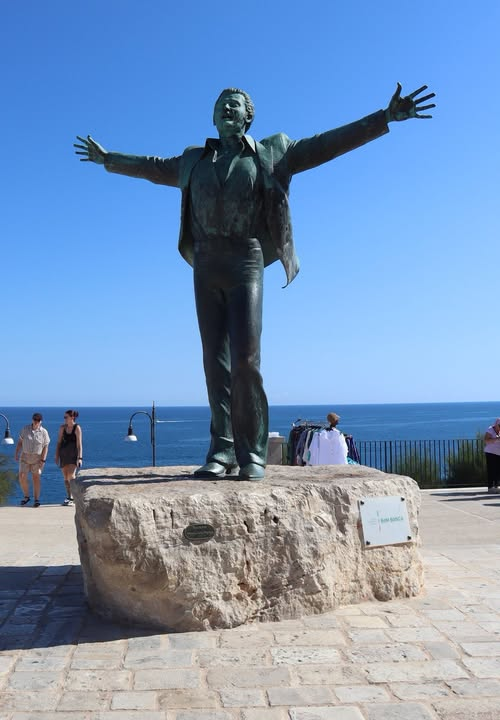
Having been dropped off in this beautiful coastal town, I walked a short distance and came across a striking statue of Domenico Modugno, a world-famous Italian singer, composer, and actor, who was born in the town. He is shown here, I am reliably informed, in his most characteristic pose, with his arms held wide open, as if at the climax of performing his legendary song “Nel blu dipinto di blu”, better known as the famous song “Volare”. Have you heard of Domenico Modugno or the song “Volare”, which came third for Italy, in the 1958 Eurovision Song Contest. I have to admit my ignorance about not knowing anything about Domenico Modugno, but I have heard the song “Volare, many times before.
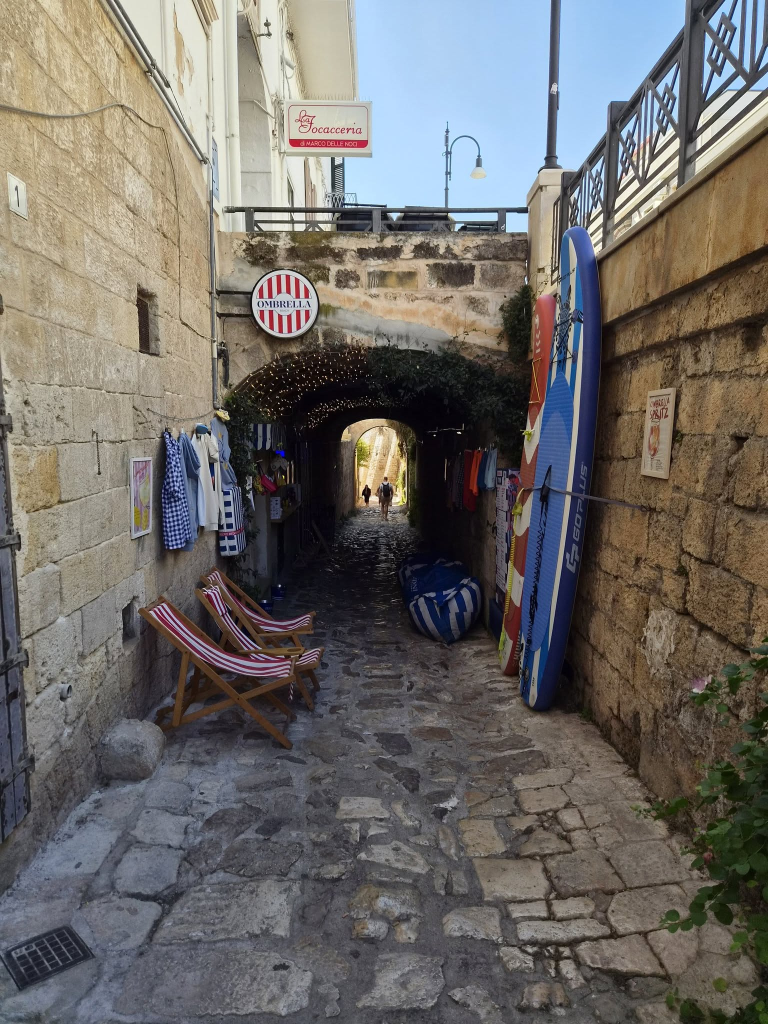
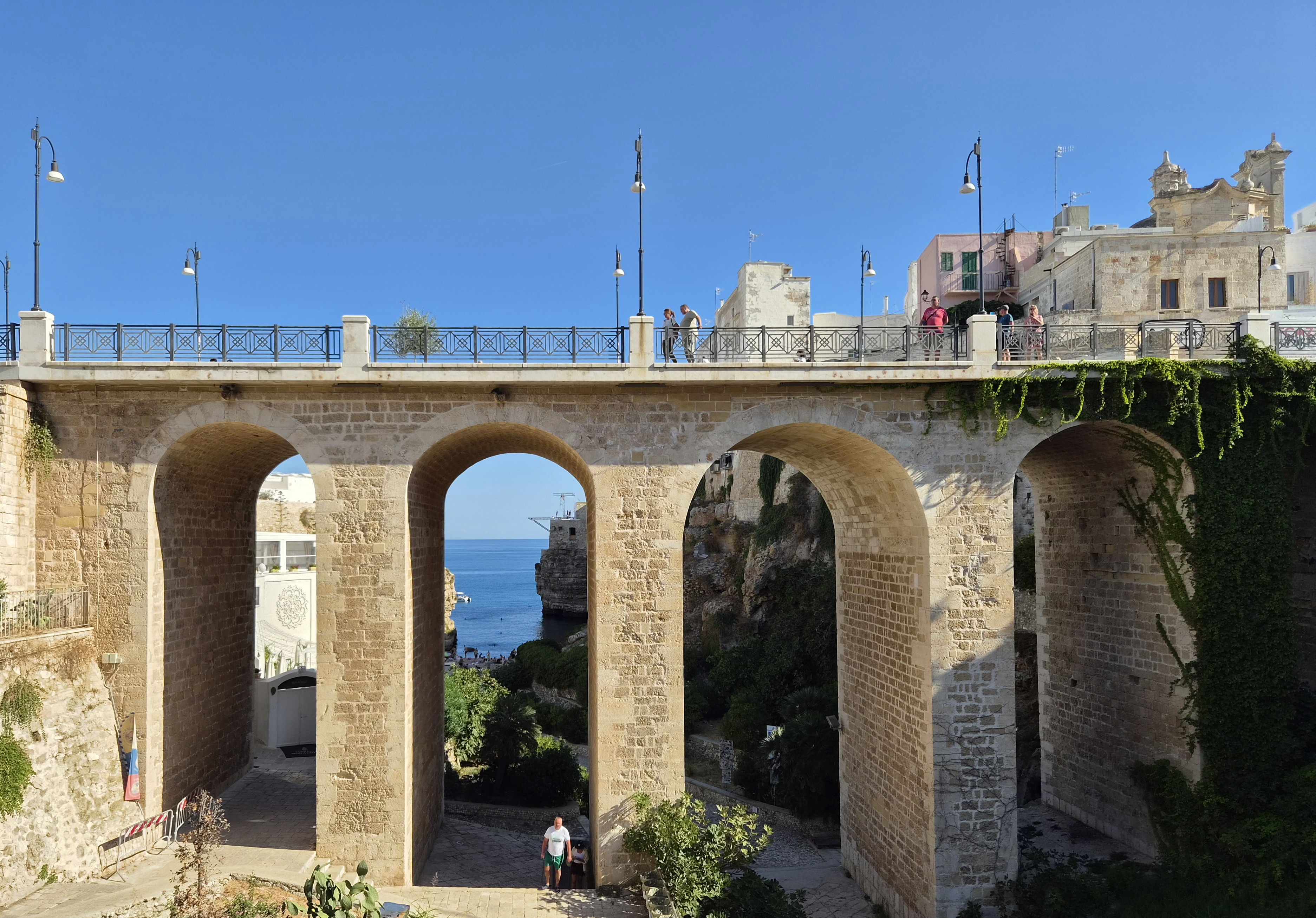
A dark, mysterious and enchanting passageway to the Cala Porto Beach, the Lama Monachile in Polignano a Mare.
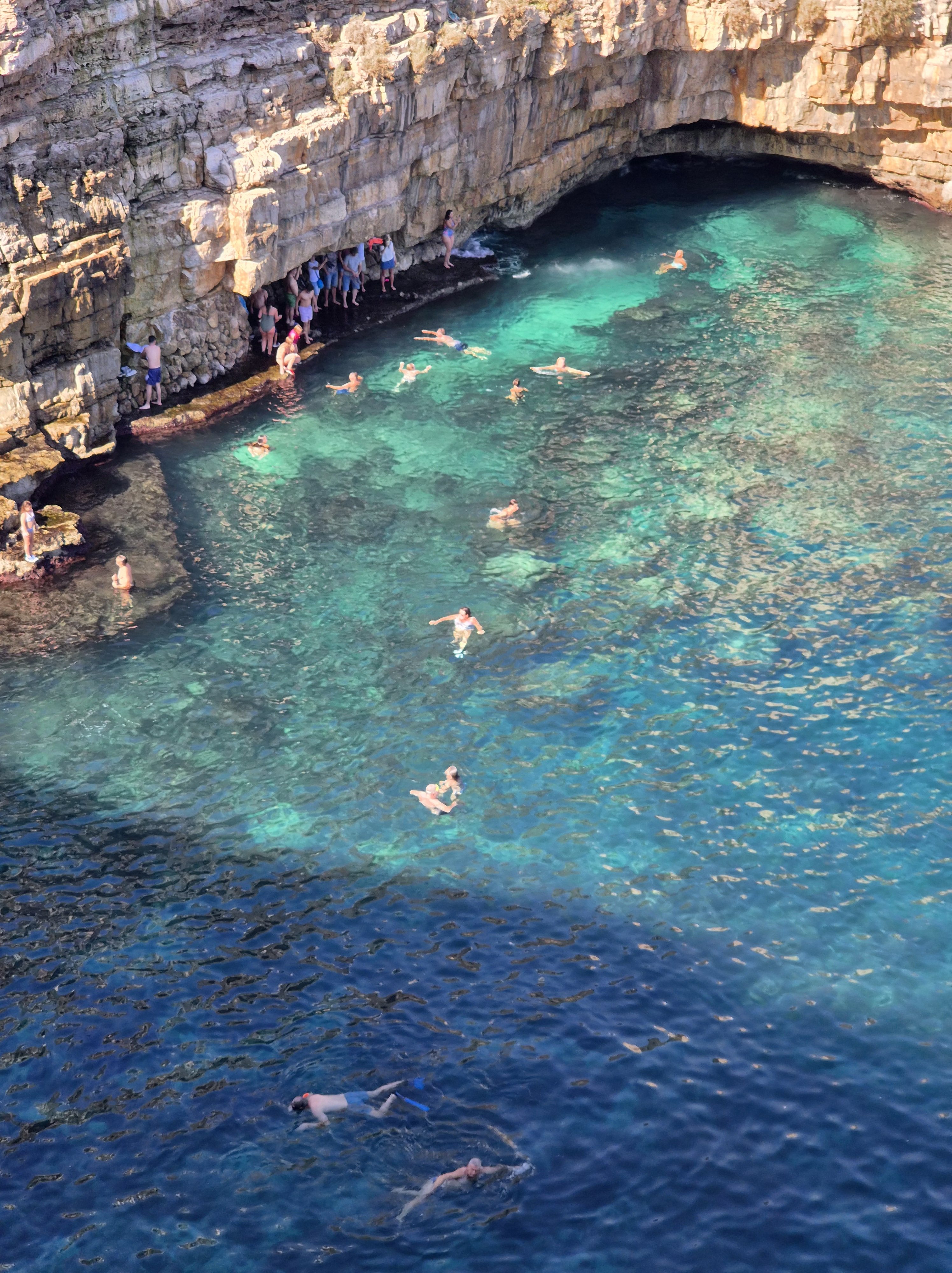
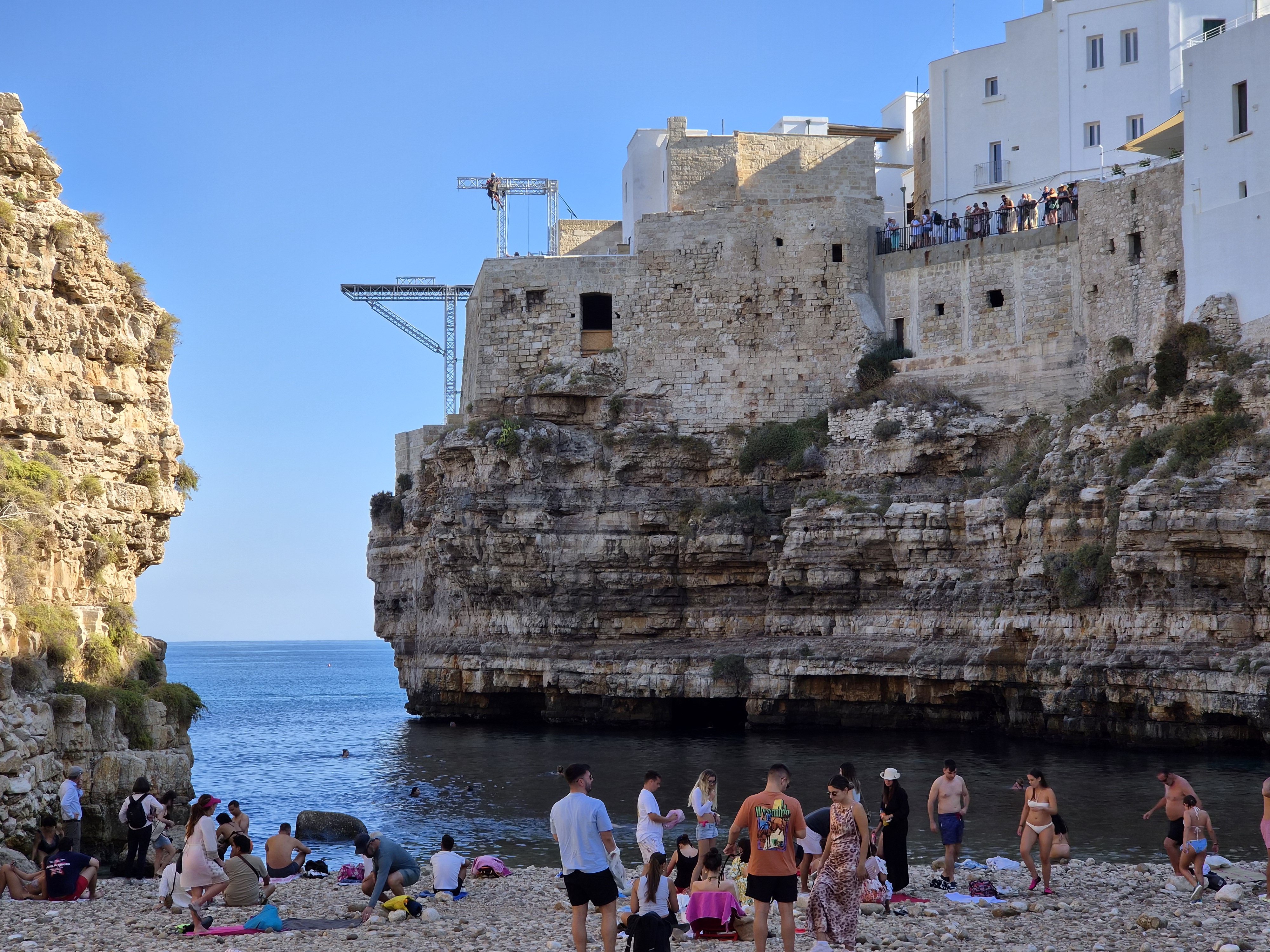
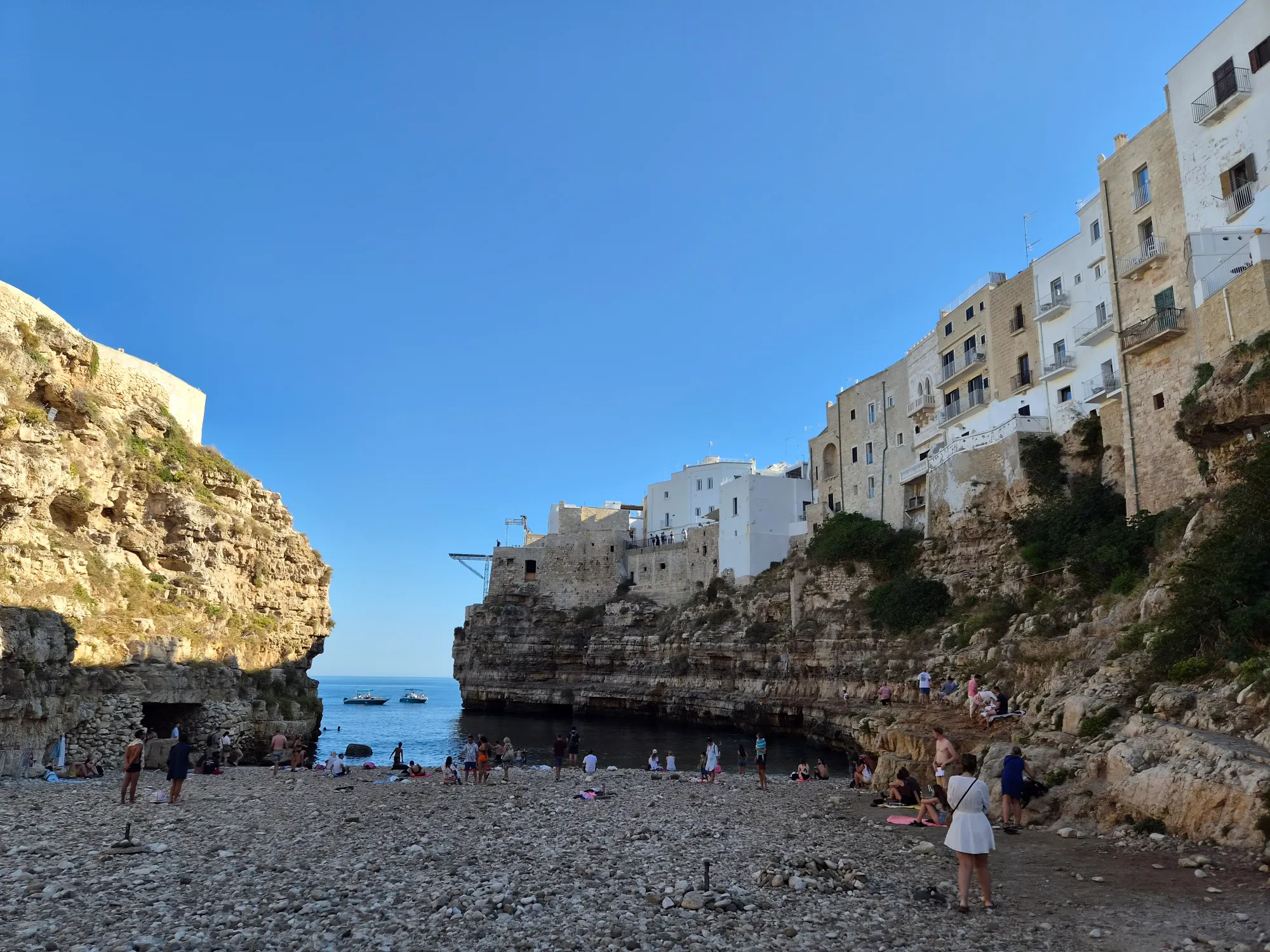
I made my way down to the beach and explored the famous cove, the Cala Porto Beach or the Lama Monachile. This famous pebble rocky beach is situated between sheer vertical rock cliffs and the clear blue sea. The bright aquamarine sea offers wonderful opportunities for swimming, boating and exploring the hidden sea caves. What a delightful and popular place it is to swim, dive or catch some sun on the rocky beach. Local divers are known to dive from the high cliffs which surround the cove, but unfortunately not on the day I was visiting.
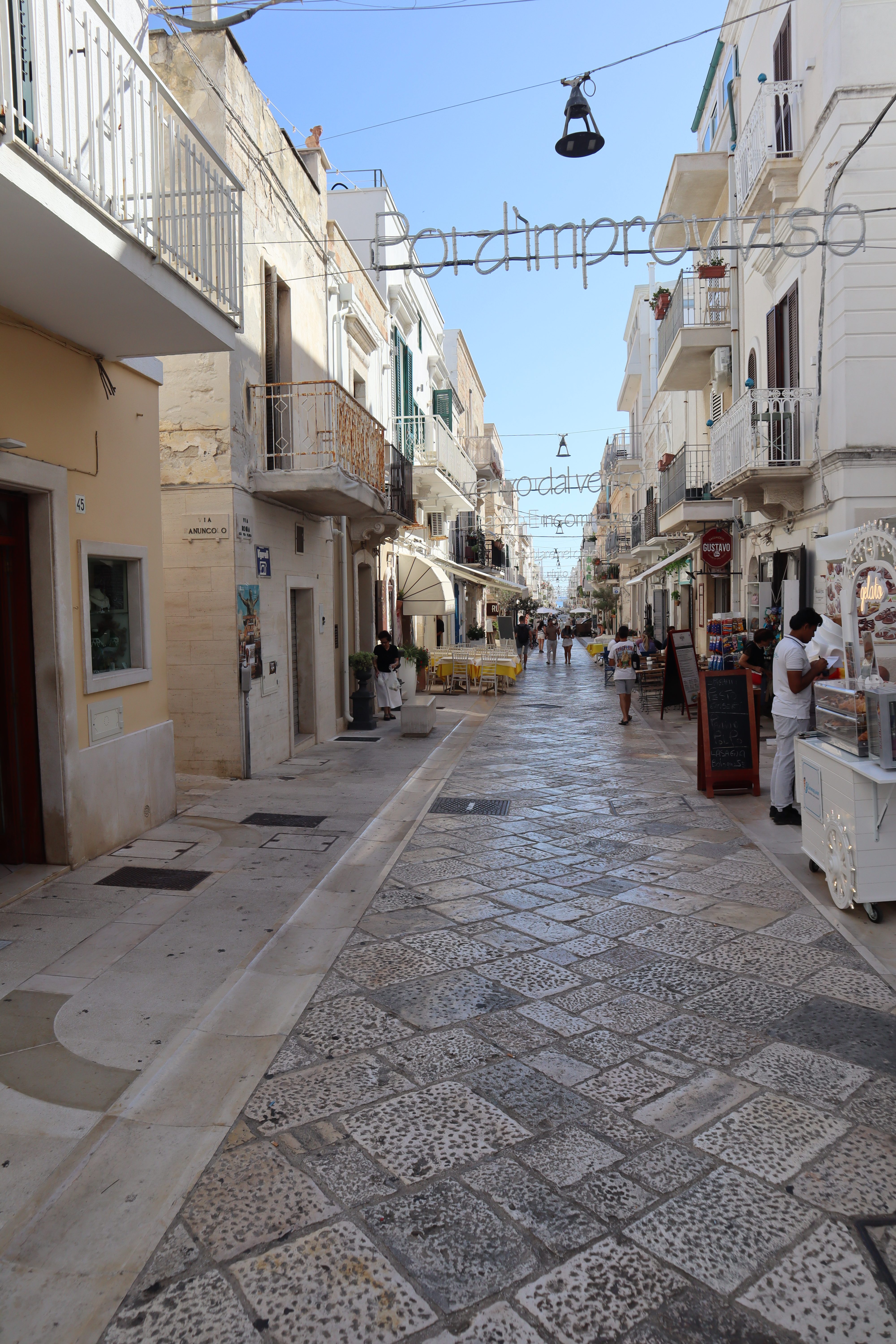
The medieval quarter of Polignano a Mare is a complex maze of of narrow, winding ancient cobblestone streets and whitewashed houses. I very quickly became lost, such was the complexity of the tight little alleys and passages, I kept coming up at a cul de sac and had to backtrack where I had come from. I had also been told by a local, that there were some walls and staircases, which have been covered with local poems and that there were restaurants which had been built directly inside cliffside caves. Unfortunately, I was unable to find either, as my time in this beautiful coastal town was limited, so I shall look forward to returning.
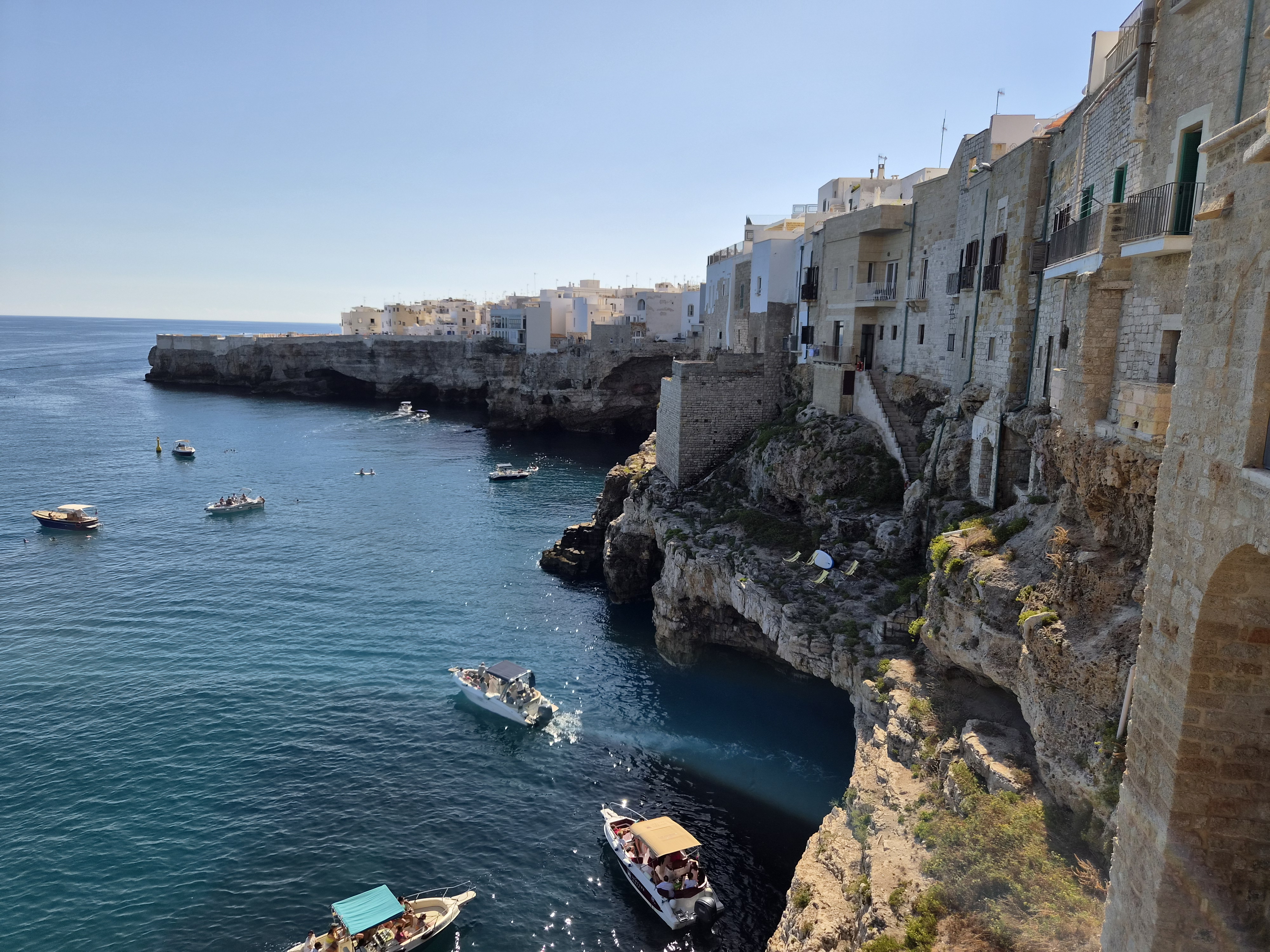
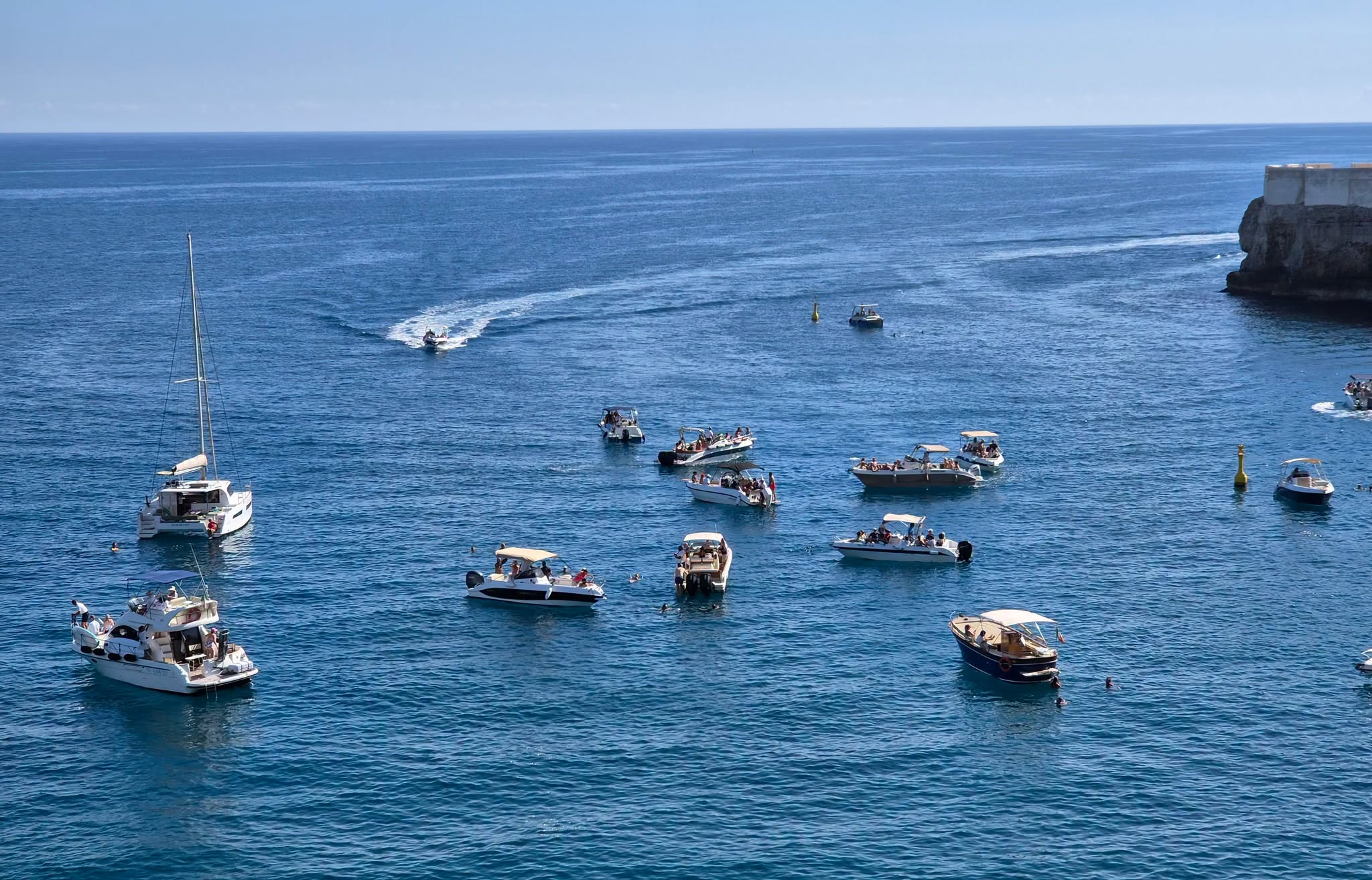
After strolling around the stunning streets, I managed to find the stone terraces, such as the Balconata sul Mare, which over looks the cove and beach, far below. The panoramic views from the top of these terraces was stunning. I was able to look along the cliffs and down onto the beach, which had many people swimming and jumping off the narrow cliff edges, there were also very many hire boats, showing people the cliff faces from the perspective of the water.
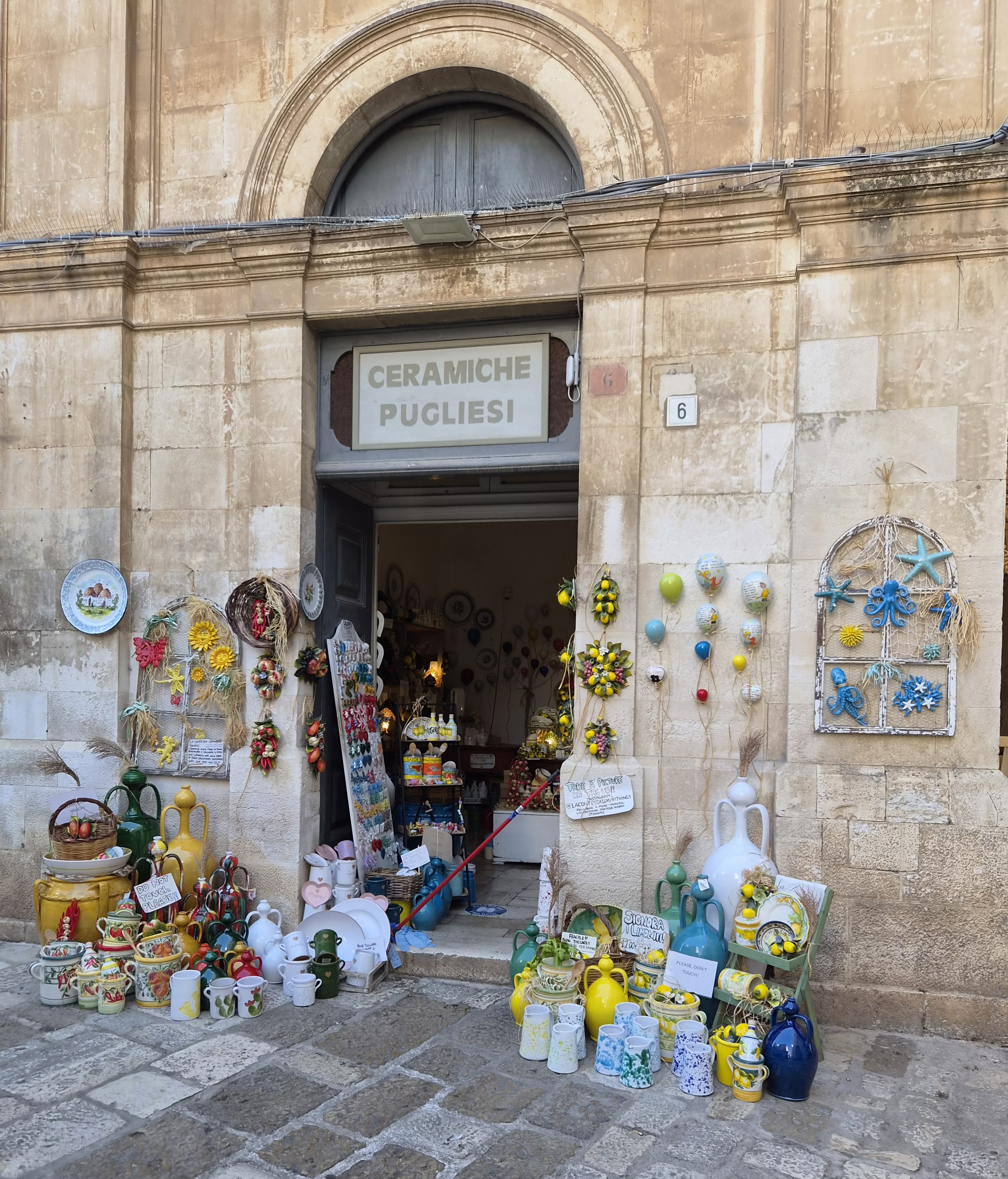
Continuing my walk around the narrow streets of Polignano a Mare, I came across several beautifully presented shop fronts, such as the Ceramiche Pugliesi. I had spent a good two hours exploring the stunning former medieval fishing port of Polignano a Mare and its famous cove & beach. It really is a beautiful coastal town with plenty of man made and natural attractions.
What a delightful place to stroll, before the crowds arrive!